


Supima wins on quality, hands down, because its extra-long staple fibers make stronger, smoother, longer-lasting fabric than standard cotton. That said, it costs more, and a well-made regular cotton shirt with combed, ring-spun yarn can still serve you fine if you’re not planning to wear it for a decade. “Supima” itself isn’t a fiber type. It’s the trademarked name for American-grown Pima cotton, and that distinction matters more than most shoppers realize.
TL;DR:
- Genuine Supima cotton is more durable, retains softness over time, and holds dye better than standard cotton, but it comes at a higher price.
- Supima is strictly licensed from American-grown Pima cotton, ensuring consistent quality and origin verification, unlike generic “100% cotton” labels.
- Combed and ring-spun cotton can nearly match Supima’s quality if the yarn is finer, combed, and constructed with higher GSM, making construction key to fabric durability.
- Proper washing and drying—cold water, gentle cycle, low heat—significantly extend the lifespan of both Supima and regular cotton shirts.
- Supima’s cost may be worth it for long-term wear, especially for garments intended to last several years, but regular high-quality combed ring-spun cotton suffices for short-term or heavy-use basics.
Table of Contents
- Supima Cotton vs Cotton at a Glance
- What Is Supima Cotton, Really?
- Ring Spun vs Combed Cotton: Where the Real Difference Comes From
- Washing and Drying Rules That Keep Either Fabric Alive Longer
- Is Supima Cotton Worth It for Your Wardrobe?
- How to Spot Real Supima and Avoid Vague “100% Cotton” Labels
- Why Trust This Breakdown
- The Honest Verdict on Supima vs Regular Cotton
- Moreciandco’s Take on Premium Cotton Shirts
- Sources
Supima Cotton vs Cotton at a Glance
The gap between Supima and standard cotton shows up in four places: fiber length, durability, feel, and price. Standard upland cotton fibers run about 20 to 25 millimeters. Supima’s extra-long staple (ELS) fibers measure roughly 35% longer, which sounds like a small number until you see what it does downstream. Longer fibers spin into smoother, stronger yarn with fewer weak points, and that single fact drives almost every other advantage on this list.
Here’s how the two stack up on the traits that actually affect how a shirt performs on your body and in your closet:
- Durability: Supima resists pilling and tearing far better over repeated wear and washing than typical cotton, which tends to fuzz and thin out faster.
- Softness over time: Regular cotton often feels fine new but coarsens with washing. Supima tends to hold, or even improve, its hand feel wash after wash.
- Color retention: The smoother fiber surface on Supima takes dye more evenly and holds it longer, so blacks stay black instead of fading to gray.
- Price: Expect to pay a noticeable premium for genuine Supima compared to regular cotton garments, depending on construction.
- Availability: Supima makes up a small share of global cotton production, so it shows up mostly in premium and specialty lines rather than mass-market basics.
None of this means regular cotton is bad. A budget tee made from short-staple cotton is perfectly reasonable for a gym shirt you’ll replace in a year anyway. The comparison only matters once you’re deciding whether to pay more for something you want to keep.
What Is Supima Cotton, Really?
Supima cotton comes from Gossypium barbadense, a cotton species that produces naturally longer, finer fibers than the Gossypium hirsutum plant behind most commercial cotton. Growers and textile people call this category extra-long staple, or ELS, cotton. Pima is the general ELS variety; Supima is the brand name reserved specifically for Pima cotton grown in the United States and licensed through the Supima Association.
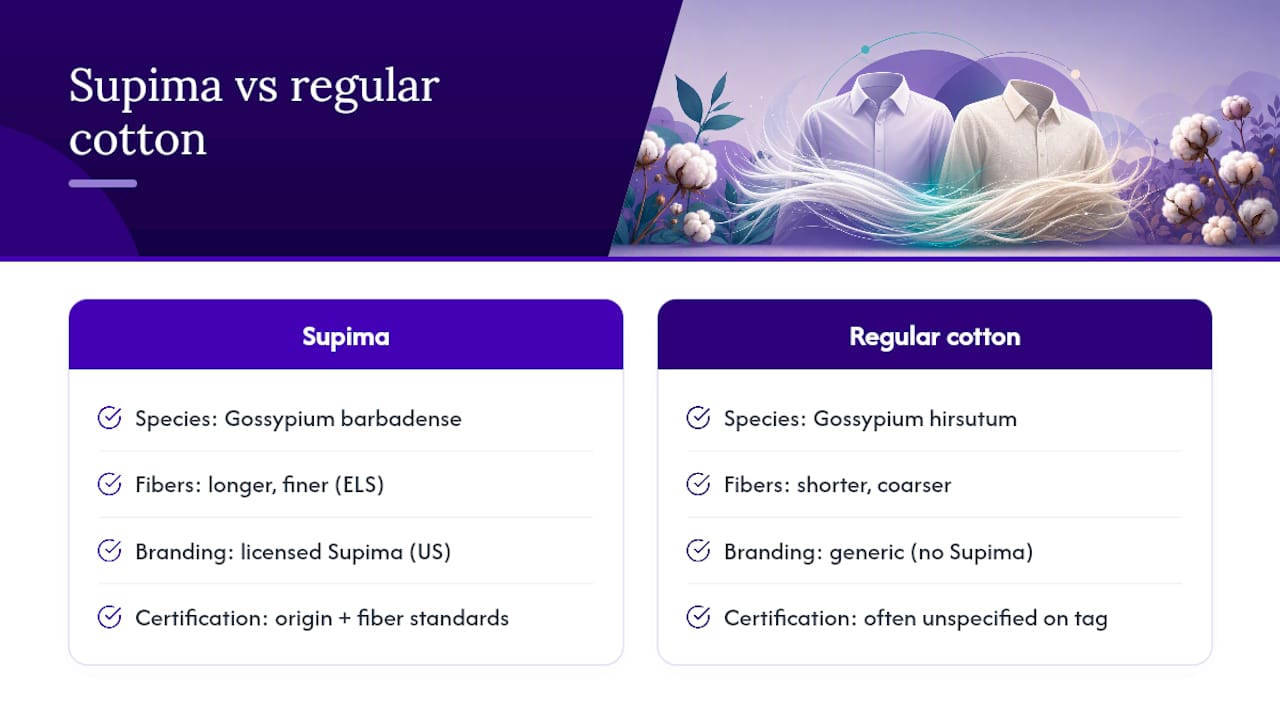
That licensing is the part most shoppers skip past. Supima isn’t a loose marketing term anyone can slap on a tag. It’s a certification tied to origin and fiber standards, similar in spirit to how Champagne can only come from one region of France. Because ELS cotton is harder to grow and represents a fraction of total cotton output, supply stays tight, which is a big part of why Supima costs more.
Origin certification also buys you consistency. A shirt labeled genuine Supima has to meet fiber standards batch after batch, while “100% cotton” on a regular tee tells you almost nothing about fiber length, spinning method, or how it’ll hold up after twenty washes.
Ring Spun vs Combed Cotton: Where the Real Difference Comes From
Fiber length sets the ceiling for quality, but how the mill spins that fiber decides how close a fabric gets to it. Standard cotton fiber runs 20 to 25 millimeters; Supima runs longer and finer, and that extra length lets spinners twist tighter, smoother yarn with fewer joints and less loose fuzz sticking out.
Three spinning and finishing terms show up constantly on product tags, and knowing them will save you from guessing:
- Combed cotton: short, weak fibers get mechanically removed before spinning, leaving a stronger, smoother yarn.
- Ring-spun cotton: fibers get twisted and thinned in a rotating process that produces soft, durable yarn, the opposite of cheaper open-end spinning.
- GSM (grams per square meter): measures fabric density and weight; higher GSM generally means a thicker, more substantial feel.
- Singles count: describes yarn thickness; higher numbers mean finer, often softer yarn.
Combing and ring-spinning can push a regular cotton shirt surprisingly close to the Supima experience, even though the raw fiber is shorter. A brand using combed ring-spun cotton at 240 GSM will usually outperform a cheap open-end-spun Supima blend, if such a thing existed, because construction compounds with fiber quality rather than replacing it.
Pro Tip: If a tag lists fiber origin but skips spinning method entirely, treat that as a yellow flag. Brands that combed and ring-spun their cotton almost always say so, because it’s a selling point worth bragging about.
Washing and Drying Rules That Keep Either Fabric Alive Longer
Care habits decide how long any cotton shirt actually lasts, and following uniform care instructions that protect fit, color, and logos will help prevent the mistakes that wreck a $15 tee from wrecking a $60 one just as fast.
- Wash in cold or warm water, never hot. Hot water is the single biggest cause of shrinkage in both Supima and regular cotton, though Supima’s longer fibers resist the damage slightly better.
- Use a gentle cycle when possible. Aggressive agitation breaks down short fibers fastest, which is exactly the weakness regular cotton already has.
- Skip the high-heat dryer setting. Tumble on low or hang dry. Heat is what locks in shrinkage after the wash cycle already loosened the fibers.
- Wash inside out. This protects the outer surface from pilling and fading, especially on darker colors.
- Don’t overload the machine. Cramming a load in causes more friction per garment, and friction is what turns smooth yarn fuzzy over time.
Higher-quality cotton, Supima especially, tends to bounce back from repeated washing with less visible wear than standard cotton, but no fabric survives bad laundry habits indefinitely.
Is Supima Cotton Worth It for Your Wardrobe?
The price premium comes down to scarcity and processing. Supima represents a small slice of global cotton supply, the fiber requires more careful harvesting, and licensing adds a layer of quality control regular cotton never goes through. That’s not padding. It’s the actual cost of a more consistent, longer-fiber input.
Whether it’s worth it depends on how you think about cost. A pricier shirt that lasts five years and still looks sharp beats replacing a cheaper one every year or two, once you do the math per year of wear rather than per purchase. If you’re buying a work shirt you’ll wear weekly for seasons, Supima usually pays for itself. If it’s a shirt for occasional wear or heavy manual work, a high-spec combed ring-spun regular cotton shirt gets you most of the benefit for less money.
How to Spot Real Supima and Avoid Vague “100% Cotton” Labels
“100% cotton” tells you the fiber content and nothing else. It says nothing about staple length, spinning method, or how the shirt will feel after ten washes. Before you pay a premium, check for these specifics:
- Look for explicit Supima Association licensing or wording like “American-grown Pima” rather than the generic term “Pima,” which isn’t origin-restricted.
- Check for combed and ring-spun callouts, plus a stated singles count or GSM. Vague tags without these terms usually signal lower-grade cotton.
- Inspect stitching quality and the seller’s return policy. Brands confident in their fabric tend to offer clear returns and detailed fabric quality signs on the product page.
- If a listing avoids naming spinning method or weight entirely, ask the seller directly before buying.
Why Trust This Breakdown
Giuseppe has covered fabric fundamentals before, including thread count myths and how to read quality into a garment before you buy it. Moreciandco builds its own shirts around the same logic laid out here: fiber quality, real construction specs, and an experience that matches what you paid for, not a label that just sounds premium.
The Honest Verdict on Supima vs Regular Cotton
Most cotton comparisons oversimplify this into “Supima good, regular cotton bad,” and that’s lazy. The fiber science is real. Longer staple genuinely produces stronger, smoother yarn, and that’s not marketing spin. But construction can close a lot of that gap. A cheap Supima blend with poor stitching and thin GSM will disappoint you faster than a well-built combed ring-spun regular cotton shirt.
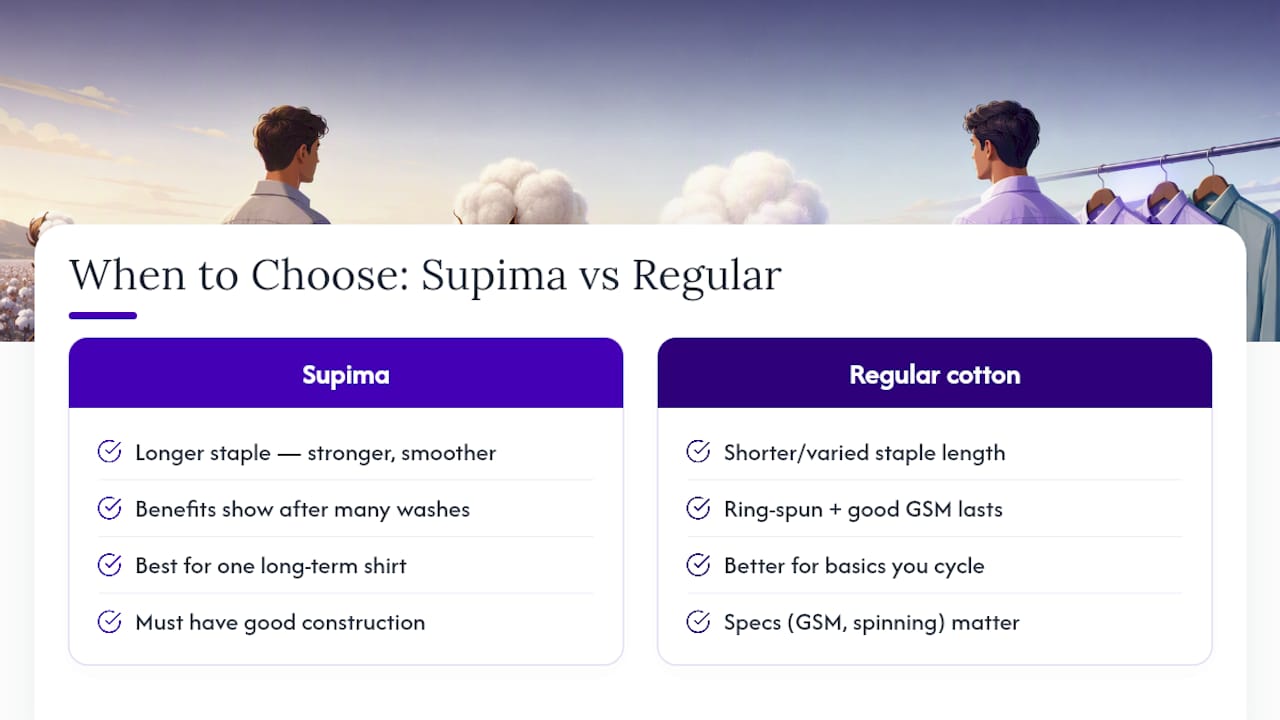
What gets overlooked is that most shoppers judge cotton quality by touch in a store, which is close to useless. Fresh-off-the-shelf feel doesn’t predict how fabric holds up after twenty wash cycles. The specs, staple length, spinning method, GSM, matter more than the initial hand feel, because they predict the fifteenth wash, not just the first one.
If you’re buying one shirt you’ll wear constantly for years, prioritize fiber origin and construction specs over price. If you’re stocking up on basics you’ll cycle through quickly, spend your money on good ring-spun regular cotton instead and save the premium for pieces that earn it.
— Giuseppe
Moreciandco’s Take on Premium Cotton Shirts
Moreciandco built The Complesso Polo and The Complesso Bamboo Cotton Tee around the same priorities covered here: fit that actually holds its shape, fabric weight you can feel is substantial, and construction that doesn’t fall apart after a season of regular wear.
Bamboo-cotton blends offer a soft, breathable hand with strong moisture handling, providing an alternative fabric option that can compete with premium cotton in performance. Both pieces skip the vague “100% cotton” tag and give you real specs to evaluate before you buy. Visit either product page to check the fabric details, fit notes, and return policy for yourself, then decide which one fits how you actually plan to wear it.
Sources
- Supima Cotton | FAQ
- Gossypium barbadense — Wikipedia
- Combed Cotton vs. Ring-Spun Cotton: What the BELLA+CANVAS Airlume Label Actually Means – Storiginator
- Supima Cotton vs Cotton: Key Differences, Benefits, and Which is Best for You — All In The Difference