


A polo works under a blazer when it acts like a dress shirt, not a gym shirt: structured collar, close fit, no logos. Pair it with a soft, unstructured blazer instead of a formal suit jacket, and the outfit reads smart casual rather than sloppy. Pieces built for this style are cut with exactly this pairing in mind.
TL;DR:
- The collar’s structure and the blazer’s softness are crucial for creating a deliberate, tailored look, especially with a pique or refined-knit polo.
- Favor unstructured or lightly padded blazers in navy, charcoal, or medium gray with subtle textures to avoid exposing formality mismatches.
- Choose slim or semi-fitted polos with reinforced collars, mid-fly hems, and avoid athletic fabrics or large logos for a polished appearance.
- Tucking or leaving the polo untucked depends on proportion and setting, with dressier environments favoring tucking and casual settings allowing untucked wear.
- Using a collar press or light steaming enhances the polo’s shape, and swapping a floppy collar polo for a stiffer one helps maintain a sharp look under a blazer.
Table of Contents
- Why A Polo Under A Blazer Actually Works
- How To Choose The Right Polo For The Job
- Which Blazers Actually Pair With A Polo
- Building The Full Outfit: Pants, Shoes, And Accessories
- Tuck Or Untuck? Here’s The Quick Test
- Common Mistakes That Ruin An Otherwise Good Outfit
- Three Outfits You Can Copy Today
- Why We Build Polos Around This Exact Pairing
- Get The Polo Built For This Exact Look
- Sources
Why A Polo Under A Blazer Actually Works
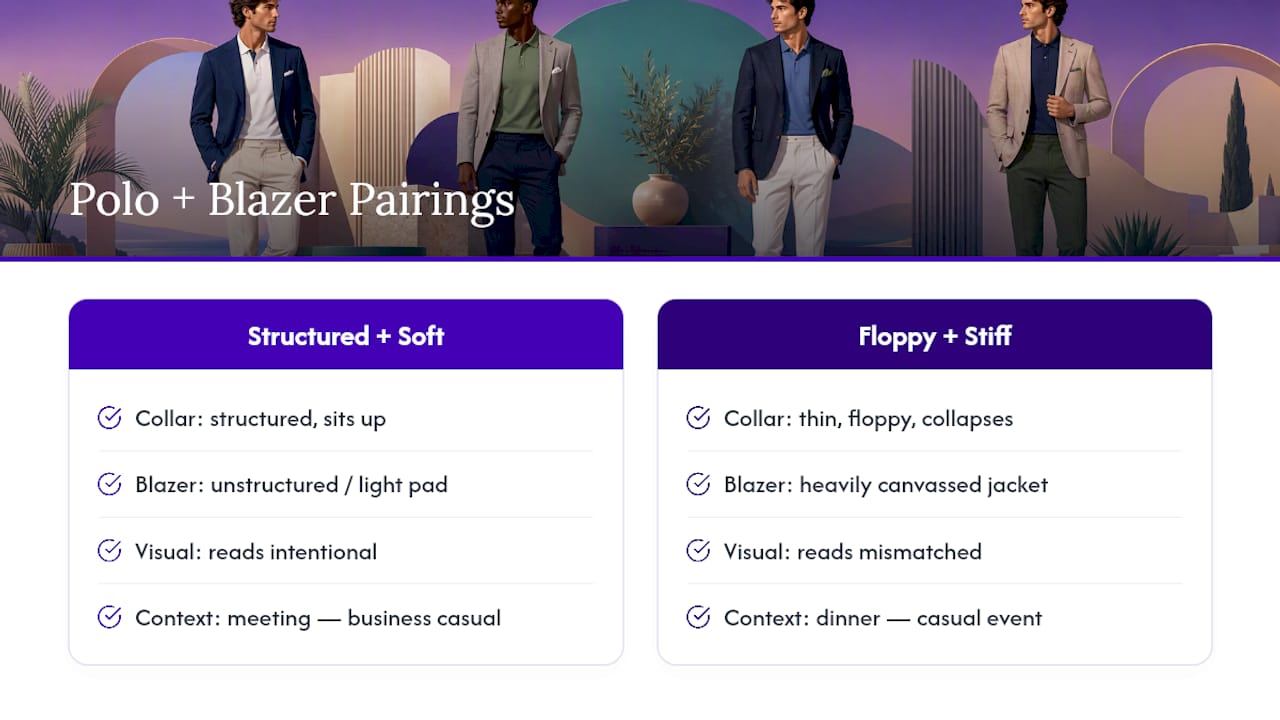
The logic is visual, not arbitrary. A polo’s collar and knit texture signal a level of formality, and a blazer signals another. When those two signals match, the outfit reads intentional. When they clash, it reads like you got dressed in the dark.
A structured collar with real body sits up under a lapel and looks tailored. A floppy, thin collar collapses and looks like an afterthought. That’s why collar structure matters more than almost anything else you’re wearing.
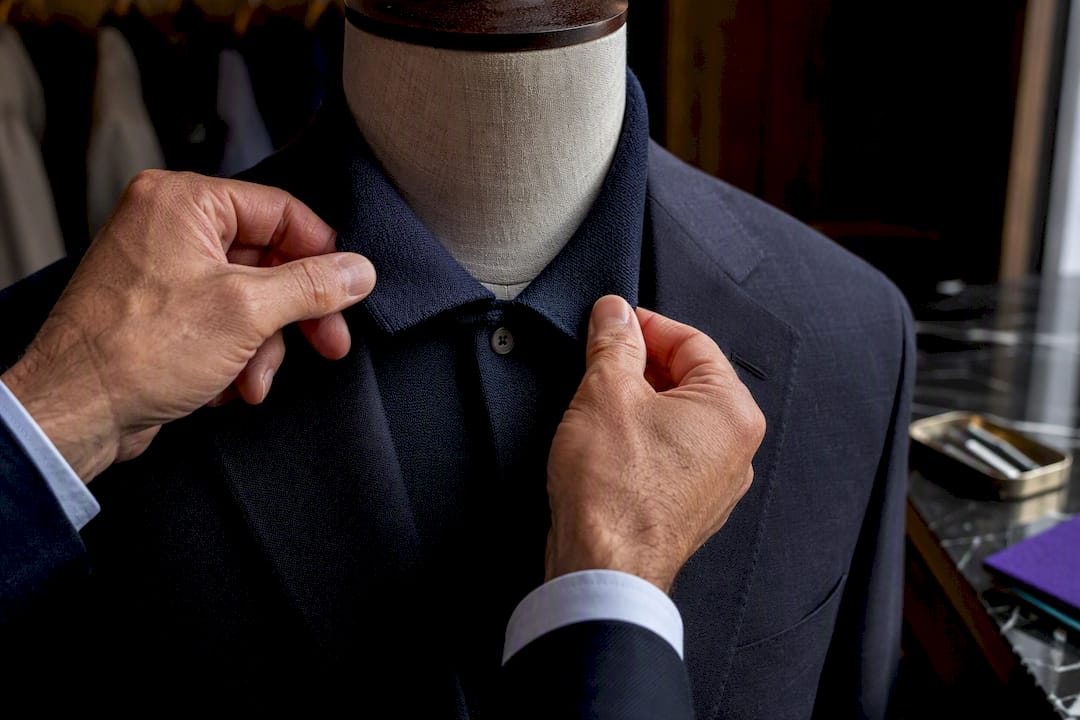
The blazer matters just as much. An unstructured or lightly padded jacket softens into the polo’s knit texture instead of fighting it. A heavily canvassed suit jacket, built for a woven dress shirt, exposes the mismatch instantly. Context decides the rest: a client meeting or office with a slightly dressier standard calls for a pique polo that reads as legitimately business casual, while a dinner or casual event gives you more room to relax the fit.
How To Choose The Right Polo For The Job
Not every polo in your drawer earns a spot under a jacket. Four traits decide whether it looks deliberate or accidental.
- Fit: go slim or semi-fitted, with sleeves that hit mid-bicep and an armhole that sits close without pulling.
- Fabric: stick to pique or a refined knit. Skip anything labeled performance or athletic, and skip big logos.
- Collar: look for a collar with real structure or internal reinforcement, ideally on a two- or three-button placket. This is the single detail that separates a deliberate look from a sloppy one.
- Hem length: aim for mid-fly. Long enough to tuck cleanly for a dressier look, short enough to sit right if you leave it untucked.
If you’re unsure what separates a gym-bag polo from one built for tailoring, this breakdown of pique fabric construction is worth five minutes.
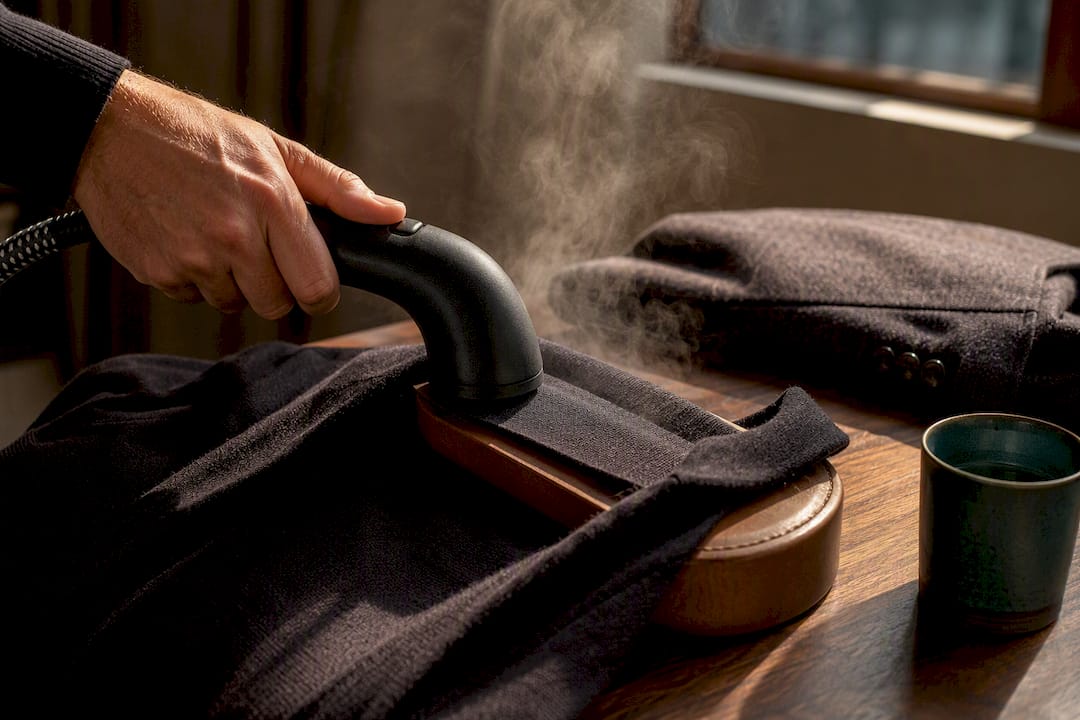
Pro Tip: Press or lightly steam the collar before wearing it under a jacket. Even a well-made collar looks better with the crease reinforced, and it’s the fastest way to make a $60 polo look like a $150 one.
Which Blazers Actually Pair With A Polo
The blazer does half the work here, and picking the wrong one undoes everything you got right with the polo. The goal is a jacket with enough give to move with a knit shirt instead of standing rigid against it.
- Favor unstructured or soft-shouldered sport coats in cotton, linen blends, or a lightweight wool. These move with the polo instead of fighting it.
- Avoid heavily canvassed suit jackets and formal details like peak lapels or heavy shoulder padding. That combination tends to expose the formality mismatch instead of hiding it.
- Lean on navy, charcoal, and medium grays, ideally in a subtle weave like herringbone or a soft flannel texture, so the jacket adds visual interest without competing with the polo.
A jacket that’s too formal doesn’t just clash. It makes the whole outfit look like two different dress codes stitched together.
Building The Full Outfit: Pants, Shoes, And Accessories
Once the polo and blazer are settled, the rest of the outfit either reinforces the look or quietly wrecks it.
- Pants: chinos or tailored trousers for business casual settings; dark, clean jeans for a smart-casual evening look. Skip distressed denim entirely. It reads as a different outfit category altogether.
- Shoes: loafers or derbies keep things business casual. Minimal leather sneakers or clean boots shift the same outfit toward smart casual without losing polish.
- Accessories: a leather belt that matches your shoe color, a minimal watch, and, for a slightly dressier occasion, a pocket square in the blazer.
- Color and texture: pair a solid polo with a textured blazer, or a patterned polo with a solid jacket, never both busy at once. Mixing a smooth knit with a nubby wool or linen weave keeps the outfit from looking visually flat.
Readers building out a full rotation might find this business casual wardrobe breakdown useful for filling in the gaps around this core combo.
Tuck Or Untuck? Here’s The Quick Test
Tucking isn’t about rules for their own sake. It’s about proportion. A well-fitted polo with the right hem length gives you the option to tuck for dressier settings and leave it untucked for relaxed ones, and the deciding factors are simple.
- Tuck when you’re in dress trousers or a business-casual office setting.
- Leave it untucked when the blazer is soft, the pants are casual, and the vibe is evening or weekend.
- Check proportions by sitting down. If the polo rides up and exposes a gap of shirt below the blazer hem, it’s too short or too tight.
- Look in a mirror with your arms raised. If the hem pulls sharply above your waistband, size up.
Common Mistakes That Ruin An Otherwise Good Outfit
Most polo-and-blazer failures trace back to three fixable errors, not bad taste.
- Floppy collar: swap the polo for one with a stiffer collar, or press it before wearing. A collapsed collar under a lapel is the fastest way to look unintentional.
- Wrong fabric: an athletic or moisture-wicking polo reads as gym gear under tailoring, no matter how sharp the blazer is. Swap it for pique or a bamboo-cotton blend.
- Mismatched formality: a heavily structured suit jacket over a casual polo looks like two outfits fighting each other. Match the jacket’s formality to the shirt’s.
Pro Tip: Keep a small fabric brush or lint roller near your closet. A polo that’s picked up lint or pet hair undoes even the best collar and blazer pairing in about two seconds.
Three Outfits You Can Copy Today
- Business casual: navy unstructured blazer, white pique polo tucked into gray tailored trousers, brown leather loafers.
- Smart-casual evening: charcoal soft blazer, black slim-fit polo left untucked, dark jeans, clean minimal leather sneakers.
- Travel outfit: soft unstructured blazer, breathable bamboo-cotton polo, chinos, low-profile sneakers for a look that survives a flight and still looks put-together on arrival.
Why We Build Polos Around This Exact Pairing
Most polos are designed for the golf course, then marketed for everything else. That’s backward. A polo that’s supposed to live under a blazer needs a higher collar stand, a denser collar knit, and a reinforced placket so it holds shape through a full workday, not just a photo. That’s the engineering behind the Complesso Polo: built to behave like a shirt first, a polo second.
If you want the technical side of why placket construction changes how a collar sits, this breakdown of placket styles is worth reading before your next purchase.
— Giuseppe
Get The Polo Built For This Exact Look
Most polos on the market split into two bad options: athletic cuts that collapse under a jacket, or oversized fits that bunch at the collar. This polo splits the difference on purpose.
It’s built in a bamboo-cotton blend that holds a crisp hand without feeling stiff, with a collar that keeps its shape under a lapel instead of folding flat after wear. The cut is semi-fitted through the body with a hem long enough for a clean tuck, which makes it the natural match for the business-casual outfit template above, navy blazer, gray trousers, brown loafers, and it holds up just as well untucked with dark jeans for something more relaxed. Check sizing and fabric details on the product page before you order, and if you’re building out a full rotation, the bamboo-cotton tee covers the days a blazer stays in the closet.
Sources
For deeper dives on specific pieces of this outfit: office dress-code nuances are covered well by WEARLETS, fit and fabric fundamentals by Jos. A. Bank, and collar troubleshooting by He Spoke Style. For denim pairing beyond this guide, NYDJ’s business casual jeans guide is a solid companion resource.
- Is a Polo Shirt Business Casual? Your Complete Office Style Guide - WEARLETS
- Men’s Polo Shirt Guide: Fit, Fabric, and How to Wear It - Jos. A. Bank
- Can You Wear a Polo Shirt Under a Blazer? - He Spoke Style
- How to Wear a Polo Shirt with a Blazer | Style Tips - GrayHorse Basics