


A cart strap pass through is a built-in tunnel that lets the cart’s ratchet strap run through your golf bag instead of over it, so the strap locks the bag to the cart frame while your pockets stay open and reachable. That matters because a bag strapped over the top blocks your glove pocket and shifts around on rough terrain. Prioritize this feature if you ride carts more than you carry.
TL;DR:
- A pass through tunnel allows the strap to run inside the bag, maintaining pocket access and reducing wear compared to external straps over the top.
- Proper installation involves seat the bag correctly, thread the strap flat, and test tension over uneven ground, with adjustments needed after a few holes.
- Durable built-in tunnels are fixed into the bag structure, with wider tunnels and reinforced anchor points being key features of high-quality bags.
- Incorrect threading or narrow tunnels can cause twisting, loose tension, or fabric abrasion, but these issues are easily fixable with proper setup and suitable hardware.
- Fully integrated pass through designs, like the Moreci Lusso 14, improve stability, protect pockets, and prevent bag movement on carts, making them a crucial feature for cart riders.
Table of Contents
- What a Cart Strap Pass Through Actually Is
- Why a Pass Through Actually Helps on the Cart
- How to Secure a Bag Using a Pass Through, Step by Step
- What to Look for When Buying a Bag With a Pass Through
- Common Problems With Cart Strap Pass Throughs (and How to Fix Them)
- Why Moreci Built the Lusso 14 With a Pass Through in Mind
- Where to Learn More About Cart Straps and Bag Setup
- Explore the Lusso 14 and Moreci’s Cart-Ready Bag Design
- The Feature Golfers Underrate Until They Don’t Have It
- Sources
What a Cart Strap Pass Through Actually Is
Retailers describe it plainly: a cart strap pass through is an integrated tunnel that allows the cart strap to slide through the bag itself, so pockets and access remain usable while the bag stays strapped to a cart. Instead of buckling a strap across the top flap and pinning your rangefinder pocket shut, the strap disappears into the bag and comes out the other side, doing its job invisibly.
You will see this feature called a few different things depending on the manufacturer. Some product pages call it a “cart strap pass through,” others label it a “cart strap sleeve” or “hidden strap channel.” A few premium bags pair the internal tunnel with a removable fabric sleeve that wraps the strap itself, adding a layer of protection where the webbing rubs against the bag. One golf bag maker built exactly this combination into a stand bag design, pairing a hidden pass through with a matching cart strap sleeve to guard against wear.
Placement differs by bag category, and this is where a lot of buyers get confused. Stand bags, built primarily for carrying, often add the pass through as a secondary feature since the bag’s main job is walking, not riding. Dedicated cart bags build the tunnel into the core structure, positioning it lower on the bag body where it lines up with a standard cart cradle. If you split time between walking and riding, look for a stand bag that treats the pass through as a real feature rather than an afterthought, not just a marketing bullet point.
Why a Pass Through Actually Helps on the Cart
The benefit isn’t cosmetic. A properly routed strap changes how your bag behaves for eighteen holes, and the difference shows up in three specific ways.
- Stability on rough ground. Running the strap through the bag’s core, rather than over the top, centers the load and resists the side-to-side rocking you feel on cart paths, sidehill lies, or when the driver hits a rut. A strap over the top pinches the outer shell but does little to stop rotation.
- Pockets stay usable. With the strap routed internally, your top pocket, apparel pocket, or valuables pouch stays free to open and close mid-round. You’re not unbuckling a strap every time you need a glove or a snack.
- Less wear on the panels. Wider strap contact and low-stretch webbing reduce slippage under load, a principle material handling cart manufacturers apply to their own strap systems for the same reason: friction under tension wears fabric fast. Routing the strap internally spreads that friction across a reinforced tunnel instead of concentrating it on an exposed pocket seam.
Golfers who’ve used both setups tend to notice the pocket access first and the stability second, mostly because you don’t appreciate stability until you’re the one chasing a bag that’s slid halfway off the cart on the 14th tee. The wear factor shows up later, usually as creasing or thread wear on a pocket flap that’s been cinched under a strap for a full season.
How to Secure a Bag Using a Pass Through, Step by Step
Getting this right takes about ninety seconds once you know the sequence. Most of the frustration golfers report comes down to skipping step one or guessing at strap tension instead of testing it.
- Seat the base fully in the cradle. Drop the bag into the cart’s lower basket and push down until the base sits flat, centered left to right. A bag that’s tilted or hanging off one side of the cradle will fight the strap no matter how well you tension it.
- Thread the strap through the tunnel. Feed the cart strap through the pass through opening, keeping the webbing flat rather than twisted. If your bag uses a removable sleeve, wrap the sleeve around the strap section that will sit against the tunnel before threading it through.
- Set the tension. Pull the strap snug and buckle it, aiming for what fitters and pro shops call “Goldilocks” tension: tight enough that the bag doesn’t shift when you push on the top, loose enough that you’re not straining the tunnel seams or bowing the bag’s frame.
- Fasten the lower strap and test drive. Clip the second strap around the base if your cart has one, then drive a short stretch, ideally over a curb or rough patch. Pro-shop guidance backs this up directly: a short drive test after securing the bag catches loose tension before it becomes a problem on the course.
- Recheck tension and pocket access. Stop, tug the bag to confirm it hasn’t loosened, and open your main pockets to make sure nothing’s pinched shut.
Pro Tip: Test tension with an open palm, not a fist. Press flat against the side of the bag. If it rocks more than an inch, tighten the strap a notch. If the fabric around the tunnel puckers or the seams look stressed, back off. That’s the Goldilocks zone: firm contact, no visible strain.
A few notes depending on your setup. Motorized cart riders should recheck tension after the first two or three holes, since vibration from paved paths loosens buckles faster than grass does. Push cart users generally deal with lighter loads and slower speeds, so tension matters less for stability but still matters for keeping the bag from sliding forward on downhill stretches. If your cart or bag uses a quick-release buckle system, get in the habit of listening for the click. A strap that’s seated but not locked will hold for a hole or two and then let go without warning.
What to Look for When Buying a Bag With a Pass Through
Not every pass through is built the same, and the differences show up the first time you try to force a thick strap through a narrow opening. Buying criteria worth checking before you commit to a bag:
- Tunnel type. Fixed tunnels are sewn permanently into the bag structure and tend to be the most durable option. Removable sleeves offer flexibility if you want to protect the strap itself, and hidden tunnels with a matching sleeve combine both, keeping the channel out of sight when you’re not on a cart.
- Tunnel width. Measure or check specs before assuming compatibility. Heavy-duty replacement straps often run wider than stock straps, and vendor listings for replacement cart straps with cam-buckle hardware show just how much variation exists in strap thickness across brands. A tunnel sized for a thin factory strap will fight a thicker aftermarket one.
- Base geometry. The bag’s base needs to lock cleanly into your cart’s cradle shape. Round bases fit some cradles better; molded or four-point bases fit others. Mismatched geometry causes the rocking that a tight strap alone can’t fix.
- Pocket orientation. Bags designed with reverse-facing or offset pockets keep your gear accessible even when the strap crosses the bag’s midsection. Check where the main pockets sit relative to where the tunnel exits.
- Reinforcement at anchor points. Look for stitched or riveted reinforcement around the tunnel opening. This is the spot that takes the most repeated stress, and a wider, reinforced opening lets a heavy-duty strap seat cleanly without fighting a cramped channel, one of the clearest differences between entry-level bags and premium builds.
Retail listings for cart-compatible bags outside the US market echo the same functional priorities: integrated pass throughs and cart-compatible base designs built for secure mounting and open pocket access, confirming these aren’t features unique to one region or brand. If you’re deciding between bag styles for how you’ll pack and use pockets during a round, it’s worth reading through a breakdown of pocket layouts before you settle on a model.
Common Problems With Cart Strap Pass Throughs (and How to Fix Them)
Most complaints about pass throughs trace back to one of four issues, and all four have straightforward fixes.
Twisting or slipping. If the bag rotates mid-round, the strap is usually threaded with a twist in the webbing, or the base wasn’t seated square in the cradle to begin with. Pull the strap back out, lay it flat, and reseat the bag before re-threading.
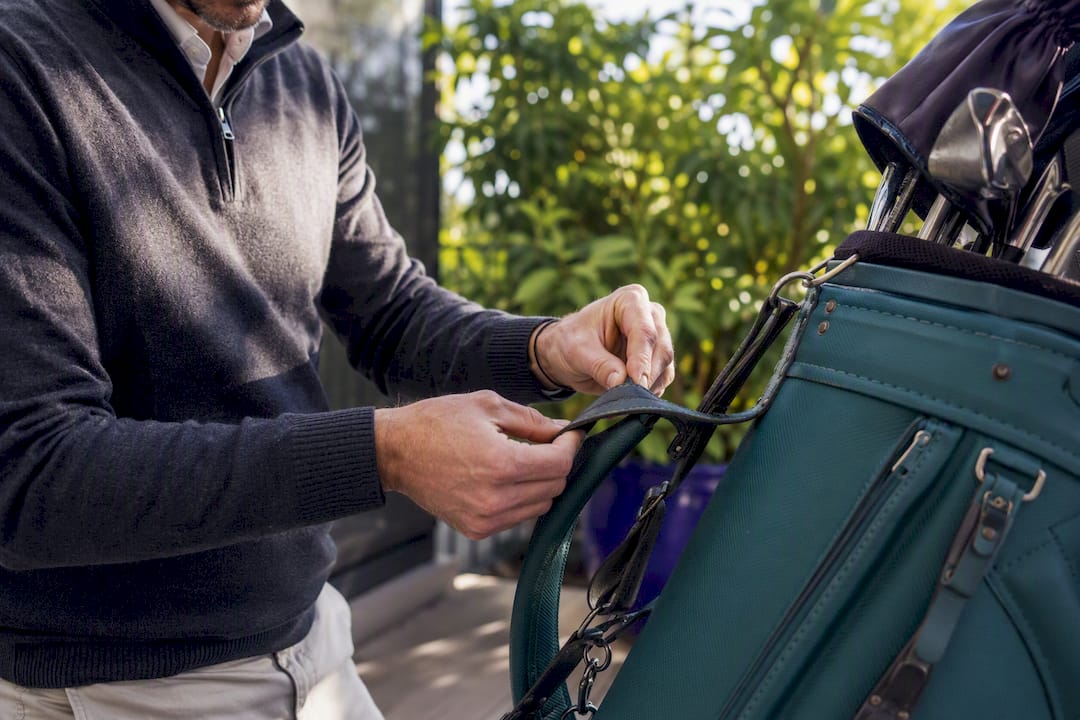
Tunnel too narrow. A strap that won’t feed through smoothly is often just too thick for the channel. Short term, try a thinner strap or remove any added sleeve. Long term, this is a buying-criteria issue: check tunnel width specs before purchasing, especially if you’ve already invested in heavy-duty replacement straps.
Abrasion and pocket creasing. Repeated friction from a strap wears fabric faster at contact points than most golfers expect, particularly on bags that route the strap over exterior pockets rather than through an internal tunnel. A cart strap sleeve, or a bag with reinforced tunnel edges, cuts that friction significantly over a season of regular use.
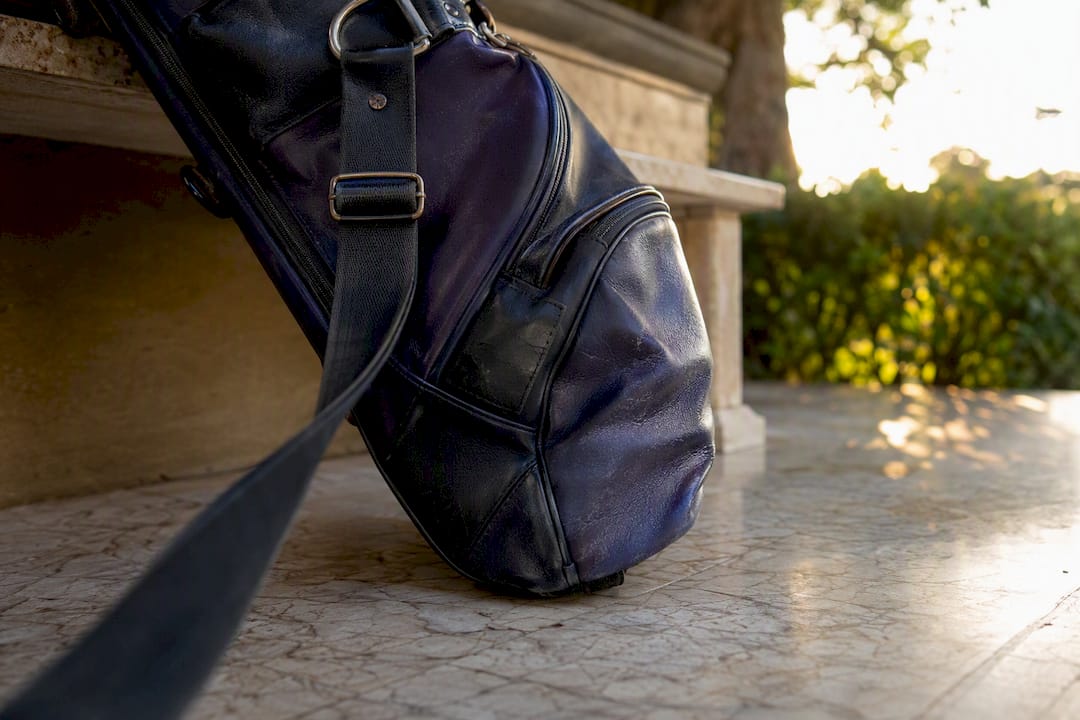
Fastener wear. Cam buckles and clips degrade with UV exposure and repeated cinching. Once a buckle feels gritty or fails to hold tension after a drive test, replace it rather than working around it. Community forums back this up consistently: golfers who’ve dealt with pass-through frustrations firsthand point to worn hardware and narrow tunnels as the two recurring complaints, far more than the concept of a pass through itself.
Run this quick checklist after every installation: short drive over uneven ground, a sidehill test if one’s available, a palm-press on the bag’s side, and a check that your main pockets still open freely. If a bag fails more than one of these consistently, the fix is usually equipment, not technique. For more on avoiding related strap damage around the shaft area, Jaguar Golf’s guide on tension and bag fixes covers ground worth reading before your next round.
Why Moreci Built the Lusso 14 With a Pass Through in Mind
Designing a stand bag that rides well on a cart without punishing the golfer who carries it four days a week meant treating the pass through as core architecture, not an add-on tunnel stitched in after the fact. The Moreci Lusso 14 Stand Bag routes the strap channel through the bag’s structural core, the same section that handles load when the bag is carried, so the tunnel doesn’t add bulk or throw off the balance on your shoulder.
The reinforcement decisions came from watching where straps actually wear bags out: the tunnel edges and the base anchor points. Both get extra stitching and abrasion-resistant material on the Lusso 14, the kind of build quality decision that matters more after a full season than it does on day one. The PU leather construction Moreci uses throughout its bag line holds up to that repeated strap friction better than the coated nylon most entry-level bags rely on, a difference worth understanding if you’re comparing how construction affects long-term durability across bag types.
Golfers who’ve switched to a bag built this way consistently mention two things: the bag stops rocking on cart paths, and they stop unbuckling straps to reach their rangefinder.
Where to Learn More About Cart Straps and Bag Setup
For deeper detail on strap selection and push-cart specific setup, Caddiewheel’s guide to securing a bag with cart straps covers tension and installation in more depth than most retailer pages. If you need replacement hardware, Suspenz publishes clear length and buckle specs for heavy-duty straps that work as a useful reference even outside their original kayak-cart use case. And for real-world opinions on whether pass throughs are worth prioritizing, the GolfWRX forum thread on stand bags with cart strap pass throughs is worth a scroll, warts and all.
Explore the Lusso 14 and Moreci’s Cart-Ready Bag Design
If you’re shopping for a bag that treats the cart strap pass through as a real structural feature rather than a stitched-on afterthought, the Moreci Lusso 14 Stand Bag is built around exactly that priority, reinforced tunnel, balanced base, pockets that stay open when you’re strapped in. Browse the full lineup at Moreci’s store to see how the bag pairs with the rest of the brand’s golf and apparel collection, including the Complesso Collection for anyone rounding out their course wardrobe alongside a new bag.
The Feature Golfers Underrate Until They Don’t Have It
Most golfers don’t think about their cart strap setup until it fails them, usually on a cart path corner or a downhill lie where a poorly secured bag decides to lean. That’s the real case for a pass through: it’s not a luxury detail, it’s a fix for a problem you don’t notice until it costs you a broken tee or a scratched pocket zipper.
What surprises me most researching this topic is how much the conversation still centers on whether a pass through is “necessary,” as if strapping a bag to a moving cart were optional. It isn’t. The strap is going on the bag one way or another. The only real question is whether it goes through a reinforced tunnel built for that job, or over the top pockets you actually need during the round. Framed that way, the pass through stops looking like a feature and starts looking like the baseline any cart-compatible bag should meet.
Where I’d push back on conventional buying advice is the fixation on tunnel width alone. Width matters, but base geometry gets ignored far more often, and a bag that rocks in the cradle will undo good strap tension no matter how wide the tunnel is. Buy for the base fit first, then confirm the tunnel handles your strap. Most golfers do it backward.
— Giuseppe
Sources
- Cart Strap Passthrough Stand Bag | DICK’S Sporting Goods
- Golf Push Cart Straps: A Complete Guide to Securing Your Bag
- Heavy Duty Cart Replacement STRAPS | Suspenz
- Adjustable Strap Material Handling Cart