


Most golf bags are not fully waterproof. They’re water-resistant, which means they’ll shrug off dew and a light drizzle but eventually wet out in a steady downpour. A genuinely waterproof bag is a different animal, built from coated or laminated fabric with sealed seams and waterproof zippers that keep water out even during a soaked, four-hour round.
The gap between the two comes down to five signals you can check before you buy:
- Fabric: TPU-laminated nylon, PU-coated polyester, or tarpaulin material rather than a plain treated canvas
- Seams: welded or taped, not just stitched
- Zippers: waterproof or thermo-sealed, not standard coil zippers with a flap
- Rain hood and cuff: a snug, sealed top opening rather than a loose drawstring
- Base construction: reinforced and raised off wet ground, not just a flat pad
According to buyer guides comparing the two categories, waterproof bags rely on coated or laminated fabrics, sealed seams, and waterproof zippers to block steady rain, while water-resistant bags depend on DWR sprays and tight weaves that eventually wet out. Your play style matters here too. A fair-weather walker who ducks inside at the first rumble of thunder has different needs than someone who plays through a coastal drizzle every weekend, and that difference should drive the purchase.
Key Takeaways
A golf bag is only as waterproof as its weakest seam, zipper, or cuff seal, not its outer fabric alone.
| Point | Details |
|---|---|
| Waterproof vs. water-resistant | Waterproof bags use coated fabric, welded seams, and waterproof zippers; water-resistant bags rely on DWR sprays that wet out over time. |
| Check seams and zippers first | Welded or taped seams and coated zipper pulls matter more than the outer fabric’s feel. |
| Match the bag to your play style | Frequent wet-weather or coastal golfers benefit most from full waterproofing; fair-weather players can use water-resistant plus a rain hood. |
| Maintain it to keep it working | Dry fully after rounds, avoid direct heat, and lubricate zippers to preserve waterproof performance. |
| Moreciandco’s Lusso 14 fits the checklist | Its PU leather build, sealed pockets, and snug rain hood address the leak paths this guide outlines. |
Table of Contents
- Are Golf Bags Waterproof or Just Water-Resistant?
- Stand Bags vs. Cart Bags: Which Needs Full Waterproofing?
- How to Verify a Golf Bag’s Waterproof Claims
- Weighing Fully Waterproof Bags Against Water-Resistant Options
- Keeping a Waterproof Bag Actually Waterproof
- How Moreciandco Builds Waterproofing Into Every Detail
- Who Actually Needs a Waterproof Golf Bag
- A Direct Path to a Bag Built for Wet Rounds
- A Note From Giuseppe on Wet Rounds and Bag Failures
- Sources
Are Golf Bags Waterproof or Just Water-Resistant?
The industry throws around “water-resistant,” “weather-resistant,” and “waterproof” almost interchangeably, but they describe genuinely different levels of protection. Water resistance means the fabric has been treated to bead water on the surface for a while. Waterproof means the fabric itself is a barrier, engineered so water physically cannot pass through under normal rain conditions.
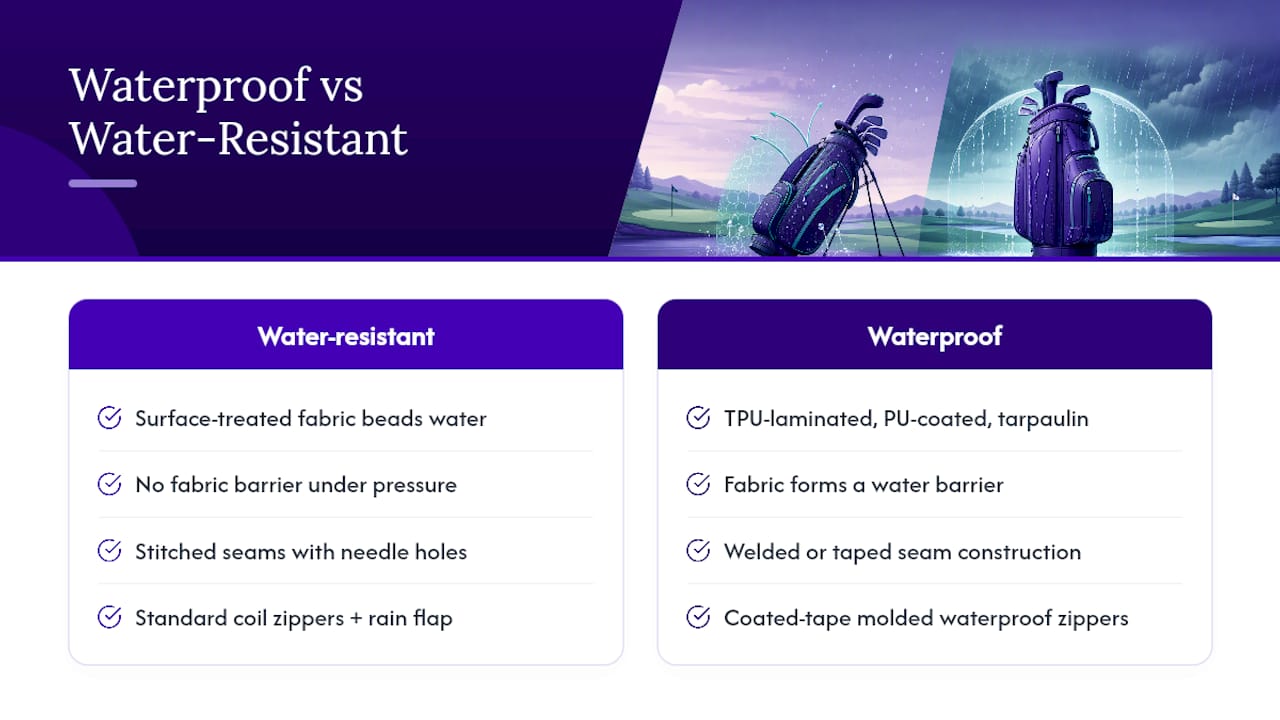
Fabric and coatings. The material doing the actual work is usually one of three things: TPU-laminated nylon, PU-coated polyester, or a heavier tarpaulin fabric. TPU (thermoplastic polyurethane) lamination bonds a waterproof film to the fabric backing, which is why it holds up better over years of use than a surface spray. PU coatings do a similar job at a lower cost point, though they can degrade faster with UV exposure and repeated flexing. You’ll sometimes see fabrics rated in millimeters of hydrostatic head, similar to how tents and rain jackets are rated. In plain terms, the higher that number, the more sustained water pressure the fabric can resist before it leaks. A comparison of waterproof and water-resistant jacket fabrics shows the same coating logic golf bag makers borrow: lamination outperforms surface treatments long-term because it doesn’t wash or wear off.
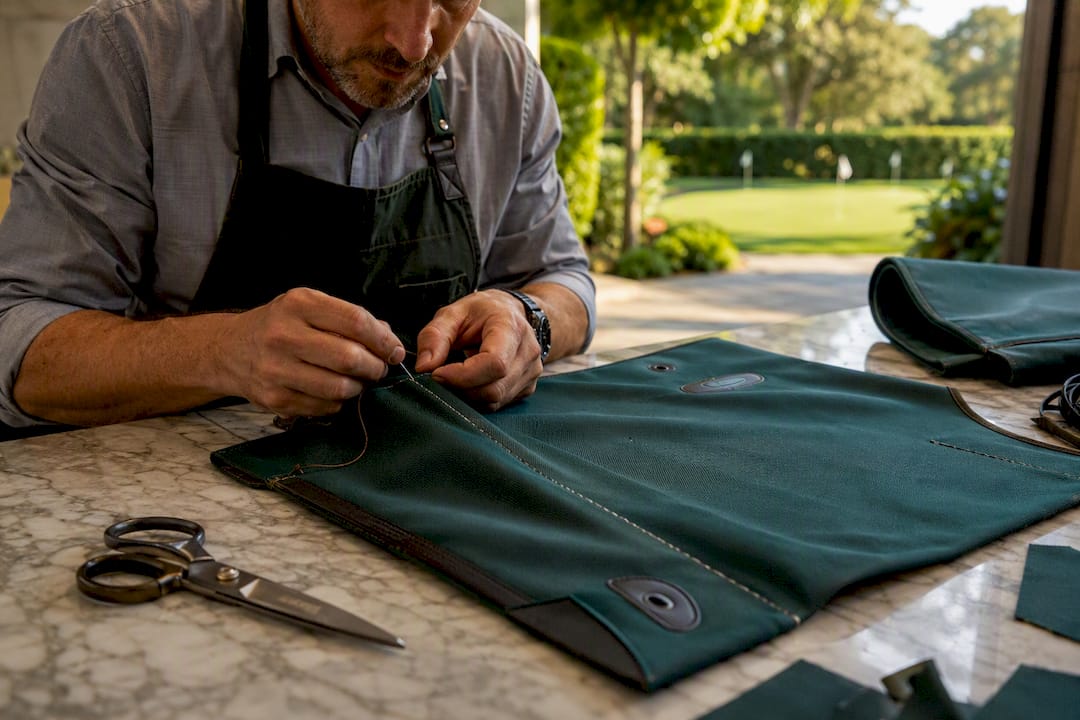
Seams. This is where a lot of “waterproof” claims quietly fall apart. A stitched seam, no matter how tight the fabric is, punches thousands of tiny needle holes through the material. Water finds those holes. Welded seams fuse the fabric together with heat, and taped seams cover the stitching with a waterproof strip on the inside. Reviewers checking construction quality flag seam-sealed pockets and waterproof zippers as repeated features in the top-rated waterproof cart bags, and it’s rarely one or the other. You need both.
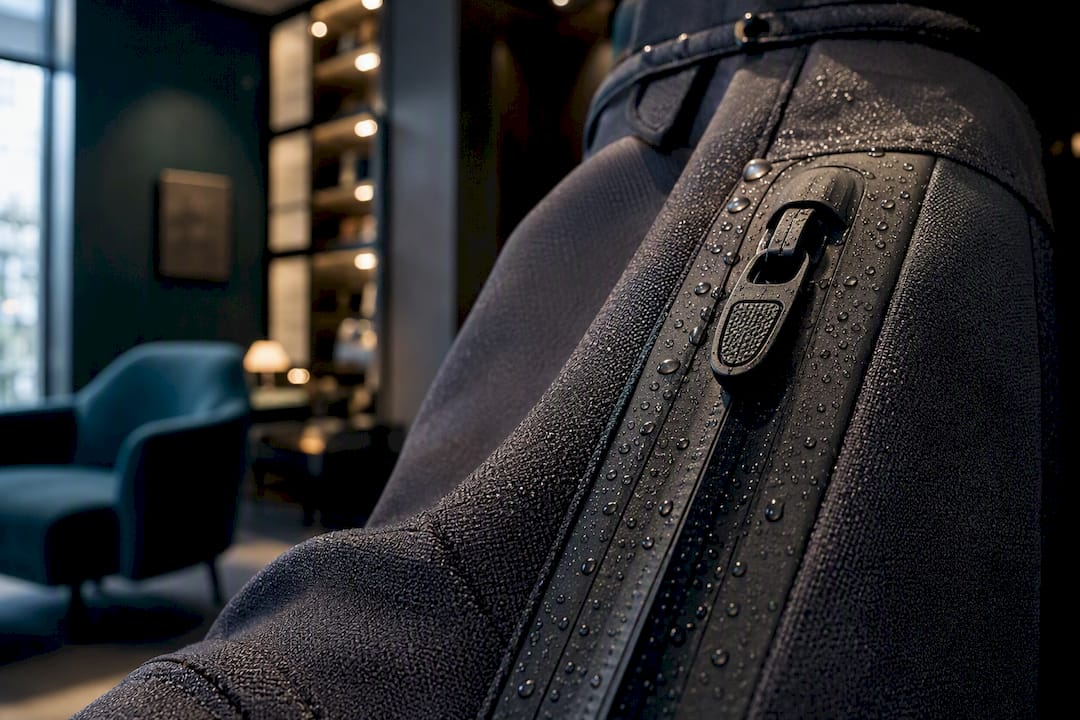
Zippers. A standard coil zipper with a rain flap over it is water-resistant at best. True waterproof zippers use a coated tape and a molded slider that seals the teeth shut, the same tech used on dry bags and wetsuits. Some manufacturers have gone further and eliminated stitching almost entirely. BIG MAX’s welded construction pairs a non-stitched build with fully waterproof zippers specifically to remove the classic leak paths.
Where bags actually leak. Even well-built bags fail in predictable spots: the top cuff where clubs are inserted, the strap pass-throughs where hardware punctures the fabric, the leg or stand mounts, and the base, which wicks moisture up from wet grass over a long round.
Pro Tip: Don’t judge a bag’s waterproofing by the outer fabric alone. Flip it over and check the base seam and strap attachment points first. Those two spots fail before the main body ever does.
Stand Bags vs. Cart Bags: Which Needs Full Waterproofing?
Not every golfer needs the same level of protection, and the bag style you carry changes the calculation.
- Stand bags sit lower to the ground and get more direct spray from wet grass, plus they’re the bag most likely to get set down in a puddle or soaked rough. Their lighter frames and dual-strap systems also mean more seams and pass-throughs, which is more opportunity for water to sneak in.
- Cart bags ride higher, strapped to a pull cart or riding cart, so they see less ground-level splash but face more sustained exposure if you’re playing through a full afternoon of rain with the bag sitting exposed on the cart.
- A lighter water-resistant stand bag is fine if you mostly play in dry climates, skip rounds when the forecast turns ugly, or only get caught in the occasional passing shower. Save the premium waterproof build for when you actually need it.
- A fully waterproof bag becomes the safer call if you play somewhere with regular morning dew, coastal humidity, or unpredictable weather windows, since you can’t always control when the rain starts.
- Travel and multi-day trips add another wrinkle. A bag that gets tossed around baggage handling and left on a wet cart path for a week of golf trip abuse benefits enormously from sealed seams and a reinforced base, regardless of climate.
How to Verify a Golf Bag’s Waterproof Claims
Marketing copy says “weatherproof.” Your job is to confirm it actually is. Buyer guides that dig into construction quality consistently recommend a short field-test routine before you trust any bag with your electronics and glove compartment of valuables.
- Read the spec sheet closely. Look for the words “welded” or “thermo-sealed” seams and explicit mention of “waterproof zippers.” Vague phrases like “StaDry treatment” or “weather-resistant coating” without those specifics usually mean surface treatment only, not a true barrier.
- Inspect the seams in person. Run your finger along the inside of a pocket. Stitched seams feel raised and porous. Welded or taped seams feel smooth and continuous.
- Check the zipper pulls. Waterproof zippers have a slightly rubbery, coated feel and a visible molded tab, distinct from a standard metal or plastic coil zipper.
- Test the rain hood and cuff. Pull the hood over the top opening and check whether it cinches down snugly around the cuff lip or leaves gaps at the corners.
- Run the tissue test at home. Place a dry tissue in each main pocket, spray the bag with a hose or watering can for two minutes concentrated on the seams and zippers, then open the pockets. A dry tissue means it passed. Any dampness means water found a path.
- Do a cuff press test. Push down on the closed rain hood as if you’d just shoved clubs in during a downpour, and check for water pooling or seeping at the seam line.
The GolfRepublic team’s construction analysis backs this same approach, noting that step-by-step spray and tissue checks remain the most reliable way to validate a waterproof claim before or after purchase.
Pro Tip: Ask the seller directly whether the seams are welded, taped, or simply stitched with a coated fabric. A confident, specific answer is a good sign. A vague “it’s treated to resist water” answer means you should test it yourself before trusting it in a storm.
Weighing Fully Waterproof Bags Against Water-Resistant Options
A fully waterproof bag earns its price in a few concrete ways. Your grips stay tacky instead of slick. Your phone, rangefinder, and scorecard stay dry without a separate dry bag. And if you travel with your clubs, the bag survives baggage handling and rainy tee times without flinching.
The trade-offs are real too:
- Cost. Waterproof construction with welded seams and coated fabric runs meaningfully higher than a standard bag.
- Weight and rigidity. Coated and laminated fabrics tend to be stiffer and slightly heavier than lightweight mesh or standard nylon.
- Styling limits. Fully sealed pocket systems sometimes mean fewer external pockets or simpler layouts, since every zipper and seam is a potential leak point.
- Repair difficulty. A welded seam that fails is harder to patch yourself than a torn stitch line, which usually means a manufacturer repair or replacement.
Equipment guides note that waterproofing alone doesn’t guarantee ideal storage either. Divider integrity and pocket layout still matter for protecting clubs, grips, and electronics, so a fully sealed bag with a poorly organized interior isn’t automatically the better buy. Frequent wet-weather players, coastal golfers, and anyone who travels often with their clubs get the most out of a fully waterproof build. Fair-weather players who mostly golf on dry, predictable days can reasonably choose water-resistant with a solid rain hood and a dry pouch as a backup.
Keeping a Waterproof Bag Actually Waterproof
Waterproof performance degrades over time if you skip basic upkeep. The good news is that maintenance takes minutes, not hours.
- Dry it out fully after wet rounds. Open every pocket, pull out any removable inserts or dividers, and let the bag air dry in a shaded, ventilated spot rather than direct sun or near a heater.
- Skip direct heat. High heat can warp coated fabrics and degrade the adhesive on taped seams over time.
- Clean with mild soap and water. Harsh detergents and solvents break down PU coatings and DWR treatments faster than normal wear does.
- Reapply DWR on water-resistant bags every season or two, since the surface treatment wears off with UV exposure and handling.
- Lubricate zippers periodically. A dry silicone lubricant on waterproof zipper tracks keeps them sliding smoothly and prevents the seal from cracking.
Care guides covering this exact routine point out that regular drying, mild cleaning, and zipper lubrication are what actually extend a bag’s waterproof lifespan, more than the initial fabric quality alone.
Pro Tip: If a seam starts showing the first signs of separation, a flexible seam sealer made for tents and rain gear can buy you another season. For a full seam failure on a warrantied bag, contact the manufacturer before attempting a DIY fix, since most warranties cover seam and zipper defects but not damage from an unauthorized repair attempt.
Check the warranty language before you buy, not after something fails. Some manufacturers cover seam separation and zipper failure for multiple years; others only guarantee the fabric itself.
How Moreciandco Builds Waterproofing Into Every Detail
Moreciandco starts from a simple premise: if you’re paying a premium price, every component should justify it, not just the logo. That philosophy shows up directly in how the Moreci Lusso 14 Stand Bag is built, using PU leather construction with sealed pocket design and a hood engineered to sit snugly against the cuff rather than gap at the corners, the exact failure point most bags struggle with.
Here’s the checklist Moreciandco applies internally, and the same one worth applying to any bag you’re evaluating:
- Confirm the seam type before trusting the fabric rating
- Check that zipper pulls feel coated, not just painted
- Test the rain hood fit under pressure, not just at rest
- Run the tissue test in the largest apparel pocket, since that’s where wet-weather gear failures cost you the most
A bag that looks waterproof on a store shelf and a bag that stays waterproof after forty rounds in real weather are two different products. The difference is almost always in the seams and the zipper, not the outer fabric everyone touches first.
Author credentials and customer testimonials for this section are pending final review.
Who Actually Needs a Waterproof Golf Bag
If you play through rain more than a handful of times a season, coastal fog counts, morning dew counts, this is not a luxury purchase. It’s the thing standing between your rangefinder and a dead battery.
Here’s how to think about it by player type:
- Frequent wet-weather players and coastal golfers: a fully waterproof bag with welded seams and sealed zippers pays for itself in protected electronics and dry grips within a season.
- Frequent travelers: waterproof construction survives baggage handling and unpredictable weather on trips better than a standard bag.
- Fair-weather or occasional players: a quality water-resistant bag paired with a strong rain hood and a dry valuables pouch is a sensible, lower-cost choice, an approach several buyer guides recommend for golfers who mostly play in predictable weather.
- Budget-conscious shoppers: prioritize the rain hood and cuff seal over full-body waterproofing if you have to choose, since that’s where most rain damage actually starts.
Before you buy any bag, run three checks: seams (welded or taped, not just stitched), zippers (coated and waterproof, not standard coil), and rain hood fit (snug at the cuff, no corner gaps). If a bag passes all three and you play in wet or coastal conditions regularly, a premium build like Moreciandco’s Lusso 14 is a direct, honest option rather than an upsell.
A Direct Path to a Bag Built for Wet Rounds
If you’ve read this far, you already know what separates a bag that survives a rainy back nine from one that soaks through by the twelfth hole. Moreciandco’s Lusso 14 Stand Bag is built against that exact checklist, PU leather construction, sealed pocket seams, and a hood designed to grip the cuff rather than flap loose in wind and rain.

This isn’t a bag aimed at everyone. It’s built for golfers who’d rather pay once for gear that holds up than replace a soaked, mildewed bag every couple of seasons. Care instructions ship with every order, and the same drying and cleaning routine covered above will keep the coating and seams performing for years.
Ready to see the construction details for yourself? Visit the Moreci Lusso 14 Stand Bag product page to check sizing and pocket layout, or browse the full Moreci store to see how the same quality-first approach carries through the rest of the lineup.
A Note From Giuseppe on Wet Rounds and Bag Failures
I’ve watched more than one golfer lose a rangefinder to a bag that claimed “weather-resistant” on the hangtag and meant almost nothing in practice. The worst failures never happen at the fabric. They happen at the cuff, where a loose hood lets water pool directly onto whatever’s sitting in the top pocket. If there’s one habit worth building, it’s checking that seal before the first wet round, not during it.
— Giuseppe