


Athletic shorts styles are distinguished primarily by inseam length, liner presence, and fabric features that directly affect performance and comfort. The wrong choice costs you mobility, focus, and sometimes skin. The right choice disappears on your body so you can focus on the work. This guide breaks down every major style category, from the 5-inch split-hem runner to the 9-inch casual hybrid, so you can match your shorts to your training with confidence. Whether you are chasing PRs or building a versatile active wardrobe, the details here will sharpen your decision.
1. Athletic shorts styles compared: why inseam length is the first decision
Inseam length is the single most consequential spec on any pair of athletic shorts. It controls your range of motion, your coverage, and how the shorts feel during compound movements. Get it wrong and you will feel it on every rep.
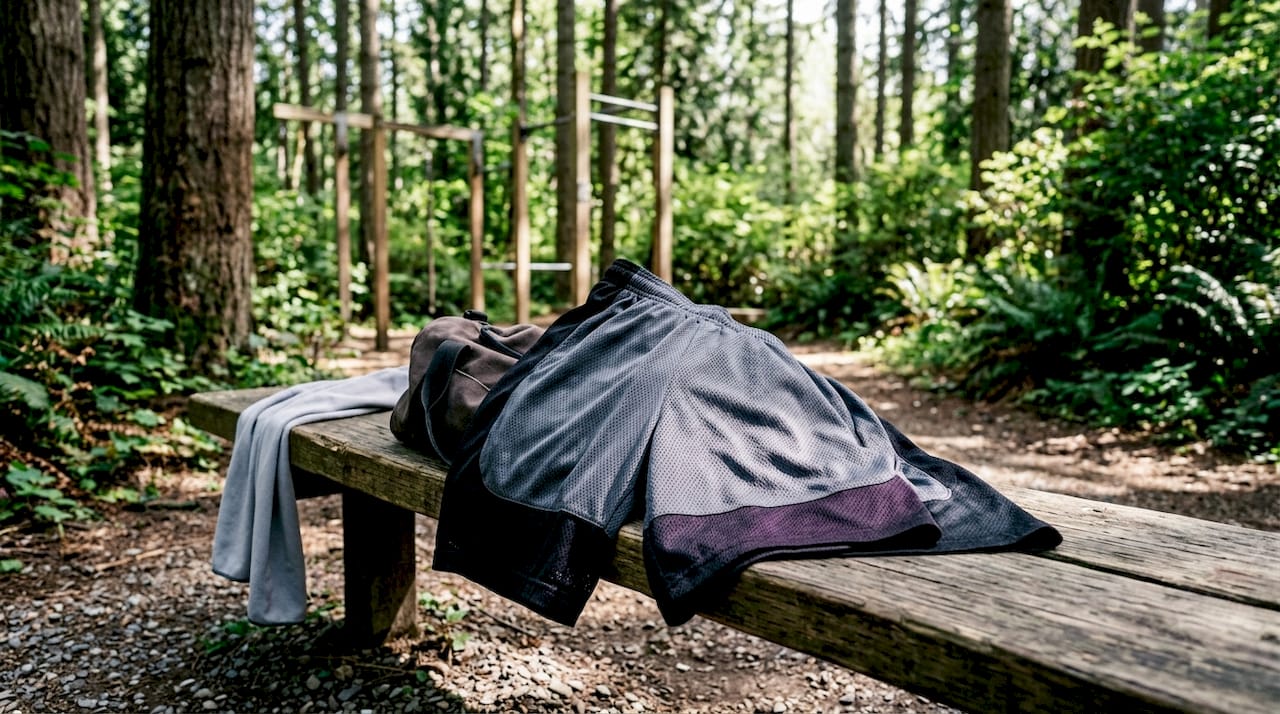
The three standard inseams are 5 inches, 7 inches, and 9 inches. Each serves a distinct purpose tied to movement mechanics and athlete body type.
5-inch inseam
- Best for running, sprinting, and deep squat work
- Minimal fabric drag improves performance in running and squatting
- Exposes more thigh, which some athletes prefer for heat management
- Less coverage can feel restrictive for taller athletes or those sensitive to exposure
7-inch inseam
- Industry standard for daily versatility, balancing mobility and coverage
- Works across gym sessions, casual wear, and moderate cardio
- The most forgiving fit for varied body types and heights
- Rarely a wrong choice for athletes who train across multiple disciplines
9-inch inseam
- Preferred by taller athletes for proportional aesthetics and thigh protection
- Offers the most coverage but can limit full leg extension in heavy lifts
- Works well for casual wear, outdoor training in cooler weather, and lower-impact workouts
Pro Tip: If you train across multiple activities and want one pair that handles everything, start with the 7-inch. Add a 5-inch pair specifically for run days or squat-heavy sessions.
Inseam length directly influences biomechanics. Shorter inseams improve performance in running and squatting by minimizing fabric drag, while longer inseams can hinder full leg extension in lifts. That is not a minor comfort issue. It is a mechanical limitation that compounds over a long training session.
2. Lined vs. unlined: how liner type changes everything
The liner inside your shorts does more work than most athletes realize. It determines your support level, your chafing risk, and whether you can layer underneath for cold-weather training.
Brief liners provide standard support and basic chafe protection. They are the most common liner type and work well for moderate-intensity workouts where you are not generating extreme friction between the thighs.
Compression liners are built into 2-in-1 shorts and represent a meaningful upgrade for high-output training. Compression liners reduce muscle fatigue and significantly cut thigh chafing during intense cardio or high-friction activities. The tighter fit also keeps everything in place during dynamic movements like box jumps or sprint intervals.
Unlined shorts are the choice for athletes who prefer to control their own layering. Unlined shorts allow layering of compression tights underneath, offering adaptable comfort across weather conditions and workout types. This matters most for outdoor athletes who train in varying temperatures or multi-sport athletes who need one pair of shorts to work across seasons.
Fitness professionals consistently point to liner selection as the most underrated decision in athletic shorts shopping. Choosing lined shorts for high-impact workouts and unlined for casual or layering purposes is the clearest framework for maintaining both comfort and support across different training demands.
Liner type based on training intensity is the expert recommendation: lined for high-impact, unlined for versatility. The mistake most athletes make is buying one type and expecting it to cover every scenario. Two pairs, one lined and one unlined, solves that problem completely.
3. Fabric and design features that separate good shorts from great ones
Fabric is where performance shorts earn their price. The exterior design catches your eye, but the internal construction determines how the shorts feel after 45 minutes of hard training.
Moisture-wicking fabrics and breathable mesh panels maintain comfort during aerobic workouts and reduce heat retention. Mesh panels placed at the sidecuts or along the waistband improve airflow without sacrificing structure. This matters most during sustained cardio where body temperature climbs steadily.
Waistband construction is the most overlooked spec. Lay-flat waistbands prevent pinching and curling during intense workouts. A waistband that rolls or digs into your hip creates a constant distraction. Wide, flat waistbands with internal drawcords give you a secure fit without pressure points.
Key design features worth evaluating:
- Sidecuts and split hems: Open the range of motion for running and high-knee movements
- Tapered vs. relaxed fit: Tapered fits look cleaner and reduce fabric bunching; relaxed fits prioritize airflow and casual comfort
- Pocket type and security: Zippered pockets support carrying essentials without distraction during exercise; open pockets work for gym use but fail on runs
- Fabric weight: Lighter fabrics suit cardio and warm weather; heavier fabrics add structure for lifting and cooler conditions
Pro Tip: Check the waistband before you check the price. A shorts with a poor waistband will annoy you on every session. A great waistband on a mid-priced pair beats a bad one on a premium pair every time.
Experienced athletes prioritize internal features like liner length and waistband construction over aesthetic elements. That is because these features affect comfort during high-rep and intense training sessions where small irritations become major distractions.
4. How to choose athletic shorts for specific activities
Matching your shorts to your activity is the practical application of everything above. The right pairing removes friction from your training. The wrong one adds it.
-
Running and sprint work: Choose a 5-inch inseam with a split hem and a compression liner. The shorter length reduces drag, the split hem opens your stride, and the liner handles the friction from leg turnover. Zippered pockets keep your phone secure on longer runs.
-
Weightlifting and strength training: A 5-inch or 7-inch inseam with a compression liner works best. The shorter length allows full depth on squats and lunges. Avoid 9-inch inseams for heavy lower-body days because the fabric can restrict leg extension at the bottom of a deadlift or squat.
-
High-intensity interval training (HIIT) and CrossFit: A 7-inch inseam with a compression liner covers the widest range of movements. You need enough coverage for floor work and enough freedom for box jumps and burpees.
-
Outdoor training in cold or variable weather: Unlined shorts paired with compression tights give you the most control. You can layer for outdoor training by adding or removing the tights as temperature changes. This setup outperforms a single lined pair in variable conditions.
-
Casual wear and streetwear: A 7-inch or 9-inch inseam in a relaxed or slightly tapered fit crosses over best. Pair with a clean athletic top and low-profile sneakers. For guidance on transitioning gym wear to street style, the key is fit and fabric quality. Shorts that look structured off the body read as intentional rather than lazy.
-
Swimming and water sports: Look for quick-dry fabrics and a liner designed for wet conditions. Standard compression liners hold water and become heavy. Board-style shorts with a mesh liner dry faster and move better in and out of the water.
-
Yoga and mobility work: Unlined shorts with a relaxed fit and a wide waistband work best. You need full hip and knee range of motion without any liner bunching during seated or floor-based positions.
5. Budget-friendly and versatile athletic shorts options
Price does not always predict performance. The most important features, inseam length, liner quality, and waistband construction, exist across price points. The difference between budget and premium is usually durability, fabric feel, and brand finish.
What budget shorts get right:
- Functional moisture-wicking fabrics that perform adequately during moderate workouts
- Standard brief liners that handle everyday gym use without issues
- Accessible inseam options across the 5-inch to 9-inch range
Where budget shorts fall short:
- Waistbands that roll or lose elasticity faster after repeated washing
- Liners that bunch or shift during high-intensity movements
- Lighter construction that wears out quicker with daily use
How to maximize value at any price:
- Prioritize waistband and liner quality over exterior design details
- Buy one premium pair for your primary training activity and one budget pair for casual or secondary use
- Look for shorts with at least one zippered pocket, which adds utility without adding cost
- Avoid shorts with decorative stitching or complex paneling at budget price points. Those details eat into the construction budget that should go toward fabric and liner quality.
Multi-use shorts that handle both gym and casual wear deliver the best cost-per-wear ratio. A 7-inch inseam in a mid-weight fabric with a brief liner and a clean design works for lifting, casual errands, and light cardio without looking out of place in any setting.
Key takeaways
The best athletic shorts choice combines the right inseam length, liner type, and fabric features matched to your primary training activity.
| Point | Details |
|---|---|
| Inseam length drives mobility | Choose 5-inch for running and squats, 7-inch for daily versatility, 9-inch for coverage and casual wear. |
| Liner type matches intensity | Use compression liners for high-impact training and unlined shorts for layering in variable conditions. |
| Waistband quality matters most | A lay-flat, wide waistband prevents distraction and discomfort during long or intense sessions. |
| Fabric features affect performance | Moisture-wicking materials and mesh panels reduce heat retention and maintain comfort during cardio. |
| Multi-use shorts save money | A 7-inch brief-lined short in mid-weight fabric covers gym, casual, and moderate cardio without compromise. |
What I have learned from testing shorts across every training style
The conventional wisdom says buy the shorts that look good and feel comfortable in the store. That advice fails the moment you hit rep 15 of a heavy squat set or mile 4 of a long run.
My honest experience: the 7-inch inseam is the right default for most athletes, but I keep a 5-inch pair specifically for squat days and tempo runs. The difference in hip mobility at the bottom of a squat is not subtle. You feel it immediately, and once you do, you cannot go back to training heavy legs in a longer inseam.
On liners, I spent years buying unlined shorts and layering compression tights underneath. That setup works well for outdoor training where temperature varies, and the layering pieces you choose underneath matter as much as the shorts themselves. But for pure gym work, a built-in compression liner is cleaner and more convenient. I stopped fighting that reality.
The feature I undervalued the longest was the waistband. A shorts with a rolling or digging waistband is a problem you think about every few minutes during a session. A great waistband disappears. That is the goal. Fabric quality matters for longevity, but waistband construction is what determines whether you reach for a pair again or leave it at the bottom of the drawer.
Style and function are not in conflict if you buy the right cut. A clean 7-inch short in a structured fabric looks intentional on the street and performs in the gym. You do not need two separate wardrobes. You need better shorts.
— Giuseppe
Quality athletic wear that performs as well as it looks
Moreciandco was built on a simple idea: you should get exactly what you pay for, and then some. The Moreci Store carries athletic-inspired apparel that takes fabric quality and construction seriously, from the waistband down to the liner.
The Moreciandco collection is built for athletes who want their gear to work hard and look sharp without choosing one over the other. If you are pairing your shorts with a top that matches the same standard, the Complesso Collection brings that same quality-first approach to every piece. Browse the full store and find apparel that earns its place in your rotation.
FAQ
What inseam length is best for most athletes?
The 7-inch inseam is the industry standard for daily versatility, balancing mobility and coverage across gym sessions, casual wear, and moderate cardio.
Do I need a liner in my athletic shorts?
Lined shorts work best for high-impact training because compression liners reduce chafing and muscle fatigue. Unlined shorts suit athletes who layer compression tights for weather adaptability.
What fabric should I look for in athletic shorts?
Moisture-wicking, breathable fabrics with mesh panels maintain comfort during aerobic workouts by reducing heat retention and managing sweat effectively.
Are 5-inch shorts only for runners?
No. The 5-inch inseam is ideal for any movement requiring deep hip flexion, including squats, lunges, and box jumps, not just running.
How do I style athletic shorts for casual wear?
Choose a 7-inch or 9-inch inseam in a tapered or relaxed fit, pair with a structured athletic top, and wear low-profile sneakers. Fabric quality and a clean silhouette are what make the look work off the gym floor.