


An athletic V-neck shirt is defined as a performance garment featuring a V-shaped neckline combined with moisture-wicking synthetic fabrics engineered to support physical activity. The design serves two purposes at once: it improves ventilation during training and creates a cleaner, more tailored silhouette than a standard crew neck. Modern performance V-necks often weigh as little as 3.49 oz and include odor-control technology for freshness across multiple wears. That combination of light weight and functional fabric is what separates a true athletic V-neck from a basic cotton tee. Moreciandco builds on this standard by pairing performance construction with materials that actually hold up over time.
What fabric and technology features define athletic V-neck shirts?
Fabric is the foundation of every athletic V-neck shirt. The wrong material turns a well-cut shirt into a sweaty, uncomfortable mess within the first ten minutes of a workout.
Moisture-wicking and quick-dry properties
Moisture-wicking fabric pulls sweat away from the skin and moves it to the outer surface of the shirt, where it evaporates faster. Polyester is the most common base fiber because it repels water rather than absorbing it, unlike cotton. Fabric blends typically combine polyester with spandex or elastane to add stretch and shape retention. That blend keeps the shirt from bagging out after repeated washes and hard sessions.
Stretch, weight, and odor control
Four-way stretch fabric moves with the body in every direction, which matters most during exercises like overhead pressing, rowing, or dynamic stretching. Lighter fabric weights, generally under 4 oz per square yard, reduce heat buildup without sacrificing durability. Odor-blocking treatments are applied at the fiber level in many performance shirts, meaning they survive washing better than surface-applied sprays. This is the detail most buyers overlook when comparing shirts at similar price points.
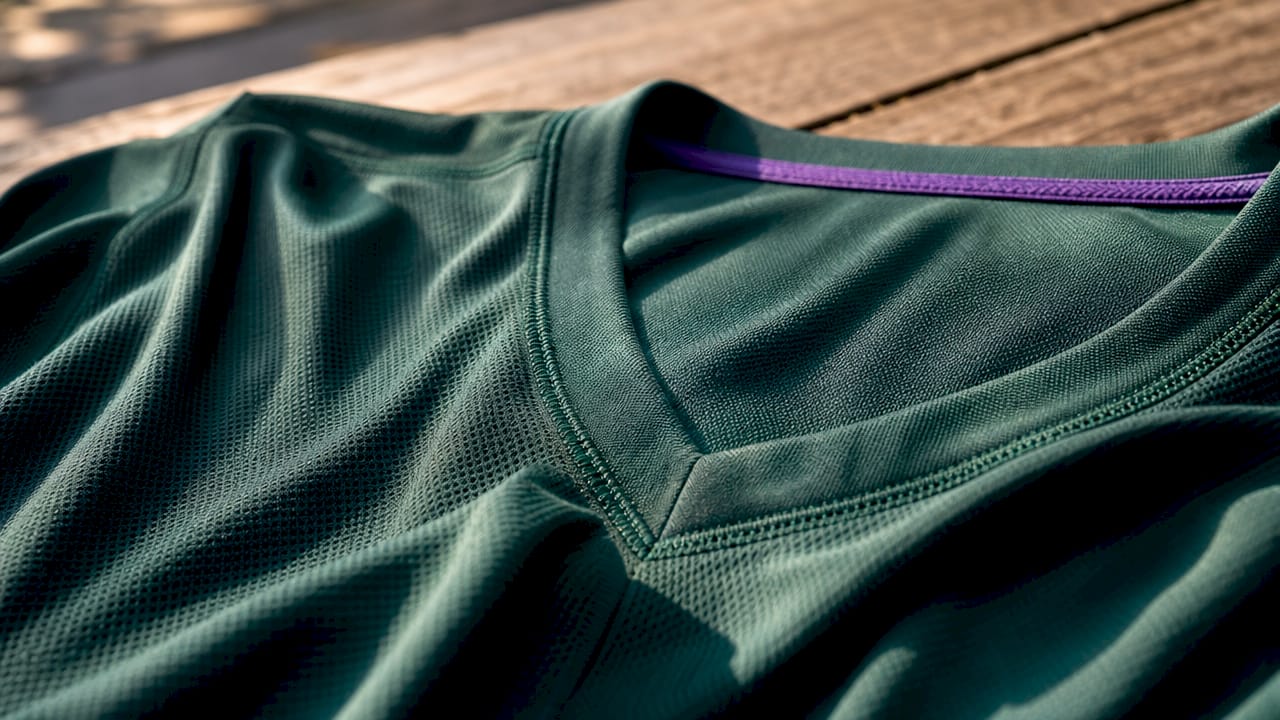
Pro Tip: Check the spandex or elastane percentage before buying. A blend with at least 5–10% elastane holds its shape through hundreds of washes, while pure polyester shirts tend to lose their fit faster.
Here are the core fabric features to look for in a quality athletic V-neck:
- Moisture-wicking polyester or polyester blend: Moves sweat off the skin quickly
- Spandex or elastane content (5–10%): Provides four-way stretch and shape retention
- Lightweight construction (under 4 oz): Reduces heat buildup during intense training
- Odor-control treatment: Keeps the shirt fresh through multiple wears between washes
- Quick-dry finish: Speeds evaporation so the shirt does not stay wet against the skin
Understanding collar style performance differences helps you match fabric technology to the right neckline for your specific training needs.
How does the V-neck cut impact fit, comfort, and style?
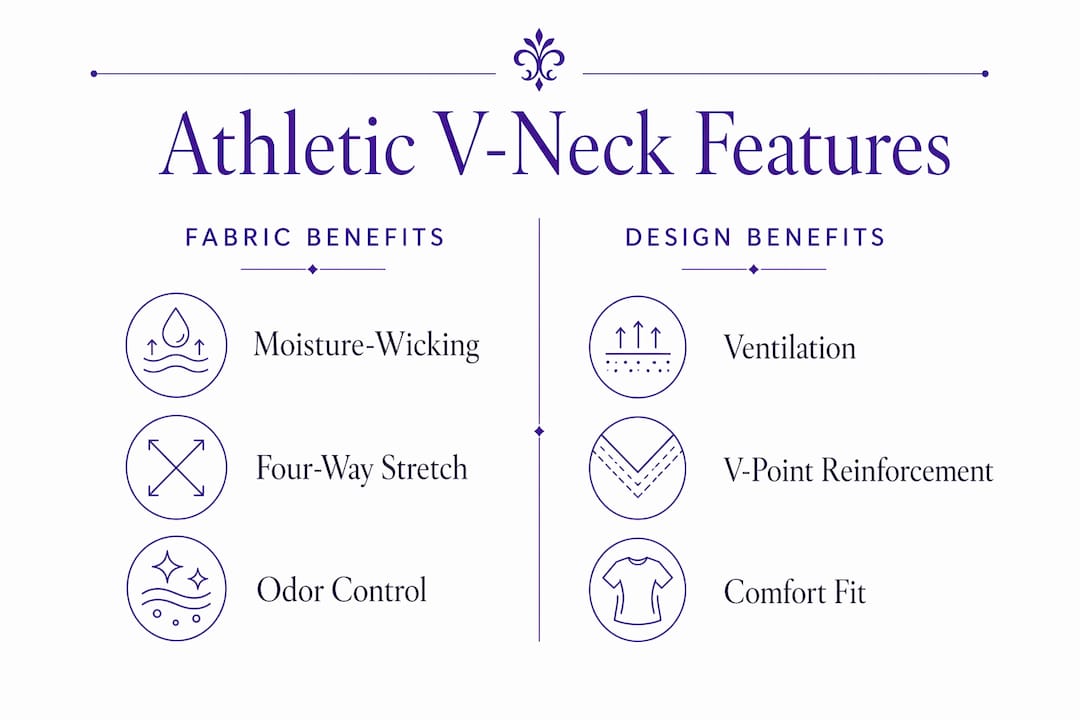
The V-neck neckline is not just a style choice. Its depth, shape, and construction directly affect how the shirt performs and how it looks on an athletic body.
Neckline depth and shape variations
Shallow-to-moderate V-neck depths provide the most versatility, balancing fashion and functionality across gym and casual settings. A depth of approximately 3 inches from the base of the neck is the industry standard for athletic shirts. That measurement keeps the neckline open enough for ventilation without exposing too much chest, which can look out of place outside the gym. Deep V-necks, while visually dramatic, tend to reduce structural stability and limit layering options.
Reinforcement at the V-point
The V-point is the highest-stress zone on the entire shirt. Manufacturers stabilize this point using internal facings or reinforced stitching to prevent neckline sag and unraveling under stress. Without this reinforcement, the neckline stretches out after a few hard training sessions and never recovers. Poor fabric recovery leads to a sagging neckline that detracts from both performance and appearance. This is a quality indicator you can check by gently pulling the V-point before purchase.
V-neck versus crew neck: a direct comparison
| Feature | V-neck athletic shirt | Crew neck athletic shirt |
|---|---|---|
| Neckline ventilation | Higher airflow at chest and neck | More enclosed, less airflow |
| Visual silhouette | Elongates neck and torso | Rounder, more casual look |
| Layering under jackets | Cleaner, no collar bunching | Can bunch under zip-ups |
| Muscle presentation | Frames shoulders and chest | Covers more of the upper chest |
| Versatility off the gym floor | Strong transition to casual wear | More limited style range |
Pro Tip: When trying on a V-neck athletic shirt, raise both arms overhead and check that the neckline does not gap or pull forward. If it does, the V-point reinforcement is insufficient for training use.
The V-neck design allows greater shoulder movement and ventilation, making it a favored style in performance wear. That extra range of motion matters most in upper-body training where a tight crew neck can restrict the neck and trap heat.
What are the benefits of athletic V-neck shirts versus other styles?
Athletic V-neck shirts deliver advantages that go beyond aesthetics. The design choices built into a quality V-neck solve real problems that athletes face during and after training.
-
Better ventilation during high-intensity training. The open neckline creates a natural airflow channel at the chest. This reduces heat buildup faster than a closed crew neck, which is especially noticeable during cardio or circuit training.
-
Visual elongation of the torso. The V-neck silhouette elongates the neck and torso and complements athletic builds by balancing broad shoulders and showcasing muscle tone. This is why fitness brands select V-necks as hero products in their lines.
-
Versatility from gym to street. Over 75% of athletic V-neck shirt wearers appreciate their versatility, wearing them from gym workouts to casual settings due to a tailored look compared to crew necks. That dual-use value makes the price per wear significantly lower than single-purpose gym shirts.
-
Cleaner layering under outerwear. A moderate V-neck sits flat under a zip-up hoodie, bomber jacket, or even a blazer without creating collar bulk. A V-neck with moderate depth works better for layering under sweaters or blazers without collar bunching. Crew necks often bunch visibly at the collar, which limits their off-gym use.
-
Flattering fit for athletic builds. Proper V-neck fit is snug but not tight, highlighting musculature without restricting movement. Excess fabric interferes with motion, while an overly tight shirt causes discomfort and restricts circulation.
-
Retail accessibility across price points. Retail prices range from $20 to $50 depending on features like four-way stretch and sustainability certifications. That range means you can find a quality athletic V-neck without spending on premium performance gear if your training needs are moderate.
One consideration worth noting: very deep V-necks are not ideal for high-impact sports like basketball or contact training, where the neckline can shift and expose more than intended. A shallow to moderate depth solves this without sacrificing the style benefits.
How do you style and wear athletic V-neck shirts in and out of workouts?
The athletic V-neck earns its place in a wardrobe by working across more situations than most gym shirts. Knowing how to wear it well in each context makes the difference between looking put-together and looking like you forgot to change.
At the gym
- Pair with fitted training shorts or compression pants. A tailored V-neck over loose shorts creates a balanced silhouette. Avoid pairing a fitted V-neck with baggy sweatpants if you want a clean gym look.
- Choose darker colors for intense sessions. Sweat shows less on navy, charcoal, or black fabrics. Light gray is the worst offender for visible sweat patches.
- Size for shoulder fit first. The shoulder seam should sit at the edge of your shoulder, not drooping onto the arm. Everything else can be adjusted by fabric stretch.
Transitioning to casual wear
Learning how to transition gym wear to street style starts with the right base layer. An athletic V-neck in a solid neutral color works as a standalone shirt with chinos or dark jeans. The tailored cut reads as intentional rather than athletic when paired with non-gym bottoms.
- Layer under an open button-down shirt. A fitted V-neck under an unbuttoned Oxford or linen shirt is a clean, casual look that works for errands, coffee, or low-key social settings.
- Add a lightweight jacket for cooler weather. A bomber or track jacket over a V-neck keeps the athletic aesthetic while adding warmth. Check out training outfit layering options for specific combinations that work across seasons.
- Stick to fitted cuts for off-gym wear. Oversized athletic shirts read as loungewear outside the gym. A shirt that fits the shoulders and chest correctly looks intentional in any setting.
Pro Tip: Invest in two or three V-necks in neutral colors first: white, black, and navy. These layer under anything and work in every setting. Add colors and patterns once you know the fit that works for your body.
Color choice also affects how the V-neck frames the upper body. Darker shades create a slimming effect, while lighter colors draw attention to the chest and shoulders. For athletes who want to highlight muscle definition, a fitted light-colored V-neck does that work without any extra effort.
Key Takeaways
An athletic V-neck shirt is the most versatile performance garment in a training wardrobe because it combines functional fabric technology with a neckline design that works equally well during workouts and in everyday settings.
| Point | Details |
|---|---|
| Fabric defines performance | Look for polyester-spandex blends with odor control and four-way stretch for training use. |
| V-point reinforcement matters | Internal facings or reinforced stitching at the V-point prevent neckline sag under stress. |
| Moderate depth wins | A neckline depth of approximately 3 inches balances ventilation, style, and layering ability. |
| Fit should be snug, not tight | The shirt should highlight muscle tone without restricting movement or causing discomfort. |
| Versatility is the core value | Athletic V-necks transition from gym to casual wear better than crew necks or tank tops. |
What I’ve learned from years of wearing athletic V-necks
Most people buy athletic V-necks based on price or brand recognition and then wonder why the neckline looks stretched out after three months. The real issue is almost always the V-point construction, not the fabric. I’ve worn shirts from every price tier, and the ones that hold their shape longest are the ones with visible reinforcement at the V-point, either a double-stitched binding or an internal facing you can feel when you pinch the fabric there.
The other mistake I see constantly is buying the wrong depth. Deep V-necks look striking on a hanger but become a liability in the gym. They shift during overhead movements, they limit your layering options, and they wear out faster because the neckline geometry puts more stress on a longer binding. A moderate depth, around 3 inches, solves all of those problems without giving up the visual benefits.
One thing the fitness industry rarely talks about: V-necks actually suit a wider range of body types than crew necks. The elongating effect of the V-line benefits both lean and broader builds. For someone with a wider torso, the V draws the eye inward and downward, creating proportion. For a leaner build, it adds visual structure to the chest area. That adaptability is why athletic V-necks have stayed relevant across decades of shifting fitness fashion trends.
My practical advice is to treat the athletic shirt fit guide as your starting point before buying anything. Get the fit right first, then focus on fabric and neckline depth. In that order, you will not make a bad purchase.
— Giuseppe
Moreciandco’s athletic and casual wear collection
Moreciandco was built on a simple idea: you should get exactly what you pay for, every time. That means shirts with real construction quality, fabrics that perform, and fits that work for athletic builds without looking like gym-only gear.

The Complesso Tee is a strong example of what that standard looks like in practice. It uses premium bamboo-cotton fabric made in Portugal, combining natural softness with the structure that athletic wear demands. For athletes who want performance without sacrificing quality, the full Moreciandco collection covers everything from training essentials to pieces that move with you from the gym to the street. Browse the range and find the fit that matches how you actually live.
FAQ
What is an athletic V-neck shirt?
An athletic V-neck shirt is a performance garment with a V-shaped neckline and moisture-wicking synthetic fabric designed for physical activity. It combines ventilation, stretch, and odor control to support training while offering a tailored look for casual wear.
Are V-neck shirts good for sports and training?
V-neck shirts work well for most training activities because the open neckline improves airflow and the synthetic fabric wicks sweat efficiently. They are best suited for gym training, running, and casual sport rather than high-contact activities where the neckline can shift.
What is the difference between a V-neck and a crew neck athletic shirt?
A V-neck provides more ventilation, elongates the torso visually, and layers more cleanly under outerwear than a crew neck. A crew neck offers a more enclosed fit that some athletes prefer for cold-weather training or contact sports.
How should an athletic V-neck shirt fit?
The fit should be snug but not tight, with the shoulder seam sitting at the edge of the shoulder. Textile experts confirm that athletic V-necks should neither be too tight nor baggy to optimize both aesthetics and athletic performance.
What should you wear with an athletic V-neck shirt?
For the gym, pair a fitted V-neck with training shorts or compression pants in a complementary color. For casual wear, layer it under an open button-down shirt or a lightweight jacket with chinos or dark jeans for a clean, intentional look.