


Amazon.it reached 35.7 million people in Italy by early 2023, covering over half the country’s population. That scale tells you everything about why sellers and shoppers alike are looking elsewhere. The best alternatives to Amazon.it in the US market right now include Etsy, Walmart Marketplace, eBay, Thrive Market, EarthHero, Bookshop.org, Back Market, and dozens of niche platforms built around ethics, specialization, and seller flexibility that Amazon simply cannot replicate.
Here is a quick-scan overview of the strongest options by category:
- Handmade and vintage: Etsy, Zibbet, Bonanza
- Ethical and sustainable grocery: Thrive Market, Grove Collaborative, Azure Standard, Misfit Market
- Eco-friendly goods: EarthHero, Package Free, Plastic Freedom, Made Trade
- Books: Bookshop.org, Better World Books, Biblio
- Refurbished tech: Back Market, iFixit, Newegg
- Fashion and apparel: Nordstrom, Revolve, lululemon, Rent the Runway, Girlfriend Collective, Able, Kotn, TenTree
- Ethical beauty: Credo Beauty, BLK + GRN, Youth to the People, Content Beauty & Wellbeing
- Gifting and specialty food: Uncommon Goods, 1-800 Flowers, Harry & David, World Market
- Mass-market generalist: Walmart Marketplace, Target Plus, Google Shopping, Temu
- Local and community: Facebook Marketplace, The Buy Nothing Project, Freegle
- Wholesale and B2B: Faire
- Music gear: Reverb
- Outdoor and sporting: REI, Huckberry
- Pet supplies: Chewy
- Food delivery and subscription: Wildgrain, Trade Coffee, Public Goods, Instacart, Doordash DashPass
Table of Contents
- Why shoppers and sellers are moving beyond Amazon.it
- Detailed profiles of the leading alternative marketplaces
- How to choose the right alternative marketplace for your needs
- Choosing quality and ethical marketplaces beyond Amazon
- Key Takeaways
- Moreciandco offers a different kind of shopping experience
Why shoppers and sellers are moving beyond Amazon.it
Amazon dominates generalist retail, but that dominance comes with real costs. For sellers, fee structures and competition levels vary dramatically across platforms, and Amazon’s marketplace often means competing directly against Amazon’s own private-label products. Margins shrink fast in that environment.
For shoppers, the issue is different. Amazon optimizes for speed and price, not for curation, ethics, or community. A shopper looking for a certified organic mattress, a book that supports an independent store, or a refurbished laptop with a warranty is not well served by a search results page full of generic listings.
Several concrete reasons to look at alternatives:
- Lower seller fees: Platforms like Etsy, Bonanza, and Zibbet charge significantly less than Amazon’s referral fees in most categories.
- Niche audiences: Specialized platforms attract buyers who already want what you sell. A seller listing handmade ceramics on Etsy reaches a buyer who searched specifically for handmade ceramics, not a generic shopper who might click past.
- Ethical sourcing signals: Thrive Market, EarthHero, and The Buy Nothing Project attract buyers who filter by sustainability, which Amazon’s search cannot replicate.
- Brand building: Selling on Amazon often means your brand disappears behind Amazon’s interface. Platforms like Faire, Zibbet, and Bonanza give sellers more control over presentation.
- Multichannel risk reduction: Italian sellers have increasingly adopted multichannel strategies to reduce dependency on any single platform. US sellers face the same logic.
The Italian ecommerce market offers a useful parallel. Sector-specific platforms like Booking.com for tourism and TicketOne for leisure events consistently rank among Italy’s top ecommerce destinations, precisely because they serve a defined buyer intent that Amazon cannot match. The same principle applies in the US.
Detailed profiles of the leading alternative marketplaces
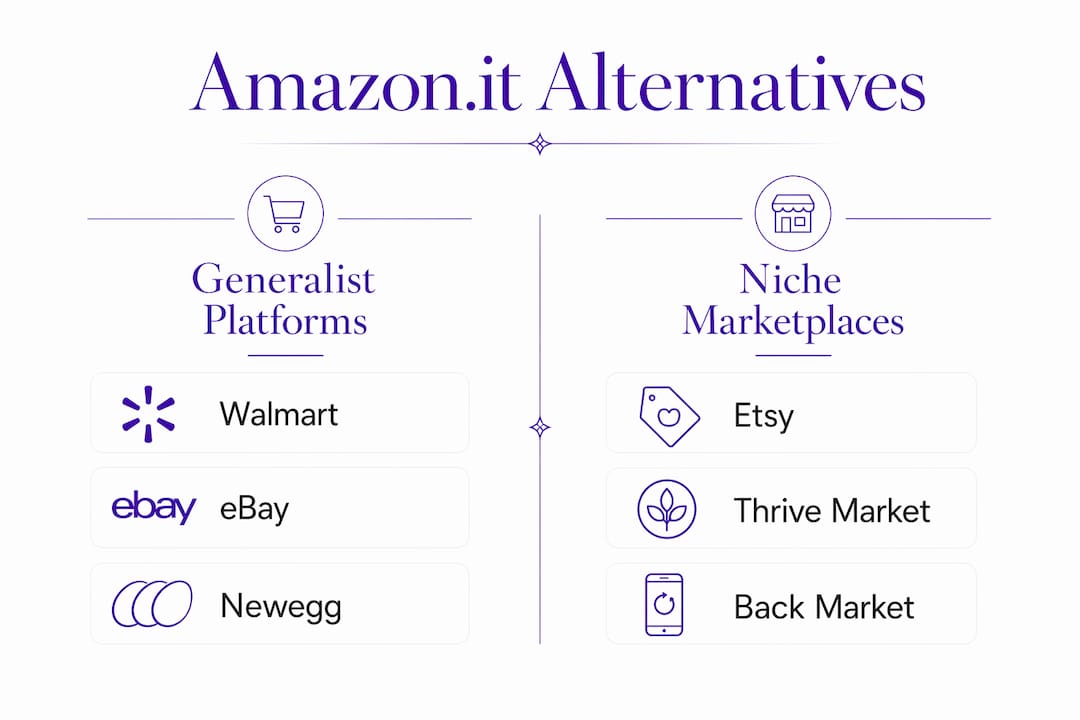
The platforms below cover the full range of what shoppers and sellers actually need. Treatment varies by how much genuine substance each platform offers.
Etsy is the clearest like-for-like alternative for handmade, vintage, and unique goods. Its seller base skews toward independent creators, and its buyer base actively searches for things that cannot be found on Amazon. Listing fees are low, though transaction fees and payment processing add up. Etsy’s search algorithm rewards shops with strong reviews and complete listings, so new sellers need to invest in photography and copy from day one.

Walmart Marketplace is the closest generalist competitor to Amazon in the US. Walmart’s physical store footprint gives it a fulfillment advantage that few rivals can match, and its buyer demographics skew toward value-conscious shoppers across a broad age range. Sellers need approval to list, which keeps competition slightly lower than Amazon’s open marketplace.
eBay remains the strongest platform for refurbished goods, collectibles, and long-tail inventory. Its auction format still works for rare items, and its fixed-price listings compete well on price. eBay’s seller tools, including promoted listings and markdown manager, give experienced sellers real control over demand generation. For used electronics especially, eBay’s buyer protection program is well established.
Facebook Shops and Facebook Marketplace serve different needs. Facebook Shops connects directly to a brand’s social presence, making it useful for sellers who already have an engaged following. Facebook Marketplace is peer-to-peer, closer to Craigslist than to Amazon, and works best for local transactions. For social shopping alternatives, this analysis of Facebook alternatives covers the broader landscape.
Thrive Market operates on a membership model and focuses on organic, sustainable, and ethically sourced groceries and wellness products. Members pay an annual fee and get access to prices that are often lower than natural grocery stores. Its buyer base is health-conscious and willing to pay for quality, which makes it a strong channel for brands in that space.
Uncommon Goods curates handcrafted and socially conscious products, with a particular strength in gifting. Every product on the platform is reviewed for social impact and creativity before listing. It is a smaller audience than Etsy, but a more intentional one.
EarthHero applies strict sustainability standards to every product it carries, including materials, manufacturing, and packaging. For eco-conscious brands, it offers a level of credibility that a generic marketplace listing cannot provide.
Bookshop.org routes a portion of every sale to independent bookstores, making it the ethical default for book buyers who want to support local economies. Better World Books and Biblio serve similar audiences, with Better World Books emphasizing used books and literacy funding, and Biblio specializing in rare and collectible editions.
The Buy Nothing Project and Freegle operate outside traditional commerce entirely. Both are community gift economies where goods are given freely within local groups. For shoppers, they are a zero-cost alternative for secondhand items. For sellers, they are not a revenue channel but a community-building tool.
Back Market is the standout platform for certified refurbished electronics. Every device is graded and tested before listing, and Back Market backs purchases with its own warranty. For buyers who want a refurbished iPhone or laptop without the risk of an eBay private seller, Back Market is the cleaner option. iFixit complements this by selling repair parts and tools, and its free repair guides make it a resource as much as a store.
Faire serves wholesale buyers and independent retailers rather than consumers. Brands selling to boutiques and specialty stores use Faire to reach retail buyers who are actively looking for new inventory. It is a B2B channel, not a consumer marketplace.
Newegg specializes in electronics and computer components, with a buyer base that skews toward tech enthusiasts and builders. Best Buy, B&H, and Micro Center serve similar audiences, with B&H particularly strong for professional photography and video equipment, and Micro Center offering in-store pickup for PC builders.
Reverb is the dedicated marketplace for musical instruments and gear, new and used. Its community of musicians and its specialized search filters make it far more useful for gear transactions than a general marketplace.
REI and Huckberry both serve outdoor and adventure-oriented buyers, but with different positioning. REI operates as a co-op, meaning members receive annual dividends on purchases. Huckberry curates a tighter selection of outdoor and lifestyle gear with editorial content that builds genuine brand affinity.
Nordstrom, Revolve, and Macy’s cover premium and mid-range fashion with strong return policies and established buyer trust. lululemon and Girlfriend Collective serve the activewear segment, with Girlfriend Collective emphasizing recycled materials. Rent the Runway offers clothing rental rather than purchase, which suits buyers who want variety without accumulation.
Ethical apparel brands with transparent supply chains include Able, which publishes its wages publicly; Kotn, which sources Egyptian cotton directly from farming communities; and TenTree, which plants ten trees per item sold.
Credo Beauty, BLK + GRN, and Youth to the People serve the clean beauty segment. BLK + GRN specifically curates products from Black-owned natural brands. Content Beauty & Wellbeing takes a similar approach with a focus on non-toxic formulations.
Chewy dominates pet supplies online, with a subscription auto-ship model and a customer service reputation that regularly outperforms Amazon’s in that category. Wildgrain and Trade Coffee serve subscription shoppers in artisan bread and specialty coffee respectively. Azure Standard and Misfit Market serve bulk and imperfect-produce buyers who want to reduce food waste.
Instacart and Doordash DashPass are delivery platforms rather than marketplaces, but they serve the same “I need this without going to a store” intent for groceries and restaurant food. Temu sits at the opposite end of the price spectrum from most ethical platforms, offering ultra-low prices on a wide range of goods manufactured primarily in China.
Google Shopping is not a marketplace but a price comparison and discovery layer that sits above multiple retailers. Idealo plays a similar role in the Italian market, aggregating over 230 million offers from 50,000 shops with price alerts and historical trends. For US shoppers, Google Shopping serves the same function.
Official Black Wall Street is a directory and marketplace supporting Black-owned businesses across categories. Avocado Mattress and Made Trade serve buyers looking for certified organic home goods. The Little Market is a fair-trade marketplace founded to support artisan communities globally. Public Goods offers a membership model similar to Thrive Market but focused on everyday household essentials with minimal packaging.
Hive and Zibbet both serve independent sellers looking for lower-fee alternatives to Etsy and Amazon. Bonanza is particularly seller-friendly, with fees that undercut most major platforms and tools for importing existing Amazon or eBay listings.
1-800 Flowers, Harry & David, and Blue Nile serve specific gifting verticals: fresh flowers and gift baskets, gourmet food gifts, and fine jewelry respectively. These are not generalist alternatives but strong choices when the purchase intent is specific.
Pro Tip: When evaluating any marketplace as a seller, calculate your total cost of sale including listing fees, transaction fees, payment processing, and shipping subsidies before comparing platforms. A platform with a lower headline fee can still cost more per sale than Amazon once all charges are included.
How to choose the right alternative marketplace for your needs
Picking the right platform comes down to matching three things: your product, your buyer, and your margin requirements.
Start with product fit. A handmade leather wallet belongs on Etsy or Bonanza, not Walmart Marketplace. A refurbished MacBook belongs on Back Market or eBay, not Uncommon Goods. Platforms that specialize in your category will always outperform generalist listings for conversion, because the buyer arrives with intent already formed.
Next, consider your buyer’s values. Ethical and sustainable marketplaces attract buyers who filter by those criteria. If your product has a genuine sustainability story, platforms like EarthHero, Made Trade, or Thrive Market will convert that story into sales in a way Amazon cannot. For a deeper look at how niche marketplaces compare to eBay’s model, this eBay alternatives analysis covers the structural differences well.
A few practical tips for sellers:
- Test before committing: List on two or three platforms simultaneously for 60 days before deciding where to concentrate. Traffic and conversion data will tell you more than any fee comparison.
- Watch buyer protection policies: Platforms with strong buyer protection tend to attract more confident buyers, which means fewer abandoned carts. Etsy, eBay, and Back Market all have well-documented buyer protection programs.
- Check shipping requirements: Some platforms, including Walmart Marketplace and Target Plus, have strict shipping speed requirements. Missing them can result in listing suppression.
- Use price comparison tools: For shoppers, Google Shopping and Idealo (for Italy-based purchases) let you verify you are getting the best available price before committing to any single platform.
- Build your own channel alongside marketplace listings: Marketplaces own the customer relationship. Your own website, even a simple one, gives you direct access to repeat buyers.
Pro Tip: Sellers who maintain a presence on at least two complementary platforms, one generalist and one niche, tend to see more stable revenue than those who rely on a single channel. The niche platform builds brand equity; the generalist platform drives volume.
Choosing quality and ethical marketplaces beyond Amazon
The growth of ethical shopping alternatives reflects a real shift in buyer expectations, not a trend. Shoppers increasingly want to know where a product was made, who made it, and what the environmental cost was. Platforms that answer those questions clearly, like EarthHero with its sourcing transparency or Able with its published wage data, earn a level of trust that a generic Amazon listing cannot.
“Ecommerce sellers who diversify across specialized and ethical platforms gain access to buyer segments that actively seek out quality and responsibility. These buyers are less price-sensitive and more loyal, making them more valuable over time than the average marketplace shopper. The multichannel approach is not just a risk-reduction strategy. It is a brand-building one.” — Moreciandco editorial perspective, grounded in multichannel ecommerce research
Evaluating a marketplace for trust and quality involves a few concrete checks. Does the platform publish its seller vetting process? Does it have a clear buyer protection policy with a documented resolution process? Does it disclose how it handles returns and disputes? Platforms like Back Market, Thrive Market, and Bookshop.org score well on all three. Temu, by contrast, offers low prices but limited transparency on sourcing and seller vetting.
Moreciandco’s approach to ecommerce reflects the same principle. The brand’s focus on curated quality and genuine user experience, rather than volume and speed, aligns with what the best alternative marketplaces offer: a reason to buy beyond the lowest price.
Key Takeaways
The strongest Amazon.it alternatives are specialized platforms that serve a defined buyer intent, whether ethical goods, refurbished tech, handmade items, or niche categories, rather than trying to replicate Amazon’s generalist model.
| Point | Details |
|---|---|
| Specialization beats generalism | Niche platforms convert better because buyers arrive with specific intent already formed. |
| Multichannel reduces risk | Selling on two or more complementary platforms stabilizes revenue and builds brand equity. |
| Ethics drives loyalty | Platforms with transparent sourcing and buyer protection attract less price-sensitive, more loyal buyers. |
| Amazon.it’s scale is real | Amazon.it reached 35.7 million people in Italy by early 2023, making alternatives a complement, not a replacement. |
| Moreciandco’s position | Moreciandco offers curated, ethical apparel focused on quality and experience, a direct alternative for shoppers who want more than a generic marketplace listing. |
Moreciandco offers a different kind of shopping experience
Most of the platforms covered here are marketplaces where dozens or hundreds of sellers compete for the same buyer. Moreciandco is built on a different premise: curated quality over volume, with a focus on what it actually feels like to buy something well made.
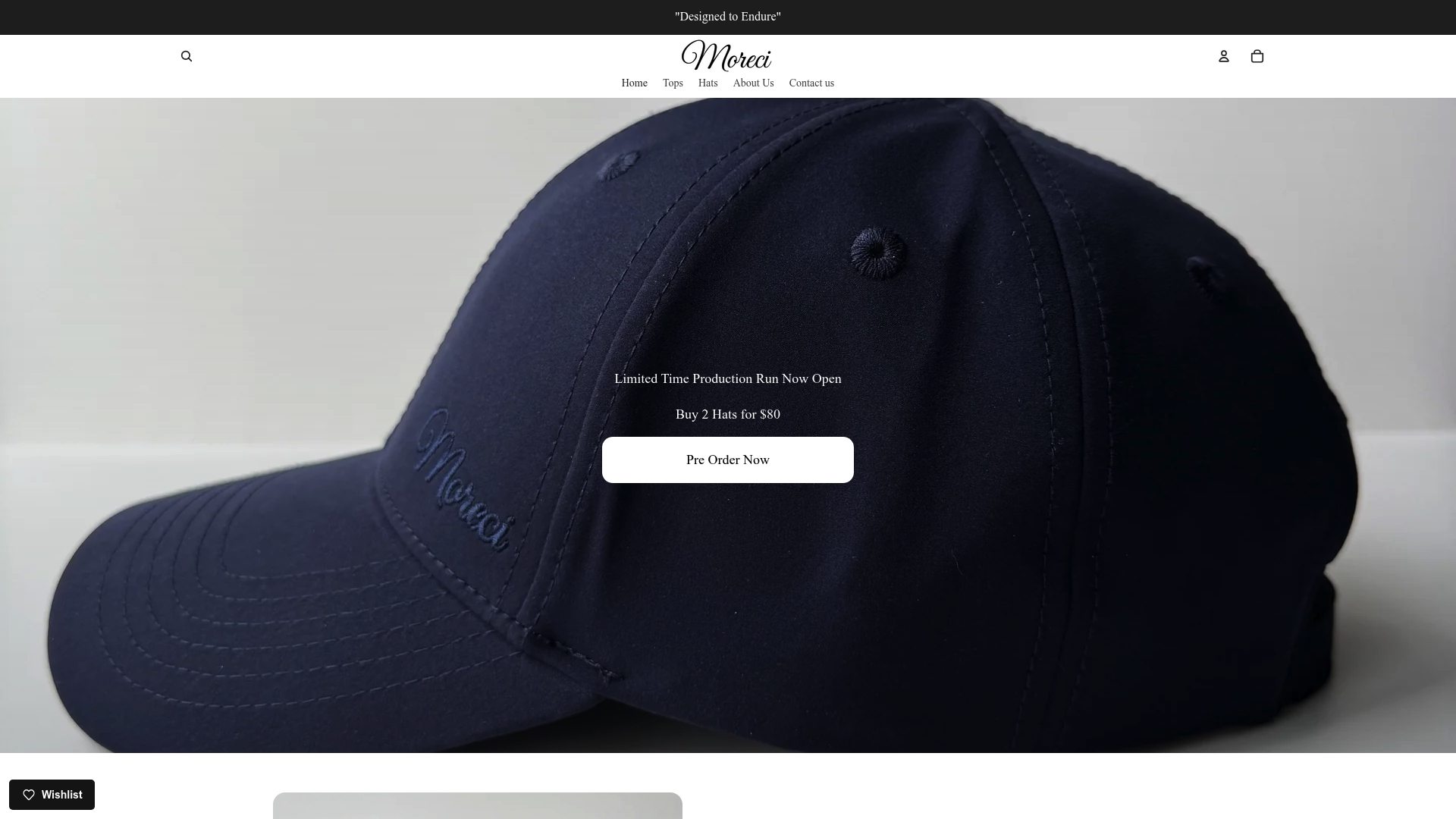
The Complesso Tee is a good example of what that means in practice. A luxury bamboo-cotton T-shirt made in Portugal, it represents the kind of product that gets lost in Amazon’s search results but stands out immediately when a buyer is looking for something worth keeping. The Complesso Collection takes the same approach across its full range: fewer pieces, better materials, and a buying experience that respects your time and taste.
If you are a seller looking for a platform that shares those values, the Moreciandco agent page outlines partnership options. If you are a shopper ready to move past the scroll-and-click routine, the Complesso Collection is a good place to start.