


Buy a midweight bamboo-cotton tee and a bamboo-cotton polo first. That’s the whole verdict. Every other piece in a refined capsule can wait, but these two carry the daily rotation, they layer under a jacket or over nothing at all, and they move from a Tuesday client call to a Saturday errand run without looking like either.
Here’s why this pair earns the first two slots in your budget instead of, say, a jacket or a third pair of chinos:
- A midweight tee (the Complesso Tee) works as a base layer, a standalone piece, and a travel staple, since bamboo-cotton blends manage moisture and stay breathable across long wear days.
- A well-built polo (the Complesso Polo) is the one piece that reads as “put together” at the office and relaxed at a Sunday brunch, no other single garment pulls that double duty as cleanly.
- Both fabrics resist the pilling and shape loss that kill cheaper basics within a year, so cost per wear drops fast once you pass the 40 to 50 wear mark.
Pro Tip: Before you check out, zoom into the product photos and look at the collar seam and hem stitching. A polo collar that already looks flat and stable in a photo, rather than curled or loose, is telling you something about the construction before it ever ships.
Key Takeaways
Building a durable men’s capsule comes down to buying a bamboo-cotton tee and polo first, verifying construction with a ten-point durability check, and scaling the collection in three budget-conscious phases.
- Start with the Complesso Tee and Complesso Polo, then add the hat once fit is confirmed.
- Run the ten-point durability test on any garment before buying, in-store or online.
- Spread purchases across three phases to manage cost and confirm sizing before scaling up.
| Point | Details |
|---|---|
| Buy-first pair | The Complesso Tee and Complesso Polo cover daily rotation and office-to-weekend versatility. |
| Prioritize construction | Look for GSM 160 to 200, taped seams, and anti-curl collars over brand names alone. |
| Fit rules matter | Shoulder seams should sit flush and sleeves should hit mid-bicep on tees. |
| Budget in phases | A full capsule runs $450 to $700 spread across three purchase phases over six months. |
| Shop the Complesso line | Moreciandco’s Complesso Collection provides the bamboo-cotton, made-in-Portugal pieces this plan is built around. |
Table of Contents
- How Do You Build a Recovery Wear Collection From Scratch?
- What Materials Actually Hold Up Over Time?
- How Should a Premium Tee, Polo, or Hat Actually Fit?
- What’s the Simplest Color Palette for Maximum Outfits?
- How Do You Wash and Store Recovery-Wear Pieces to Extend Their Life?
- What’s the Right Order to Buy a Full Capsule?
- Why the Complesso Line Fits This Approach Piece by Piece
- A 10-Point Durability Test You Can Run in Two Minutes
- What Should a Full Capsule Cost You?
- Why a Smaller, Better-Built Closet Beats a Bigger, Cheaper One
- How to Get Started With the Complesso Capsule
- Sources
How Do You Build a Recovery Wear Collection From Scratch?
You don’t need fifteen pieces to look sharp every day. GQ’s capsule wardrobe framework puts the functional core at around 10 items once you strip out underwear and socks, and that number holds up well for a durability-first professional capsule too.
The list below is ordered by how often each piece gets worn, not alphabetically. Treat the top three as non-negotiable and everything below as fill-in-as-you-go.
| Role | Where it earns its place | Material/finish to prioritize |
|---|---|---|
| Everyday tee | Solo, under a jacket, or for travel | Bamboo-cotton blend, midweight knit |
| Premium polo | Office days, dinners, casual Fridays | Bamboo-cotton, stabilized collar |
| Versatile hat | Weekend errands, travel, sun cover | Minimal branding, structured crown |
| Midweight sweater | Layering over the polo in cooler months | Cotton or wool blend, tight gauge |
| Travel tee | Packing cube rotation, hotel gym to dinner | Wrinkle-resistant knit |
| Layering long-sleeve | Under a blazer or alone on cool days | Combed cotton, clean drape |
| Neutral chinos or shorts | Anchors nearly every outfit formula | Structured cotton twill |
| Lightweight jacket | Shoulder-season outer layer | Water-resistant shell, minimal hardware |
| Leather belt | Ties the chinos and polo together | Full-grain leather |
| Structured bag | Commute, gym, weekend trips | Durable PU or leather construction |
Start with the Complesso Tee, the Complesso Polo, and the Cappellino Baseball Hat. Those three alone cover roughly 70% of your weekly outfit decisions once you build the outfit formulas further down.
What Materials Actually Hold Up Over Time?
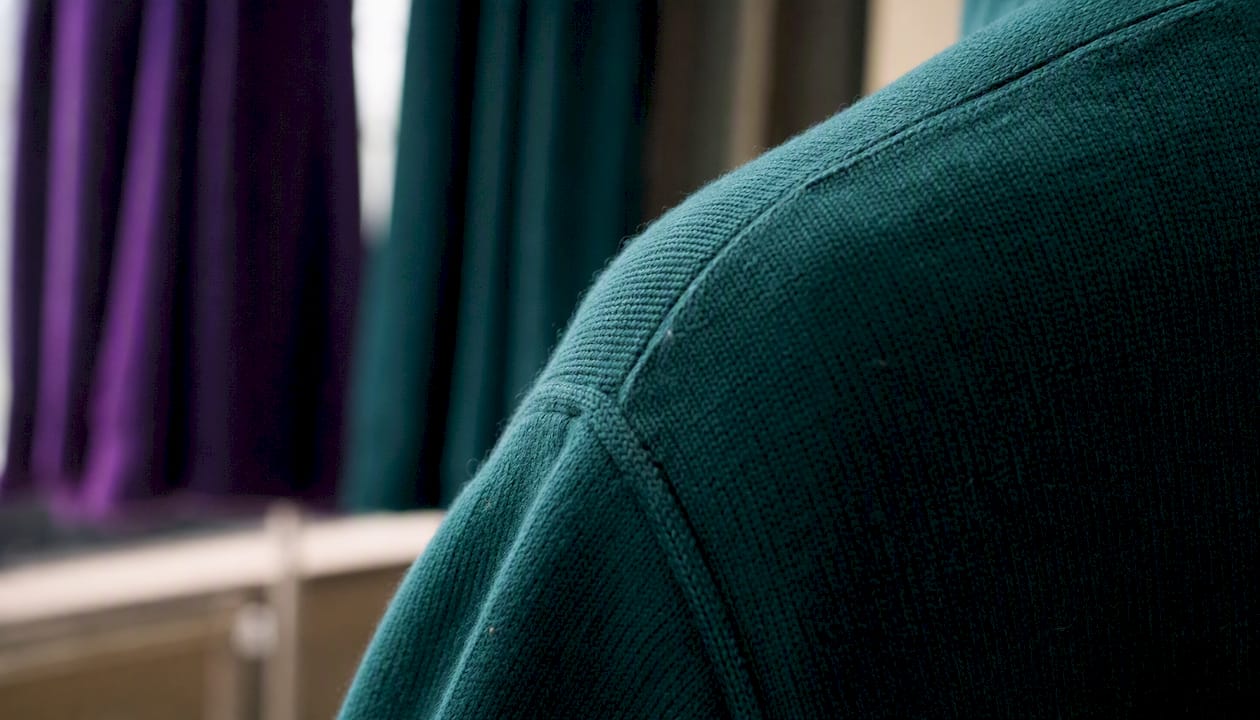
Fabric choice decides whether a tee survives 100 washes or starts pilling at wash number 20. Arcus Apparel Group frames polo quality around three levers: fabric, fit, and finishes, and testing a few GSM options side by side is the fastest way to feel the difference before you buy.
A few fiber and weave notes worth knowing:
- Bamboo-cotton blends soften with wear rather than thinning out, and they keep cotton’s structure while improving breathability, which is why a 50/50 blend tends to outperform a pure cotton tee on a hot commute.
- Mercerized cotton gets a treatment that boosts sheen and dye uptake, so colors stay richer longer, especially useful in a navy or charcoal polo you’ll wear weekly.
- Compact or combed yarns reduce the loose fiber ends that cause pilling, a small detail that shows up as fewer fuzz balls after six months.
- Performance blends with a touch of stretch help a fitted polo move with you at the gym or on a flight, without sacrificing the tailored look.
Fairway Brands recommends a midweight GSM range for polos that balance structure with breathability, along with anti-curl collar construction and taped seams. That range is your benchmark. Anything lighter drapes cheap; anything heavier feels stiff by August.
Pro Tip: Search a product description for the words “GSM,” “taped seams,” or “reactive dye.” Brands that disclose these specifics usually built the garment to survive scrutiny; brands that don’t mention fabric weight at all often have something to hide.
How Should a Premium Tee, Polo, or Hat Actually Fit?
A premium tee should sit at the top of your shoulder, not two inches down it, with sleeves ending mid-bicep and a body length that clears the belt without bunching. A polo follows the same shoulder rule but adds a slightly closer chest fit, since a baggy polo instantly looks like off-the-rack fast fashion no matter how good the fabric is.
Before you buy, check these four measurement points against the brand’s size chart:
- Chest, measured at the fullest point, with an inch of ease for movement, not four.
- Shoulder seam, which should land exactly at the shoulder bone, never sliding toward the upper arm.
- Sleeve length, hitting mid-bicep on a tee and just above the elbow on a polo.
- Body length, long enough to stay tucked or half-tucked without riding up when you raise an arm.
Once the piece arrives, run three quick checks: pinch the waist fabric to confirm it doesn’t gap when you sit down, look in a mirror to see if the shoulder seams sit flush, and check that the sleeve midpoint hits in the same spot on both arms. A hem that’s an inch too long is worth a $10 tailor visit; a chest that’s tight across the back rarely fixes itself.
Hats follow different rules. Crown depth should sit low enough that the hat doesn’t perch, the brim should hold its curve rather than going floppy after a week, and the underside of the brim should show clean stitching with no loose threads, a fast tell for build quality on any Cappellino Baseball Hat or similar minimal style.
What’s the Simplest Color Palette for Maximum Outfits?
Five colors cover nearly every situation a professional or athletic man runs into: white, navy, charcoal, olive, and one deep jewel tone like burgundy or forest green for the piece that needs to stand out. White and navy handle the office, charcoal absorbs into almost anything, olive bridges casual and outdoor settings, and the jewel accent keeps the capsule from feeling flat.
Five outfit formulas get you through a full week without repeating a look twice:
- White tee, dark jeans, white sneakers, for a weekend or casual Friday.
- Navy polo, charcoal chinos, leather loafers, for a client lunch.
- Charcoal tee under a navy blazer, with sneakers, for after-work drinks.
- Olive sweater layered over a white polo, with chinos, for a cool-weather office day.
- Jewel-tone polo, white shorts, the baseball hat, for a weekend trip or golf outing.
Swap sneakers for boots and add a lightweight jacket when the formula needs to feel more athletic, or swap loafers for dress shoes when a formula needs to skew more formal. The same five pieces flex both directions without adding a single new item.
How Do You Wash and Store Recovery-Wear Pieces to Extend Their Life?
Cold water and a gentle cycle protect bamboo-cotton and mercerized cotton far better than a hot wash ever will, since heat is what breaks down dye bonds and softens the fibers that hold a garment’s shape. Skip fabric softener, which coats fibers and dulls the moisture-wicking properties bamboo blends are prized for, and air-dry flat or on a low tumble setting instead of high heat.
A few habits that add real years to a piece:
- Treat sweat and food stains within 24 hours with a cold-water soak before they set permanently into the fibers.
- Fold knits like tees and sweaters to prevent shoulder stretch; hang structured polos and jackets to keep their shape.
- Rotate pieces rather than wearing the same tee three days running, since fibers need a rest day to recover their shape.
- Store off-season pieces in breathable cotton bags, never sealed plastic, which traps moisture and invites mildew.
Pro Tip: Build a $15 home mending kit: a needle, matching thread in navy, white, and gray, a few spare buttons, and fabric glue for a quick hem fix. A five-minute stitch on a loose seam saves a garment that would otherwise get retired a year early.
What’s the Right Order to Buy a Full Capsule?
Spreading purchases across three phases keeps the budget manageable and lets you confirm fit and durability before committing to the full collection. Buying everything at once, before you know how a brand’s sizing runs, is how closets end up full of pieces that never get worn.
Phase 1, test (weeks 1 to 2): Buy the Complesso Tee and one Complesso Polo in a neutral color. Budget $80 to $150 total. Check the fit notes above the moment they arrive.
Phase 2, foundation (weeks 3 to 8): Add a second polo, the Cappellino Baseball Hat, a midweight sweater, and a pair of neutral chinos. This phase typically runs $200 to $350 and gets you to a full weekly rotation.
Phase 3, finish (months 3 to 6): Round out with a lightweight jacket, accessories, and a jewel-tone accent piece. Budget $150 to $300 depending on tier.
Three budget tiers apply across all three phases:
- Value tier favors basic cotton blends without reinforced construction, shorter lifespan but lower upfront cost.
- Premium tier, where Moreci’s Complesso line sits, uses bamboo-cotton blends, taped seams, and stabilized collars for multi-year wear.
- Designer tier adds brand markup on top of similar construction quality, worth it mainly for resale value or specific brand loyalty.
Why the Complesso Line Fits This Approach Piece by Piece
Every construction detail this guide asks you to check shows up on Moreci’s own product pages. The Complesso Tee is built from a bamboo-cotton blend and made in Portugal, which lines up directly with the softness and breathability standards covered in the materials section above. The Complesso Polo carries the same bamboo-cotton comfort with the structured fit a professional wardrobe demands.
A few practical notes for a first Complesso purchase:
- Start with a neutral color (navy or white) so the piece slots into the outfit formulas immediately, rather than sitting unworn while you figure out how to style a bolder shade.
- If you’re between two sizes, size down slightly on the polo for the fitted shoulder look described in the fit section, and true-to-size on the tee for everyday comfort.
- Made-in-Portugal production typically signals tighter quality control on stitching and seam finishing than mass-market alternatives, worth factoring in when you compare price points.
- The full Complesso Collection is built as a cohesive family, so pieces you add in Phase 2 and 3 are designed to coordinate with what you bought in Phase 1.
Professionals who also train benefit specifically from bamboo-cotton’s moisture management, since the same tee that looks sharp under a blazer at 9 AM won’t feel damp and heavy if you’re still cooling down from a 7 AM gym session.
A 10-Point Durability Test You Can Run in Two Minutes
Run through this list on any product page or in-store before you buy, whether it’s a Complesso piece or anything else in your closet:
- Stitch density: tighter, more consistent stitches resist unraveling.
- Taped seams: check inner seams for a flat reinforcement strip, particularly at the shoulders.
- Collar construction: a stabilized collar should hold its shape when you fold it flat, not curl at the edges.
- Button attachment: cross-stitched buttons resist popping off far longer than single-thread attachments.
- Hem finish: a double-needle hem lies flatter and resists fraying longer than a single-stitch hem.
- GSM if listed: 160 to 200 for polos signals a durable midweight build.
- Fiber content: bamboo-cotton or combed cotton blends outperform generic polyester-cotton mixes.
- Dye method: reactive dyes hold color through more wash cycles than direct dyes.
- Pilling treatment: compact or combed yarns pill less over the first six months.
- Reinforced vents or stress points: side vents and underarm seams should show extra stitching where fabric stress concentrates.
Pass eight or more checkpoints and the piece should hold up for three to five years of regular wear. Fail more than three, especially on stitching or button attachment, and you’re looking at a garment that starts showing wear within a single season. A loose button or a slightly uneven hem is repairable; frayed seams at the shoulder on delivery is a return.
For a deeper breakdown of these checks applied to activewear specifically, Moreci’s own Athletic Wear Durability Checklist for Men walks through the same inspection points in more detail.
What Should a Full Capsule Cost You?
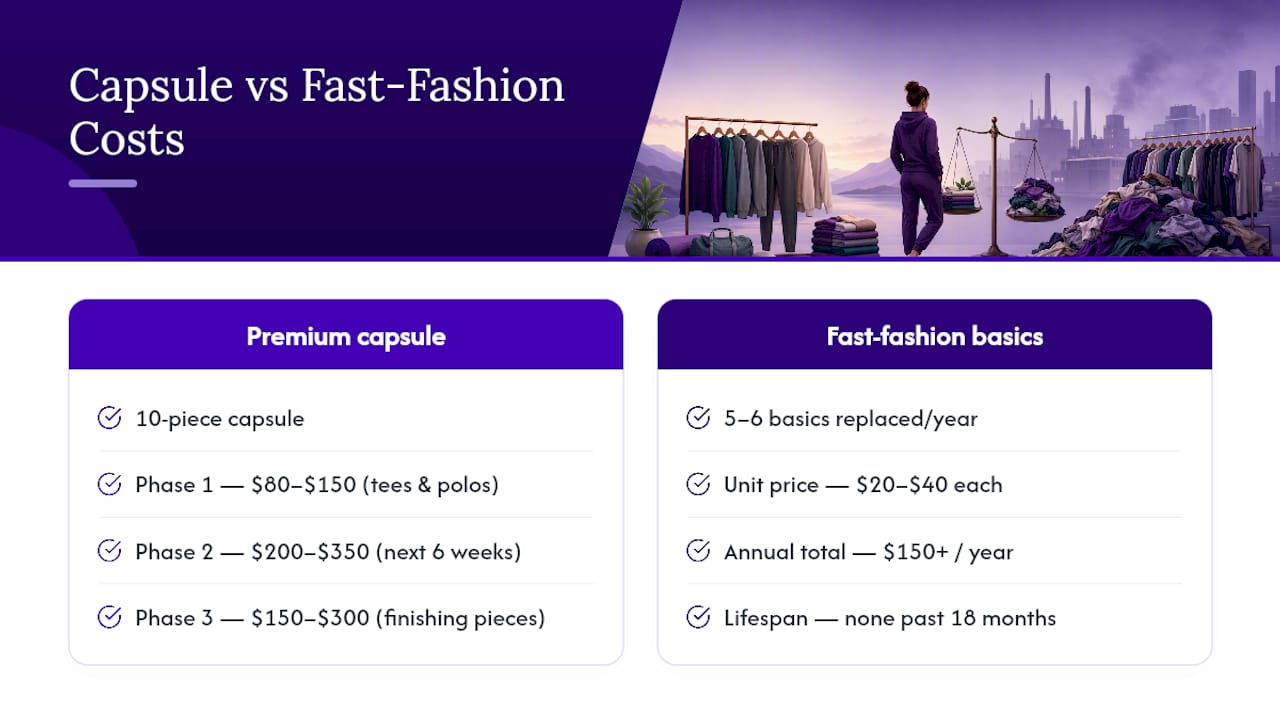
A complete 10-piece capsule built at the premium tier, tees, polos, a hat, a sweater, chinos, a jacket, and accessories, typically lands between $450 and $700 when purchased in phases rather than all at once. The tee and polo alone, your Phase 1 purchase, run $80 to $150 combined depending on color and any launch pricing.
Spread across three phases over roughly six months, that total breaks into manageable chunks: $80 to $150 upfront, another $200 to $350 over the following six weeks, and a final $150 to $300 for finishing pieces. Compare that to replacing five to six fast-fashion basics every single year at $20 to $40 each, which adds up to $150 or more annually with none of it lasting past 18 months. The premium capsule costs more upfront but the cost-per-wear math flips in your favor by year two.
Why a Smaller, Better-Built Closet Beats a Bigger, Cheaper One
I’ve watched too many capable, well-dressed men treat their closets like a revolving door of $25 tees that fall apart by spring. The shift that actually changes your morning routine isn’t buying more, it’s buying fewer things that don’t quit on you. A bamboo-cotton tee that still looks sharp after 80 washes changes how you think about getting dressed; you stop triaging your drawer and start just reaching for what works.
That’s the whole case for a durability-first capsule over a trend-chasing one. Quality construction, the kind you can verify with a ten-point checklist rather than a brand name, is what separates a wardrobe that serves you for years from one you’re constantly replacing. The Complesso pieces earn their spot in this guide because they hold up to that scrutiny, not because they’re the only option, but because they meet the bar this whole approach sets.
How to Get Started With the Complesso Capsule
Start with the two pieces this guide keeps pointing back to: the Complesso Tee for daily rotation, and the Complesso Polo for the days you need to look sharper without trying harder. Both are built from bamboo-cotton with the construction details, stabilized collars, taped seams, midweight fabric, covered throughout this guide.
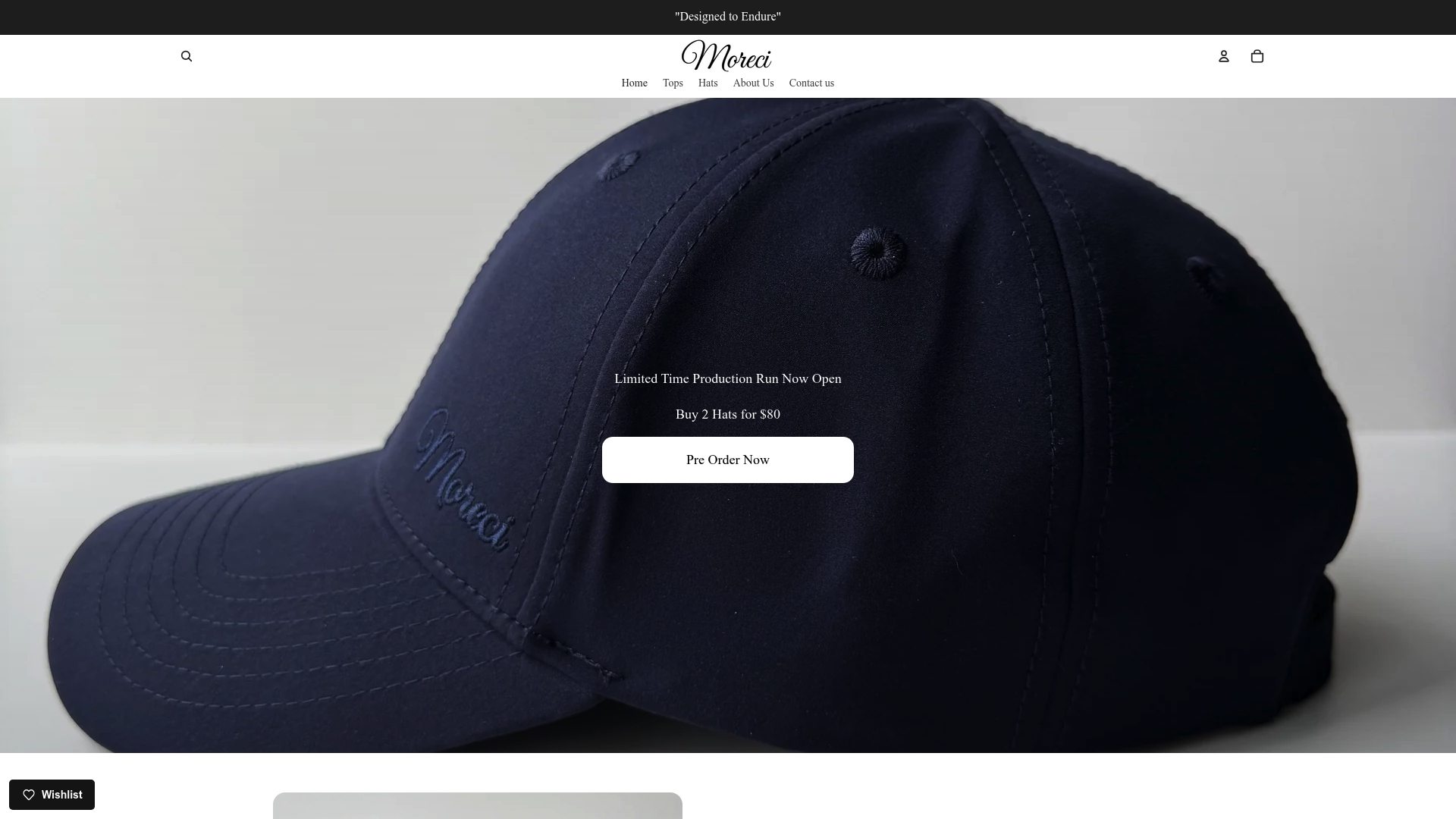
Add the Cappellino Baseball Hat once those two fit right, since it rounds out the weekend and travel side of your rotation without adding another decision to your morning. If sizing feels off on arrival, check the fit points from earlier before assuming the piece is wrong. A snug shoulder seam usually means you need one size up, not a different brand entirely.
Once you’ve confirmed fit on those first pieces, the full Complesso Collection at the Moreci Store is where the rest of your phased plan lives, sweaters, layering pieces, and accessories built to coordinate with what’s already in your closet. Browse the collection and build out Phase 2 whenever you’re ready.
Sources
- Mens Designer Polo Shirts: Fabrics, Fit, Finishes – Arcus Apparel Group
- The Ultimate Men’s Capsule Wardrobe 2026: 15 Foolproof Pieces | GQ