


Collar stays are small, flat inserts that slide into the underside of a dress shirt collar to keep the collar points crisp, flat, and free from curling. Known in the industry as collar stiffeners, these inserts are the single most overlooked detail separating a sharp, polished collar from a limp, unprofessional one. They come in plastic, stainless steel, brass, and silver, and they are available as removable inserts or sewn directly into the collar. If you have ever noticed your collar points curling upward by midday, dress shirt collar stays explained in full are exactly what you need.
How do collar stays keep your collar shape?
Collar stays add weight and crispness to flexible collar fabric, giving the collar structural support that pressing alone cannot maintain. Think of them as the collar’s skeleton. Without that skeleton, even a freshly ironed shirt loses its shape within hours of wear.
The mechanism is straightforward. A stay sits inside a small pocket sewn into the underside of each collar point. Its weight pulls the collar point downward and outward, resisting the natural tendency of lightweight fabric to curl or wilt under body heat and movement. This is why metal stays improve collar stability more than plastic ones. The additional mass does more work.

Correct placement matters as much as the stay itself. The stay must sit fully flat inside the pocket, with no part of it poking through the fabric or riding up at an angle. A stay that is even slightly misaligned creates a visible bump or uneven point, which defeats the purpose entirely.
Shape matching is equally critical. Matching collar stay shape to collar style significantly influences the final collar appearance. A pointed collar requires a longer, straighter stay. A rounded or club collar works better with a shorter, curved stay. Using the wrong geometry leaves parts of the collar unsupported, which leads to curling at the tip or an awkward bow in the middle of the point.
Pro Tip: If your collar points are curling at the very tip but the base looks fine, your stays are too short. Size up to a longer stay that reaches the full length of the collar point.
Key factors that affect how well collar stays function:
- Stay weight: Heavier metal stays pull collar points down more effectively than lightweight plastic.
- Stay length: The stay should match the full length of the collar point for complete support.
- Stay curve: Straight stays suit pointed collars; slightly curved stays suit spread or rounded collars.
- Pocket fit: A loose pocket lets the stay shift during wear, reducing its effectiveness.
What are the different types of collar stays?
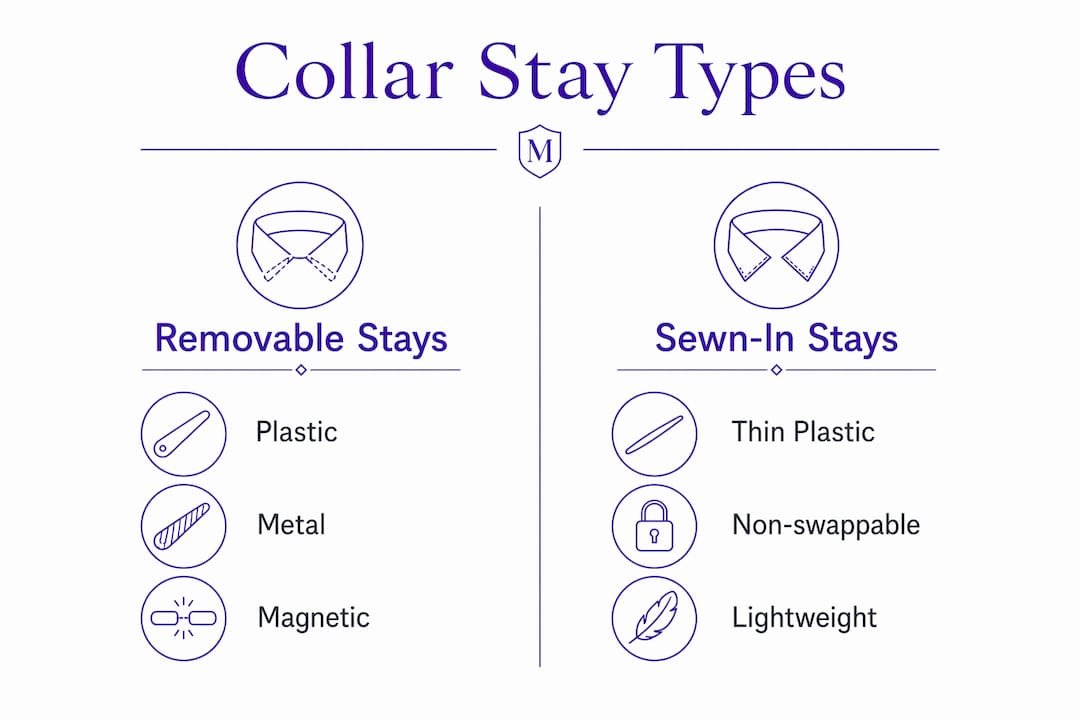
The material and construction of a collar stay determine how well it performs and how long it lasts. The three main categories are plastic, metal, and magnetic stays, each with distinct trade-offs.
Plastic collar stays
Plastic collar stays are common and affordable but often too flimsy to prevent collar curl effectively. Most budget dress shirts include plastic stays as a standard feature. They flex under pressure, which means they provide minimal resistance against collar curl compared to metal alternatives. Plastic stays are fine for casual wear or situations where collar crispness is not a priority, but they fall short for business formal settings.
Metal collar stays
Metal collar stays provide stronger crispness and reduce collar curl compared to plastic stays. Stainless steel is the most common metal option, offering durability and a neutral weight. Brass stays are heavier and add more downward pull. Silver stays are a premium choice, often sold as accessories in their own right. Metal stays are reusable indefinitely if cared for properly, making them a better long-term investment than disposable plastic inserts.
Magnetic collar stays
Magnetic collar stays use a magnet to hold stiffened collar points against the shirt for a sharper look, especially on lightweight fabrics. This system works differently from traditional stays. Instead of sitting inside a pocket, one magnetic piece attaches to the underside of the collar point while a corresponding magnet on the shirt body holds it in place. The result is a collar that stays pinned flat against the shirt front, which is particularly useful for spread collars that tend to gap open.
Removable vs. sewn-in stays
| Type | Material | Swappable | Best For | Durability |
|---|---|---|---|---|
| Removable plastic | Plastic | Yes | Everyday casual shirts | Low |
| Removable metal | Steel, brass, silver | Yes | Business formal, dress shirts | High |
| Sewn-in plastic | Thin plastic | No | Budget shirts, low-maintenance wear | Medium |
| Magnetic | Metal with magnet | Yes | Lightweight fabrics, spread collars | High |
Sewn-in stays are usually thin plastic designed to avoid wash and press damage. They cannot be swapped out for a heavier metal version, which limits their performance ceiling. Shirts with sewn-in stays are easier to care for since you never need to remember to remove them, but you also cannot upgrade the collar support without replacing the shirt.
How to use and maintain collar stays correctly
Knowing how to use collar stays correctly is what separates a polished result from a wasted effort. The process takes under a minute, but the details matter.
- Locate the collar stay pocket. Flip the collar up and look at the underside of each collar point. You will see a small, narrow pocket sewn into the fabric. This is where the stay sits.
- Insert the stay narrow end first. Slide the stay narrow end first into the collar pocket and push it fully seated so it does not poke through the fabric. The narrow tip goes in first, with the wider or flat end sitting at the base of the pocket opening.
- Check that the stay lies flat. Run your finger over the collar point from the outside. You should feel a smooth, even surface. Any bump or ridge means the stay is not fully seated or is the wrong size.
- Remove stays before washing. Removing stays before cleaning is a key step often overlooked that preserves both the shirt and the stays. Leaving metal stays in during a wash cycle can rust the stay, stain the fabric, or tear the pocket lining. Plastic stays can warp under high heat in the dryer.
- Remove stays before ironing. Ironing over a stay, especially a metal one, can leave a hard crease or indentation in the collar fabric that is difficult to remove. Always iron the collar first, then reinsert the stays.
- Reinsert stays immediately after ironing. Reinserting collar stays after ironing preserves the collar’s sharpness throughout the day, beyond the initial pressing effects. The iron sets the fabric shape, and the stay locks that shape in place as the fabric cools and stiffens.
- Store stays safely. Keep metal stays in a small case or pouch when not in use. Loose stays in a drawer scratch easily and can be lost. Many quality metal stay sets come with a dedicated case for this reason.
Pro Tip: Keep a spare set of metal collar stays in your work bag or desk drawer. If you forget to reinsert them after laundering, you have a backup ready before a meeting.
For shirts with magnetic stays, the process differs slightly. Place the magnetic insert on the underside of the collar point, then align the shirt body magnet beneath it. The two pieces snap together through the fabric, holding the collar point flat without a pocket. Check alignment carefully since a misaligned magnet creates an unnatural pull on the collar fabric. Learning how to iron dress shirts before reinserting stays gives you the best possible starting shape to lock in.
Collar stays vs. no stays: what is the real difference?
The difference between wearing collar stays and skipping them is visible within two hours of putting on a shirt. Proper collar stays help prevent fabric stretching and wear at collar points by stabilizing collar shape, which extends dress shirt lifespan and appearance quality. That is both an aesthetic and a financial argument for using them consistently.
Benefits of wearing collar stays:
- Collar points stay flat and symmetrical throughout the day.
- The shirt projects a polished, intentional appearance in professional settings.
- Fabric at the collar points experiences less stress and stretching over time.
- The collar maintains its pressed shape even after hours of wear.
What happens without collar stays:
- Collar points curl upward, especially on lightweight or worn fabric.
- The collar can gap open at the front, creating an unkempt look.
- Asymmetry develops when one collar point curls more than the other.
- The shirt looks worn out faster, even if it is relatively new.
“Collar stays transform a limp collar into a polished silhouette because they act as the collar’s structural skeleton.” — ProWearTrends
There are situations where collar stays matter less. A casual button-down worn untucked at a weekend event does not need the same collar precision as a dress shirt at a client meeting. Shirts with stiff, structured collars, such as those made from heavy Oxford cloth, hold their shape better without stays than lightweight poplin or broadcloth shirts. For a business casual wardrobe, though, collar stays are a non-negotiable detail.
Key takeaways
Collar stays are the simplest, most cost-effective way to maintain a sharp collar appearance on any dress shirt, and skipping them is the most common reason a well-pressed shirt looks sloppy by noon.
| Point | Details |
|---|---|
| Metal beats plastic | Metal stays add more weight and resist collar curl far better than plastic alternatives. |
| Shape matching matters | Match stay length and curve to your collar style for full, even support across the collar point. |
| Remove before washing | Always pull stays out before laundering or ironing to protect both the fabric and the stay. |
| Reinsert after ironing | Sliding stays back in immediately after pressing locks the collar’s shape in place all day. |
| Magnetic stays for lightweight shirts | Magnetic collar stays work best on lightweight fabrics where traditional pocket stays provide less hold. |
Why i think most men underestimate collar stays
I have spent years paying attention to what separates a well-dressed person from someone who just owns nice clothes. Collar stays are almost always the answer. You can wear a $400 dress shirt and look sloppy if the collar is curling. You can wear a $60 shirt and look sharp if the collar is flat and symmetrical.
The mistake I see most often is men using the plastic stays that came with the shirt and wondering why the collar still curls. Those stays are essentially placeholders. Swapping them for a set of stainless steel stays costs very little and makes an immediate, visible difference. I made that switch years ago and never went back.
The other habit worth building is removing stays before every wash and reinserting them after every iron. It takes thirty seconds. Most people skip it because it feels like an extra step. But leaving metal stays in during a wash is how you end up with rust stains on a collar you paid good money for. The discipline of that small routine is what separates people who get years of wear from a dress shirt from people who replace shirts every season.
Collar stays are not a luxury detail. They are basic maintenance for anyone who wears dress shirts regularly. Treat them that way.
— Giuseppe
Upgrade your collar game with Moreciandco
Moreciandco is built on one principle: you should get exactly what you pay for, and then some. That applies to every accessory that touches your dress shirt, including the details most people never think about until something looks wrong.
The Complesso Collection at Moreciandco features refined clothing and accessories designed for people who care about how a shirt looks from collar to cuff. If you are ready to stop settling for limp collar points and start wearing shirts that hold their shape all day, explore the full range at Moreciandco. Quality you can see is quality worth paying for.
FAQ
What are collar stays used for?
Collar stays are small inserts that slide into pockets on the underside of a dress shirt collar to keep the collar points flat, crisp, and free from curling throughout the day.
How do you insert collar stays correctly?
Slide the stay narrow end first into the collar stay pocket and push it fully flat so no part of it pokes through or creates a bump on the collar surface.
Should you remove collar stays before washing?
Yes. Removing stays before washing prevents rust stains on the fabric, pocket lining damage, and warping of the stays themselves, especially with metal or plastic types.
What is the best material for collar stays?
Stainless steel and brass collar stays outperform plastic because their added weight pulls collar points down more effectively and they hold their shape over years of use.
Do all dress shirts have collar stay pockets?
Most quality dress shirts include collar stay pockets, but not all budget shirts do. Sewn-in plastic stays are a common alternative on lower-cost shirts, though they cannot be upgraded or swapped out.