


The features that define high-intensity workout apparel come down to a short list: moisture-wicking fabrics, compression fit, strategic ventilation, durable construction, and safety elements for outdoor use. Get any one of these wrong and you’ll feel it mid-workout, whether that’s a soaked shirt clinging to your back or a seam splitting during a deep lunge. The materials doing the heavy lifting here are polyester, nylon, and elastane. Cotton, by contrast, absorbs sweat rather than moving it away from your skin, which turns a hard session into an uncomfortable one fast. The core features to look for in any HIIT-specific piece:
- Moisture-wicking fabric (polyester or nylon blends that pull sweat to the surface for evaporation)
- Compression fit with 15–25% elastane for muscle support without restricting range of motion
- Flatlock seams and gusseted panels to prevent chafing and seam failure under strain
- Strategic mesh ventilation placed at high-heat zones like the underarms and upper back
- Quick-drying construction so garments stay light throughout the session
- Odor control treatments (antimicrobial finishes or silver-ion technology)
- Reflective elements for anyone training outdoors in low-light conditions
What fabrics actually work for high intensity workout apparel?
Polyester and nylon are the workhorses of performance activewear, and for good reason. Both are moisture-wicking fabrics engineered to pull sweat away from the skin and spread it across the fabric surface where it evaporates quickly, keeping you dry and light rather than soaked and distracted. Polyester is lighter and dries faster; nylon is denser, softer against the skin, and more abrasion-resistant, which makes it the better choice for compression leggings and anything that sees repeated friction.
Elastane (also sold as spandex or Lycra) is rarely used alone. It gets blended in at lower percentages to add stretch and recovery. A nylon-spandex blend offering four-way stretch moves in every direction without chafing, which is exactly what you need when you’re cycling between box jumps, burpees, and kettlebell swings. The blend ratio matters: a higher technical fiber content (nylon or polyester) improves durability and moisture management, while the elastane percentage controls how much the garment compresses and snaps back.
Cotton is the one fabric that consistently underperforms in HIIT. It absorbs sweat, holds onto moisture, becomes heavy, and loses its shape under repeated strain. That’s not a minor inconvenience during a 45-minute interval session; it’s a real drag on focus and comfort. Save cotton for recovery days and casual wear.
Beyond the base fibers, fabric finishes add meaningful performance benefits. Antimicrobial treatments slow odor-causing bacteria, which matters when you’re training five days a week. Recycled polyester and recycled nylon now match virgin synthetics in wicking performance while reducing environmental impact. For outdoor sessions, fabrics with UPF ratings and durable water repellent (DWR) finishes protect against sun and light rain without sacrificing breathability.
Pro Tip: When shopping for HIIT tops, look for labels that list specific fiber percentages and mention antimicrobial or quick-dry finishes. Vague terms like “poly blend” tell you nothing useful about actual performance.
- Polyester: lightweight, excellent moisture-wicking, quick-drying, holds shape after repeated washing
- Nylon: soft, abrasion-resistant, superior stretch recovery, ideal for compression pieces
- Elastane/spandex: added in small percentages (typically 15–25%) for stretch and shape retention
- Cotton: poor moisture management, not suitable for high-intensity training
- Recycled fibers: comparable performance to virgin synthetics with lower environmental cost
How fit and compression affect your HIIT performance
Fit is where a lot of otherwise decent gear fails. Clothing that shifts during explosive movements pulls your attention away from the workout, and high-quality HIIT gear reduces those micro-distractions by managing force loads through the body, letting you stay locked in on intensity and form.
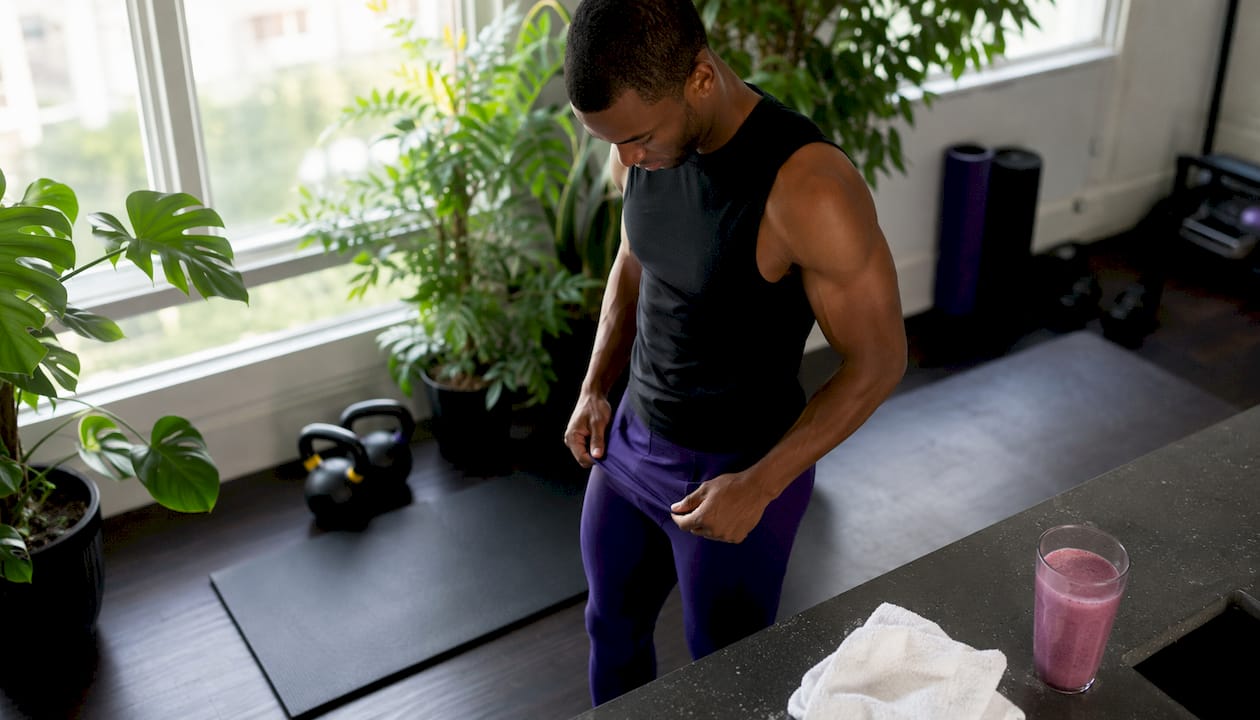
The concept behind compression fit is negative ease: the garment is cut slightly smaller than the body so it sits close to the skin and stays put through rapid transitions. This isn’t about restriction. Done right, it stabilizes muscles, reduces vibration during impact, and prevents fabric from bunching at stress points like the hips or knees. For compression leggings, look for elastane content paired with a higher-density knit to provide muscle support without limiting movement. That combination gives you the squeeze you want without cutting off circulation or limiting your squat depth.
The balance between snug and non-restrictive is genuinely tricky to get right. Too tight and every rep feels harder than it should. Too loose and the fabric shifts, creates friction, and gets in the way. The practical test: put the garment on, do a squat, a lunge, and a lateral shuffle. If you’re adjusting it at any point, the fit is wrong.
Construction details reinforce fit over time. Flatlock seams lie flat against the skin rather than sitting up in a ridge, which eliminates the rubbing that causes chafing during long sessions. Gusseted crotch panels add a diamond or triangular fabric insert at the inner thigh, giving the garment room to move with you during deep lunges and jumps without pulling the seams apart.
- Negative ease fit keeps garments in place during explosive HIIT movements
- Compression leggings work best with 15–25% elastane and a high-density knit
- Flatlock seams prevent chafing by lying flat against the skin
- Gusseted crotch panels allow full range of motion without seam stress
- Test fit with a squat, lunge, and lateral movement before committing to a purchase
Why ventilation placement matters more than “breathable” labels
Almost every piece of activewear on the market claims to be breathable. The ones that actually perform use body-mapping techniques to place mesh panels or perforations specifically where the body generates the most heat: the upper back, underarms, and behind the knees. That targeted approach keeps you cooler without compromising the garment’s structure in areas that need support.
The science behind this is straightforward. Designers use thermal imaging to identify the body’s hot zones, then position ventilation exactly where airflow will have the most impact. A mesh panel sewn into a low-heat area adds nothing. One placed across the upper back during a HIIT session makes a measurable difference in how long you can sustain output before overheating becomes a distraction.
Breathability also interacts with moisture management. A fabric that wicks sweat to the surface but traps heat underneath still leaves you uncomfortable. The best performance apparel combines capillary-action wicking with open-structure fabrics or mesh inserts so that moisture reaches the surface and heat escapes simultaneously. For outdoor training in warm weather, this combination is what separates gear that works from gear that just looks the part.
Pro Tip: Skip any garment marketed as “breathable” without specifics. Look for mesh panel placement details or body-mapping language on the product page. If the brand can’t tell you where the ventilation is, it probably isn’t where you need it.
- Body-mapped mesh panels target high-heat zones: upper back, underarms, behind knees
- Thermal imaging guides ventilation placement in well-designed performance apparel
- Breathability and moisture-wicking work together; one without the other is incomplete
- Perforations and laser-cut ventilation zones add airflow without weakening the fabric
- Generic “breathable” claims without placement specifics are marketing, not engineering
What makes HIIT apparel durable enough for daily training?
HIIT puts more stress on clothing than almost any other workout format. You’re moving through a full range of motion, repeatedly, at high speed, and then washing the gear just as frequently. Garments that can’t handle that cycle fall apart fast, either at the seams or in the fabric itself.
Flatlock seam construction (https://interprofitness.com/blogs/news/best-fabric-for-gym-gear-a-complete-guide-to-performance-materials) reduces friction points and extends garment life by eliminating the raised ridge that standard overlocked seams create. Bar-tacking, a dense cluster of stitches applied at high-stress points like pocket corners and waistband joins, prevents those areas from tearing under repeated strain. Both are construction details you can inspect before buying: flip the garment inside out and look at the seam finish.
Fabric quality plays an equally important role. Filament yarns, made from continuous fibers rather than short staple fibers, produce a smoother surface that resists pilling and holds up better against equipment friction. Leggings that use filament yarns maintain their opacity and surface texture far longer than those built from staple-spun alternatives. Fabric weight also matters for opacity under strain; heavier fabrics tend to stay opaque during deep squats and lunges where lighter ones can become see-through.
Compression garments face a specific durability challenge: they need to maintain their compression level after dozens of wash cycles, not just the first few. Elastane degrades with heat, so washing in cold water and air-drying extends the life of any compression piece significantly. Garments that lose their snap after a handful of washes were either under-engineered or made with a low-grade elastane blend.
- Flatlock seams and bar-tacking at stress points signal quality construction
- Filament yarns resist pilling and maintain surface texture longer than staple-spun alternatives
- Fabric weight affects opacity under strain, relevant for leggings during deep movements
- Cold washing and air-drying preserves elastane compression over time
- Inspect seam finish inside the garment before purchasing; overlocked raw edges fail faster
Common HIIT apparel types and what each one actually does
HIIT workouts demand a full kit, and each piece has a specific job. Understanding what each garment is engineered to do helps you build a kit that works as a system rather than a collection of random activewear.
Moisture-wicking tops (tanks and tees) are the foundation. A well-made performance tank in recycled polyester or a nylon blend manages sweat during cardio-heavy intervals while staying light enough that you forget you’re wearing it. Tanks offer more ventilation than tees, which makes them the better choice for indoor sessions where airflow is limited.
Compression leggings and shorts handle muscle support and movement freedom simultaneously. Leggings with a high, wide waistband and a gusseted crotch panel stay put through squats, jumps, and lateral drills without rolling down or bunching. Athletic shorts with a built-in liner add support for running and jumping movements while keeping the silhouette clean.
Base layers matter most for outdoor training or temperature-variable environments. A fitted base layer in a polyester or merino-synthetic blend sits against the skin, wicks moisture outward, and works with an outer layer to regulate temperature as conditions change. The key is that each layer must interact smoothly with the next without trapping moisture between them.
Grab-and-go layers (lightweight hoodies or zip-ups) serve the warm-up and cooldown phases. A breathable mid-layer that you can pull on between sets or after a session prevents the sharp temperature drop that follows intense exertion, which is particularly relevant for outdoor training in cooler months. For layering strategies that work across conditions, a structured approach to outdoor training layers makes the difference between staying comfortable and cutting sessions short.
Reflective elements on outdoor gear are a safety feature, not a style choice. Retroreflective tape or printed reflective panels on the back, shoulders, or sides of a garment make you visible to drivers and cyclists during early morning or evening sessions. If you train outdoors in low-light conditions regularly, this belongs on your checklist alongside fabric and fit.
Supportive footwear completes the kit. Every jump and landing sends force through your feet and up through your joints. Shoes built specifically for HIIT offer a balance of cushioning for impact absorption and a firm heel for stability during lifting movements, a combination that general running shoes don’t always provide.
How to choose the right high-intensity training gear
Choosing performance apparel for HIIT isn’t complicated once you know what to look for. The criteria come down to four things: fabric composition, fit and compression, ventilation placement, and construction quality. Everything else is secondary.
Start with the label. Exact fiber percentages tell you more than any marketing claim. A blend of 80% nylon and 20% elastane behaves very differently from a 90% polyester and 10% elastane mix, even if both are marketed as “compression fabric.” For HIIT specifically, nylon-elastane blends with reinforced seams offer the best combination of durability and stretch recovery. Polyester blends work well for tops where moisture management and quick-drying are the priority.
Fit testing takes 30 seconds and saves you from a bad purchase. Put the garment on, do a squat, a lunge, and reach both arms overhead. If anything shifts, pulls, or restricts, it’s the wrong fit. For compression pieces, check that the waistband doesn’t roll and that the fabric stays opaque when you bend. A garment that passes those tests in-store will hold up during an actual session.
Ventilation and breathability deserve more scrutiny than most shoppers give them. Look for specific mesh panel placement rather than generic breathability claims. For indoor HIIT, mesh across the upper back and underarms is the most useful placement. For outdoor training, you’ll also want to consider weather resistance and whether the fabric has a DWR finish for light rain.
Construction quality is visible if you look. Flatlock seams, bar-tacked stress points, and clean interior finishing all indicate a garment built to last. Brands that publish performance data, fabric certifications like OEKO-TEX, or warranty information are generally working with better materials than those that don’t. For a deeper look at evaluating technical gear before you buy, Moreciandco’s guide on choosing performance workout gear covers the evaluation process in detail.
For those interested in how performance fabrics translate across different sports, the principles around moisture management and fit in high-performance golf clothing mirror much of what makes HIIT apparel work, particularly around fabric breathability and fit precision.
Pro Tip: Before buying compression leggings online, check customer reviews specifically for mentions of pilling, sagging at the knees, or loss of compression after washing. Those three complaints reveal more about actual quality than any product description.
- Read fiber percentages on the label; avoid vague terms like “poly blend”
- Test fit with a squat, lunge, and overhead reach before committing
- Prioritize mesh panel placement details over generic breathability claims
- Inspect seam construction inside the garment for flatlock finishing and bar-tacking
- Check reviews for pilling, sagging, and compression loss after washing
Discover performance apparel built to last
Moreciandco brings back the standard of getting exactly what you pay for. Every piece is chosen for quality that holds up through real training, not just the first few sessions. If you’re building a HIIT kit that performs as hard as you do, explore the full collection and find apparel that earns its place in your rotation.
Key Takeaways
High-intensity workout apparel performs best when fabric, fit, construction, and ventilation work together as a system rather than as isolated features.
| Point | Details |
|---|---|
| Fabric choice drives performance | Polyester and nylon blends wick moisture and dry fast; cotton holds sweat and degrades comfort during HIIT. |
| Compression fit needs elastane | Compression leggings with 15–25% elastane provide muscle support without restricting range of motion. |
| Ventilation placement is specific | Body-mapped mesh panels in high-heat zones (upper back, underarms) outperform generic “breathable” fabrics. |
| Construction signals durability | Flatlock seams, bar-tacked stress points, and filament yarns indicate gear built for repeated high-intensity use. |
| Fit testing prevents bad purchases | A squat, lunge, and overhead reach test reveals shifting, opacity failure, or restriction before you buy. |