


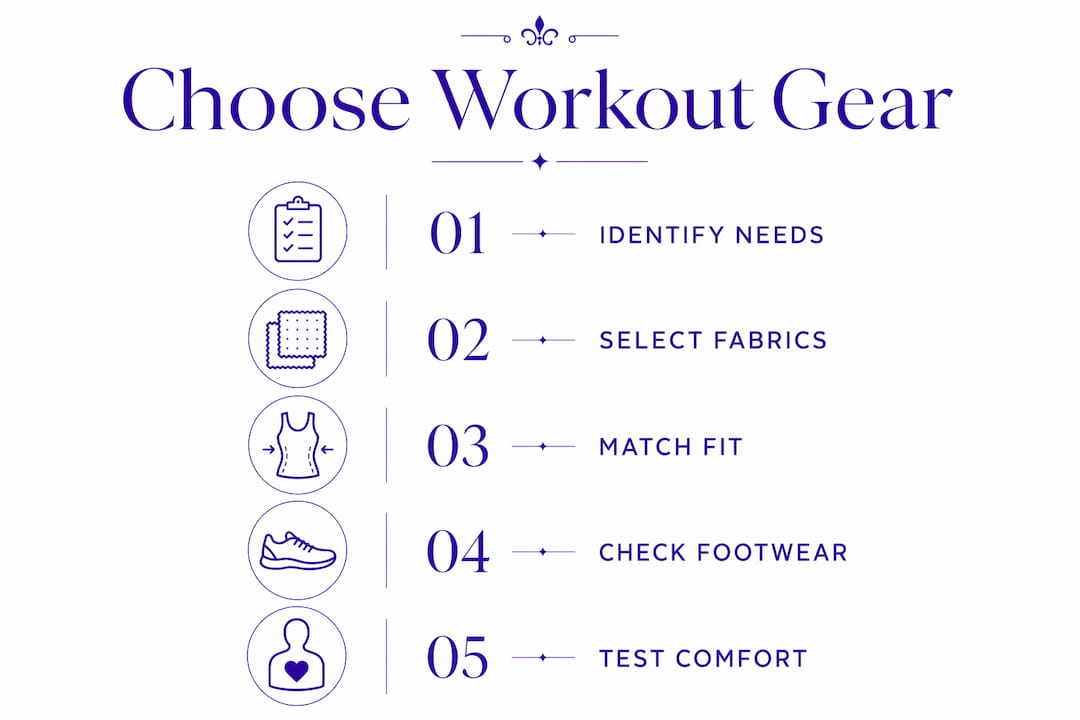
Performance workout gear is defined as apparel and footwear engineered to support specific training demands through fabric technology, fit, and function. Choosing the right gear is not about brand names or price tags. The right choice comes down to matching what you wear to how you train. Fabric, fit, footwear, and activity type are the four factors that separate gear that helps from gear that just looks good in a store. This guide gives you a practical, activity-first framework to choose performance workout gear that actually earns its place in your gym bag.
What fabrics and materials should you choose for performance workout gear?
Fabric is the single most important variable in performance athletic wear. The wrong material turns a hard workout into a miserable one. Polyester blends excel in high-intensity workouts because they dry fast and pull sweat away from your skin. That moisture-wicking property keeps you cooler and reduces chafing during long sessions.
Merino wool is the counterintuitive choice that most gym-goers overlook. It regulates temperature and resists odor better than synthetic blends, making it ideal for moderate-intensity training, outdoor workouts, and any session where you need to go from gym to street without changing. The natural fiber structure traps and releases heat based on your body’s needs.
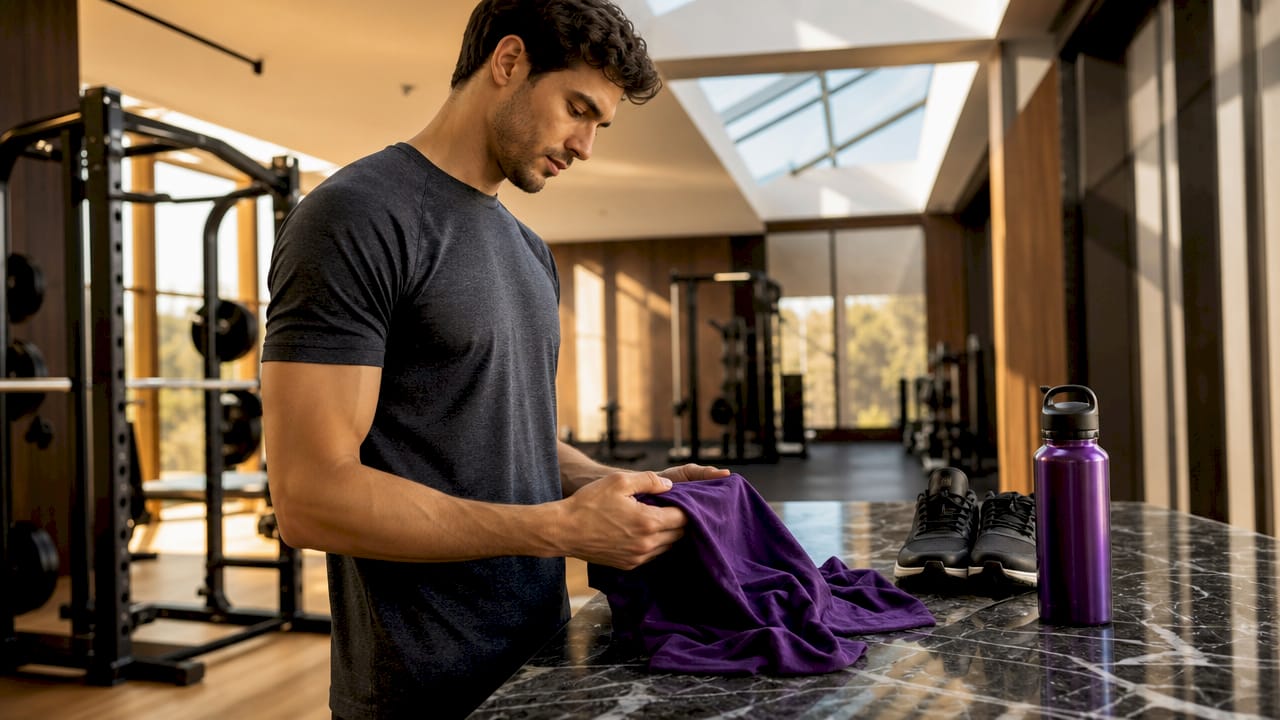
Cotton is the fabric to avoid for intense training. It absorbs sweat and holds it, which adds weight, increases friction, and slows drying. A cotton shirt feels fine at the start of a run and becomes a wet, heavy burden by mile two.
Compression fabrics serve a specific purpose. Compression garments reduce perceived soreness and support muscle groups during high-load activity. Their direct performance impact is modest compared to sleep and nutrition, but the comfort benefit is real and keeps training adherence high.
- Polyester blends: Best for HIIT, running, and any high-sweat activity. Fast-drying and durable.
- Merino wool: Best for moderate training, outdoor sessions, and temperature-variable environments.
- Compression fabrics: Best for weightlifting, HIIT, and recovery-focused sessions.
- Nylon blends: Durable and soft, well-suited for yoga, Pilates, and lower-intensity work.
- Cotton: Avoid for any workout that generates significant sweat.
Stitching quality matters as much as fabric choice. High-value workout gear sits in the middle market, built with reliable stitching and breathable finishes rather than premium branding. Flatlock seams, which lie flat against the skin, prevent the pressure points that standard seams create during repetitive movement.
Pro Tip: Run your fingers along the inside seams of any garment before buying. Raised or rough seams will cause friction during long workouts, no matter how good the fabric is.
How do you match gear to your specific workout type?
Activity-specific selection is the principle that choosing gear before defining training needs leads to wasted investment. Your workout type determines every gear decision, from fabric weight to cut to footwear. A strength athlete and a yoga practitioner have almost nothing in common in terms of what they should wear.
Here is a practical framework for matching gear to activity:
-
Weightlifting and strength training: Choose compression shorts or fitted leggings that keep fabric away from equipment. A fitted performance tee prevents fabric from bunching during deadlifts or bench press. Avoid loose shirts that can catch on bars or obscure your form in the mirror.
-
HIIT and circuit training: Prioritize moisture-wicking polyester blends and a secure fit that moves with you. Compression clothing suits HIIT by reducing friction and providing muscle support through rapid direction changes.
-
Running and cardio: Lightweight, breathable fabrics with minimal seams are the priority. Shorts with built-in liners eliminate the need for separate compression layers. Reflective details matter for outdoor runners training in low light.
-
Yoga and Pilates: Loose or stretchy clothing enhances comfort and range of motion for floor-based and flexibility-focused work. Fitted leggings or wide-leg pants in nylon blends work well. Avoid anything with a stiff waistband that digs in during forward folds.
-
Outdoor and cross-training: Layering becomes the key strategy. A moisture-wicking base layer, an insulating mid-layer, and a wind-resistant outer shell cover most conditions. The layering guide for outdoor training at Moreciandco breaks this down by climate and intensity.
Range of motion is the practical test for any gear choice. Before committing to a purchase, simulate your primary movement patterns. Squat, lunge, reach overhead, and bend forward. If the fabric pulls, rides up, or restricts you at any point, the fit is wrong regardless of how good the material is.
What footwear features matter most for training performance?
Footwear is where most fitness enthusiasts make their most expensive mistakes. Proper footwear selection is essential to injury prevention and performance across every workout type. Wearing running shoes to lift weights, or cross-trainers to run long distances, creates mechanical problems that compound over time.
The fit fundamentals apply to every shoe category. A thumb’s width of space between your longest toe and the shoe’s end prevents black toenails and pressure injuries. A secure heel with no slipping protects your Achilles and ankle stability. Running shoe durability averages 300–500 miles, which translates to roughly 500–800 km. Tracking your mileage and replacing shoes on schedule prevents the gradual loss of cushioning that leads to shin splints and knee pain.
| Training Type | Key Footwear Feature | What to Avoid |
|---|---|---|
| Running | Cushioning, heel-to-toe drop, breathable upper | Flat soles, stiff midsoles |
| Weightlifting | Flat, stiff sole for ground contact | High cushioning, unstable base |
| Cross-training | Lateral support, moderate cushioning | Highly specialized running shoes |
| Yoga / Pilates | Grip socks or barefoot | Thick-soled shoes |
| HIIT | Lateral stability, responsive cushioning | Worn-out running shoes |
Evaluate footwear on stack height, heel-to-toe drop, stiffness, and fit rather than brand recognition or marketing claims. A zero-drop shoe with minimal cushioning works well for lifting but creates injury risk for high-mileage running. A maximally cushioned shoe absorbs impact for road running but removes the ground-feel needed for stable lifting.
Pro Tip: Test new training shoes during a full workout session, not just a walk around the store. Fit changes when your foot swells under load and heat. Many specialty running stores allow treadmill testing before purchase.
How should you test and evaluate new performance gear?
A systematic testing approach separates informed gear decisions from impulse buys. True performance gains come from training and technique, not from gear alone. Gear should solve a specific problem, such as chafing, overheating, or instability, rather than promise a transformation.
-
Establish a baseline first. Track your current comfort, soreness patterns, and performance metrics for one to two weeks before changing any gear. You cannot measure improvement without a starting point.
-
Introduce one item at a time. Testing one new piece of gear over a one to two week window lets you isolate its actual effect. Changing shoes, shorts, and a shirt simultaneously makes it impossible to know what helped or hurt.
-
Evaluate on four metrics: comfort during the session, soreness the following day, performance output, and whether you actually want to wear it again. All four matter.
-
Use return policies as a testing tool. Retailers with generous return windows let you trial gear under real conditions with low financial risk. Check the policy before buying, not after.
-
Build a shortlist before shopping. Define the specific problem you are solving, identify two or three options that address it, and compare them against your criteria. This process mirrors how professionals evaluate any equipment purchase.
“Buying gear without a defined training plan leads to wasted money and unnecessary equipment. Selection must align with workout goals and environment. Treat every gear purchase as a solution to a specific, measurable training problem.”
Common mistakes to avoid when choosing exercise apparel
Most gear mistakes follow a predictable pattern. Recognizing them before you shop saves money and prevents the frustration of a closet full of gear you never use.
-
Skipping activity-specific selection. General-purpose gear rarely performs well at anything specific. A shoe marketed as a “trainer” is a compromise, not a solution. Define your primary activity first.
-
Choosing style over fit and function. Ignoring fit in favor of style causes immediate performance deficits by restricting movement or creating discomfort. A great-looking shirt that rides up during every set is a distraction, not an asset.
-
Buying multiple new items at once. Replacing your entire kit in one shopping session makes it impossible to evaluate what is working. Introduce gear one piece at a time.
-
Overbuying specialized gear before you need it. Buying altitude training gear, carbon-plated racing shoes, or advanced compression suits before your training demands them wastes money and creates clutter. Buy for where your training is now, not where you hope it will be.
-
Skipping real-world testing. Gear that feels fine in a store or looks good in a product photo may fail completely under actual training conditions. Always test under load, sweat, and movement before committing.
The athletic shirt fit guide at Moreciandco covers the specific fit checkpoints that most shoppers miss, including shoulder seam placement and torso length relative to movement range.
Key Takeaways
Selecting performance workout gear requires matching fabric, fit, footwear, and activity type to your specific training demands, then testing each item systematically before committing.
| Point | Details |
|---|---|
| Fabric drives function | Choose polyester blends for high-intensity work and merino wool for temperature-variable sessions. |
| Activity type determines fit | Compression suits HIIT and lifting; loose or stretchy cuts work best for yoga and flexibility training. |
| Footwear is activity-specific | Replace running shoes every 300–500 miles and match shoe type to your primary training modality. |
| Test one item at a time | Introduce new gear over one to two weeks to accurately measure its impact on comfort and performance. |
| Fit outranks style | Gear that restricts movement or causes discomfort hurts performance regardless of how good it looks. |
What I have learned from years of watching people buy the wrong gear
Most fitness enthusiasts I have observed make the same mistake: they buy gear that solves a problem they do not have yet. They purchase carbon-plated shoes before they can run a consistent 5K. They buy advanced compression suits before they have established a lifting baseline. The gear sits in a drawer, and the training problem they actually have, usually discomfort or poor fit in basic apparel, goes unsolved.
The most effective approach I have seen is brutally simple. Identify one specific thing that is making your training worse. Maybe your current shirt causes chafing at mile three. Maybe your shoes feel unstable during lateral movements. Buy the one item that solves that problem, test it for two weeks, and evaluate honestly. That process builds a kit that genuinely supports your training rather than one that looks impressive on a shelf.
Fit and comfort are not secondary concerns. They are the foundation. Gear that fits correctly disappears during a workout. You stop thinking about it and focus on the session. That is the standard every piece of gear should meet before you spend money on it. Trends, branding, and marketing claims are noise. The question is always the same: does this solve a real problem in my training?
— Giuseppe
Moreciandco’s approach to performance workout gear
Moreciandco was built on a straightforward principle: you should get exactly what you pay for, in quality, construction, and experience. The Moreciandco store carries workout apparel built with breathable fabrics, reinforced stitching, and fits designed for real training movement, not just a flattering photo.
The Complesso Collection includes pieces that move between training and everyday wear without sacrificing either function or build quality. Every item is selected with the same activity-first criteria this guide covers: fabric performance, fit integrity, and durability under repeated use. Moreciandco also offers clear return policies so you can test gear under real conditions before committing. If a piece does not perform the way you need it to, returning it is straightforward.
FAQ
What is the best fabric for intense workout sessions?
Polyester blends are the best choice for high-intensity training because they dry fast and wick moisture away from the skin. Merino wool works well for moderate-intensity or outdoor sessions where temperature regulation matters more than rapid drying.
How often should you replace running shoes?
Running shoes should be replaced every 300–500 miles, which equals roughly 500–800 km. Worn cushioning past that point increases injury risk even when the shoe still looks intact.
Does compression gear actually improve performance?
Compression garments provide real benefits in perceived soreness reduction and training adherence, but their direct performance impact is modest. Their greatest value is comfort and recovery support rather than measurable output gains.
How do you know if workout gear fits correctly?
Gear fits correctly when it allows full range of motion without pulling, riding up, or restricting movement. Test by simulating your primary training movements, including squats, lunges, and overhead reaches, before purchasing.
Should you buy specialized gear before starting a new training program?
No. Buy gear that solves a specific problem in your current training. Purchasing specialized equipment before your training demands it leads to wasted investment and gear you will not use.