


Matching ties to dress shirts is the process of coordinating colors, patterns, and fabrics to create a cohesive, refined appearance for formal and business occasions. Get it right, and your outfit reads as intentional and authoritative. Get it wrong, and even a well-cut suit loses its impact. The good news is that tie and shirt combinations follow clear, learnable rules. Master three principles — color, pattern, and fabric — and you will dress with confidence at every event, from boardroom presentations to black-tie dinners.
How to match ties to dress shirts using color
Color is the first thing anyone notices about a tie and shirt pairing. The foundational rule is simple: the tie should be darker than the shirt. A darker tie draws the eye upward toward the face and creates a visual anchor that reads as polished rather than casual. A tie lighter than the shirt reverses that effect and tends to look unfinished.
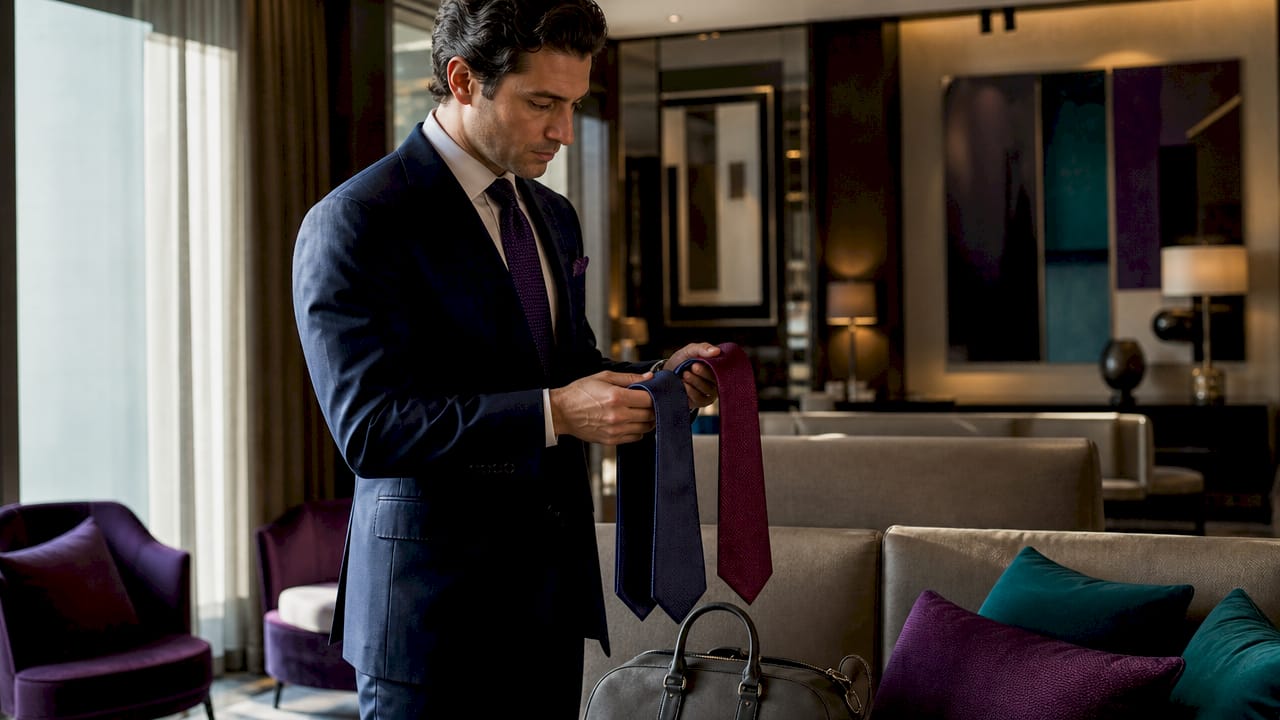
The two most versatile tie colors are navy and burgundy. Navy and burgundy ties cover approximately 90% of all formal and business occasions, pairing cleanly with white, blue, pink, and gray shirts. That is a significant return on a small investment. If you own only two ties, make them navy and burgundy.
Contrasting versus complementary color pairings
Contrasting pairings are the easier starting point. A mid-blue shirt with a burgundy tie is a textbook example: the colors sit opposite each other on the color wheel, creating clear separation without clashing. Most men can pull off contrasting combinations without much practice.
Complementary pairings require more care. Pairing a light blue shirt with a slightly deeper blue tie, for instance, demands careful shade control. When done right, the result looks sophisticated. When the shades are too close, the look reads as accidental rather than deliberate.
Best tie colors for common shirt colors
| Shirt color | Best tie colors |
|---|---|
| White | Navy, burgundy, charcoal, forest green |
| Light blue | Burgundy, navy, silver gray, burnt orange |
| Pink | Navy, charcoal, deep purple, forest green |
| Gray | Burgundy, navy, deep red, dark teal |
| Light green | Navy, dark brown, burgundy |
Pro Tip: When choosing a tie color, look at your suit jacket too. A navy tie with motifs that echo both the shirt and suit colors creates a cohesive ensemble rather than a two-piece match that ignores the third element.
How do you coordinate patterns between ties and shirts?
Pattern coordination is where most men make mistakes. The core rule is straightforward: pair a solid tie with a patterned shirt, or a patterned tie with a solid shirt. Solid and patterned pairings balance visual complexity and prevent either piece from competing for attention.
When you want to mix two patterns, proportion becomes the deciding factor. The tie pattern should be larger than the shirt pattern. This size contrast signals that the combination is intentional rather than accidental. Matching scales, such as a narrow-striped tie over a narrow-striped shirt, create visual noise that reads as cluttered.
Pattern types that work well together
- Widely striped tie + narrowly striped shirt: The difference in stripe width creates contrast. Pattern proportion is the governing principle here. The eye reads each pattern separately rather than merging them into chaos.
- Polka dot tie + solid or subtly textured shirt: Dots are self-contained and do not compete with linear patterns in the shirt.
- Paisley or floral tie + solid shirt: Bold tie patterns demand a clean, solid shirt as a backdrop.
- Plaid or check shirt + solid tie: A solid tie in one of the shirt’s dominant colors ties the look together without adding more visual elements.
Never mix more than two patterns in a single outfit. Adding a patterned pocket square to an already patterned tie and shirt combination crosses the line from intentional to chaotic. One pattern in the tie, one in the shirt, and everything else solid is the reliable formula.
Pro Tip: A patterned navy tie against a lighter patterned shirt works when the navy is the dominant color in the tie and the shirt’s pattern is subtle. Color unity compensates for pattern complexity.
Matching tie and shirt fabrics for different occasions
Fabric choice determines how formal or relaxed a combination reads. For boardroom settings and black-tie events, a smooth silk tie paired with a crisp poplin dress shirt is the standard. Silk reflects light cleanly and signals formality. Poplin’s tight weave provides a smooth surface that complements the tie’s sheen without competing with it.
For casual office environments or business casual events, the rules loosen. Knit ties and coarsely woven ties add texture and a relaxed quality that works well with sport jackets or oxford cloth shirts. The texture itself communicates that the setting is less formal, which is appropriate when the dress code calls for it.
Understanding dress shirt fabric types helps you make better tie choices. A twill shirt, for example, has a subtle diagonal texture that pairs well with a matte silk or knit tie. A heavily textured linen shirt calls for a similarly casual tie fabric, such as cotton or knit.
- Formal events: Silk tie + poplin or broadcloth shirt
- Business professional: Silk or woven tie + twill or pinpoint oxford shirt
- Business casual: Knit or wool tie + oxford cloth or chambray shirt
- Smart casual: Knit or cotton tie + linen or casual oxford shirt
Texture also affects perceived formality in a way that color alone does not. A matte knit tie in navy reads as more relaxed than a shiny silk tie in the same navy. Choosing the right texture for the occasion is as important as choosing the right color. Textured and knit ties are trending for 2026, replacing flat and shiny ties in many professional wardrobes.
Step-by-step guide to selecting a tie for your dress shirt
A clear sequence removes the guesswork from dress shirt and tie matching. Follow these steps before any formal or business event.
- Choose your shirt based on the occasion. White and light blue shirts are the most versatile. Pink and gray work well for business settings. Check the types of dress shirts suited to your event before committing to a color.
- Select a tie color that is darker than the shirt. Pull out your navy and burgundy ties first. They cover the widest range of shirt colors and occasions.
- Check the tie color against your suit jacket. The tie should echo at least one color present in the shirt or the suit. This creates a three-piece harmony rather than a two-piece match.
- Assess pattern compatibility. If your shirt has a pattern, choose a solid tie. If your shirt is solid, you can introduce a patterned tie. Confirm the tie pattern is larger than the shirt pattern if you are mixing both.
- Match the fabric to the formality level. Silk for formal. Knit or woven for casual. Confirm the texture reads appropriately for the event.
- Do a mirror check. Step back and look at the full outfit. The tie should draw the eye upward. If it blends into the shirt or fights with it, swap it out.
Common mistakes and how to fix them
| Mistake | Fix |
|---|---|
| Tie lighter than the shirt | Swap for a darker shade of the same color family |
| Matching pattern scales | Choose a tie with a noticeably larger or smaller pattern |
| Ignoring the suit jacket | Pick a tie that echoes a color in both the shirt and jacket |
| Too many patterns | Remove one patterned element and replace with a solid |
| Wrong fabric for the event | Use silk for formal, knit for casual |
Pro Tip: When in doubt, a solid navy silk tie over a white poplin shirt is the single most reliable combination in menswear. It works for job interviews, weddings, and boardroom meetings without adjustment. Build from that baseline and add variety as your confidence grows.
Key Takeaways
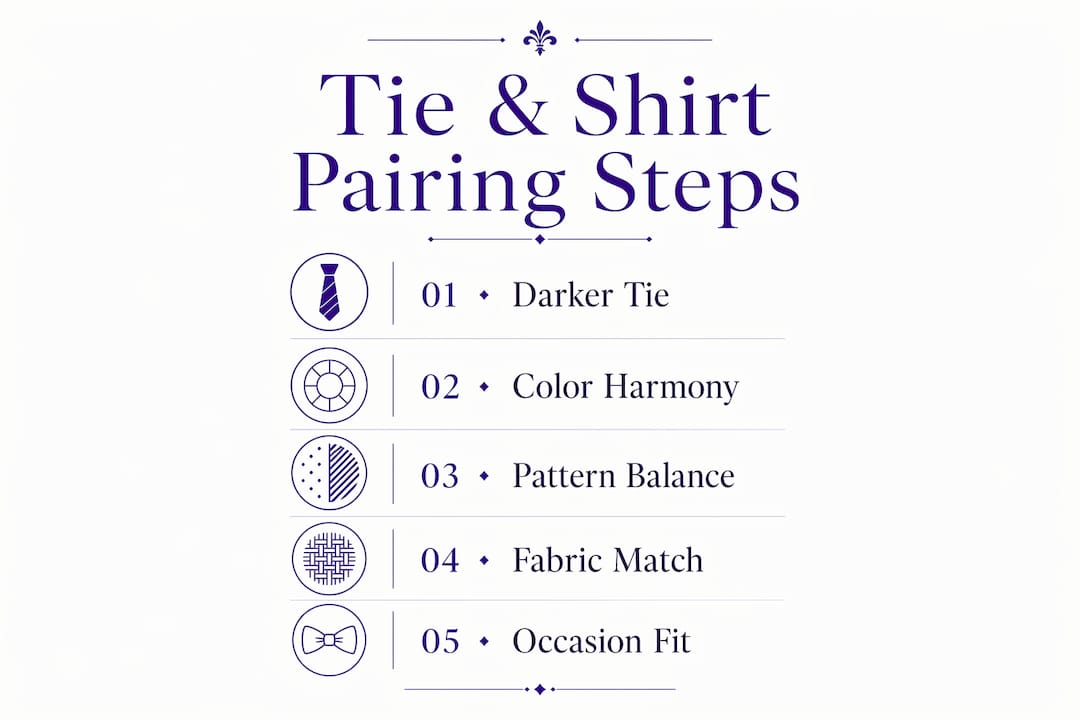
Mastering tie and shirt coordination requires three consistent decisions: choose a darker tie, balance patterns by scale, and match fabric to formality.
| Point | Details |
|---|---|
| Darker tie rule | The tie should always be darker than the shirt to create visual balance and sophistication. |
| Core tie colors | Navy and burgundy cover approximately 90% of formal and business occasions across common shirt colors. |
| Pattern proportion | The tie pattern should be larger than the shirt pattern to avoid visual clutter. |
| Fabric and formality | Silk ties suit formal events; knit or woven ties fit casual office and business casual settings. |
| Full outfit harmony | Match the tie to both the shirt and the suit jacket for a cohesive three-piece look. |
What I have learned from years of getting this wrong first
The advice I wish someone had given me earlier is this: stop treating the tie as an afterthought. Most men pick their shirt and suit, then grab whatever tie is closest. That approach produces outfits that are technically fine but never memorable.
The shift happens when you start with the tie. Choose a navy or burgundy silk tie, then build the shirt and suit around it. That reversal forces you to think about color harmony from the center of the outfit outward. It also makes getting dressed faster, because the tie becomes the anchor rather than the variable.
Pattern mixing intimidated me for years. The proportion rule changed that. Once I understood that a large-scale tie pattern over a fine-stripe shirt looks intentional, I stopped avoiding patterns entirely. A spread collar shirt also opens up more tie knot options, which affects how the pattern reads at the collar. That detail matters more than most guides admit.
For 2026, I am paying attention to knit and textured ties. They add depth to outfits that would otherwise look flat, and they work in settings where a shiny silk tie feels overdressed. The texture signals effort without formality, which is exactly right for the current business casual standard in most American offices.
Own five ties: two navy, one burgundy, one charcoal, and one with a subtle pattern. That covers every occasion. Practice pairing them with your existing shirts before the event, not the morning of it.
— Giuseppe
Moreciandco’s collection for polished tie and shirt pairings
Coordinating ties and dress shirts is easier when the quality of each piece is consistent. Moreciandco builds its collections around that principle: every item is made to deliver what you paid for, in fabric, construction, and finish.

The Moreciandco store carries dress shirts and ties selected for their pairing potential, not just individual appeal. The fabrics hold their structure, the colors are true to what you see, and the craftsmanship shows in how each piece wears over time. If you are building a wardrobe that works for formal events and business settings, starting with pieces that are already calibrated to work together saves time and removes the guesswork. Browse the Complesso Collection for luxury clothing pieces that pair well with a sharp tie and a well-chosen shirt.
FAQ
What is the basic rule for matching ties to dress shirts?
The tie should always be darker than the shirt. This creates visual balance and draws attention upward toward the face.
What are the best tie colors for a white dress shirt?
Navy, burgundy, charcoal, and forest green all pair cleanly with a white shirt. Navy and burgundy are the most versatile starting points for any formal occasion.
Can you wear a patterned tie with a patterned shirt?
Yes, but the tie pattern must be noticeably larger than the shirt pattern. Matching pattern scales create visual clutter. A widely striped tie over a fine-stripe shirt is the clearest example of this rule working correctly.
What tie fabric is best for a formal event?
A smooth silk tie is the standard for formal events. Pair it with a poplin or broadcloth dress shirt for the most polished result.
How do you coordinate ties with formal shirts for business casual settings?
Choose a knit or woven tie over an oxford cloth or twill shirt. The added texture reads as intentional and relaxed without sacrificing a professional appearance.