


Choose a midweight performance-blend hoodie with a relaxed athletic cut, moisture-wicking finish, and at least one zippered pocket. The rest is matching specific features to how you actually train.
Quick checklist before you buy:
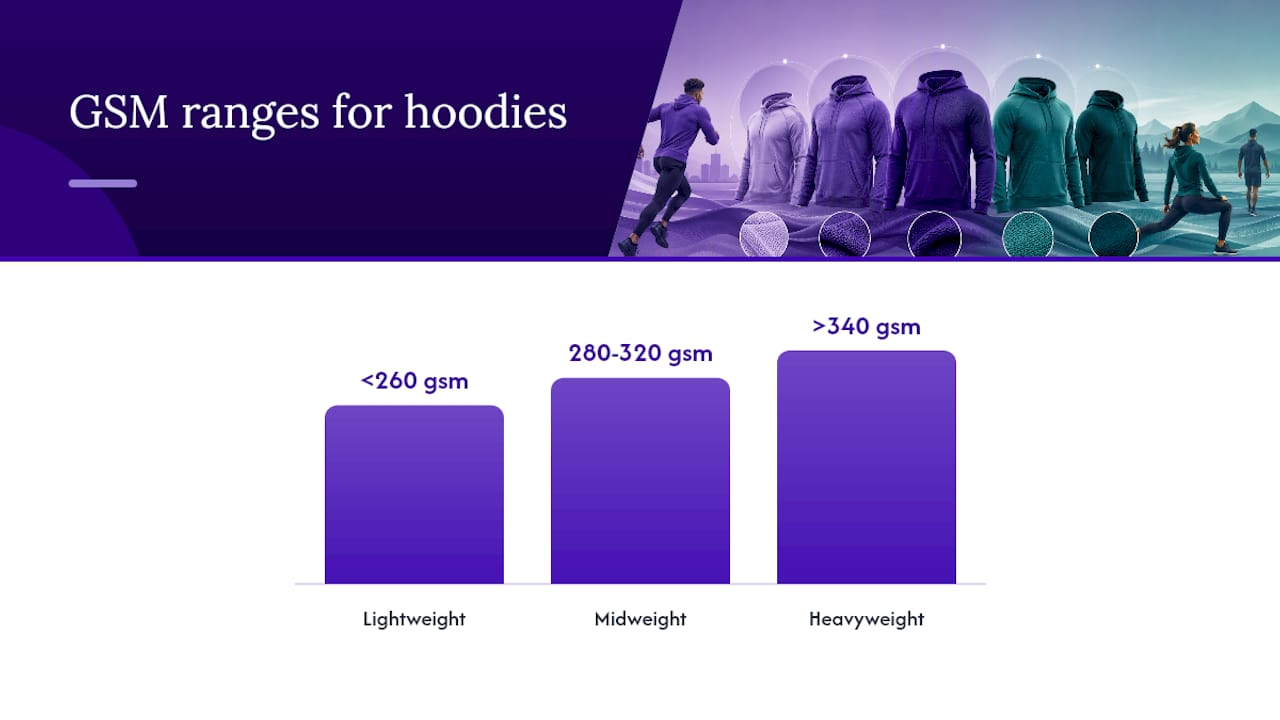
- GSM: 280–320 gsm for versatile use; under 260 gsm for pure cardio; over 340 gsm for recovery only
- Fabric blend: Cotton-poly or polyester/nylon/elastane over 100% cotton for workouts
- Fit profile: Relaxed athletic (not oversized) for gym use; trim for running
- Ventilation: Quarter-zip or full-zip for high-intensity sessions; pullover for casual warmth
- Pocket: At least one zippered closure for keys and cards
Moreciandco’s approach to buying guides starts here: measure the spec, not the marketing copy.
Key Takeaways
A midweight (280–320 gsm) performance-blend hoodie with a relaxed athletic cut, zippered pockets, and quarter or full-zip ventilation covers the widest range of training and commute needs for most athletes.
| Point | Details |
|---|---|
| GSM is your anchor spec | Target 280–320 gsm for versatile use; check the product page before buying. |
| Fit test before committing | Try arm circles, overhead reach, and a hinge row to confirm full range of motion. |
| Zippered pockets only | Kangaroo pockets shift weight and bounce; zippered side pockets are the only workout-safe option. |
| Blends outperform pure cotton | Cotton-poly and polyester blends dry faster and hold shape better for active training. |
| Invest once, rotate basics | One well-constructed $75+ hoodie outlasts multiple $30 ones; reserve budget options for recovery use. |
Table of Contents
- How to select a quality athletic hoodie: the features that matter
- Why a workout hoodie helps beyond basic warmth
- How a hoodie should fit and how to layer it for different activities
- What different fabrics do: cotton, blends, synthetics, merino, and recycled options
- Which hoodie suits which workout: practical pairings by activity
- How to care for your hoodie and realistic lifespan expectations
- Representative hoodie types and what they do well
- Scan before you checkout: a quick buying checklist
- Windproofing and water resistance for outdoor training
- How a hoodie fits into your full layering system
- Why midweight performance hoodies are the right default
- Sources
How to select a quality athletic hoodie: the features that matter
A hoodie earns its place in a training wardrobe when it does more than keep you warm on the walk from the parking lot. According to Gear Patrol’s testing, workout hoodies support warm-up thermoregulation during early session minutes, aid recovery between sets, and pull double duty on commutes. That utility is why the feature checklist below focuses on performance attributes, not aesthetics.
Shoulder and armhole construction
Raglan sleeves (the seam runs from underarm to collar) give more rotational freedom than set-in sleeves. For pressing, rowing, and overhead work, that difference is real. Set-in sleeves look cleaner but can bind at the shoulder when you load a barbell.
Hood and collar design
A lined hood sits flatter and stays put during movement. Unlined hoods are lighter but tend to flop forward during bent-over exercises. Drawstrings with a cord lock beat toggle-style closures for one-handed adjustment. If you run with earbuds, check that the hood opening is wide enough to route a cable without pulling the hood off-center. Helmet compatibility matters for cyclists; look for a low-profile hood with minimal padding.
Pocket types and closures
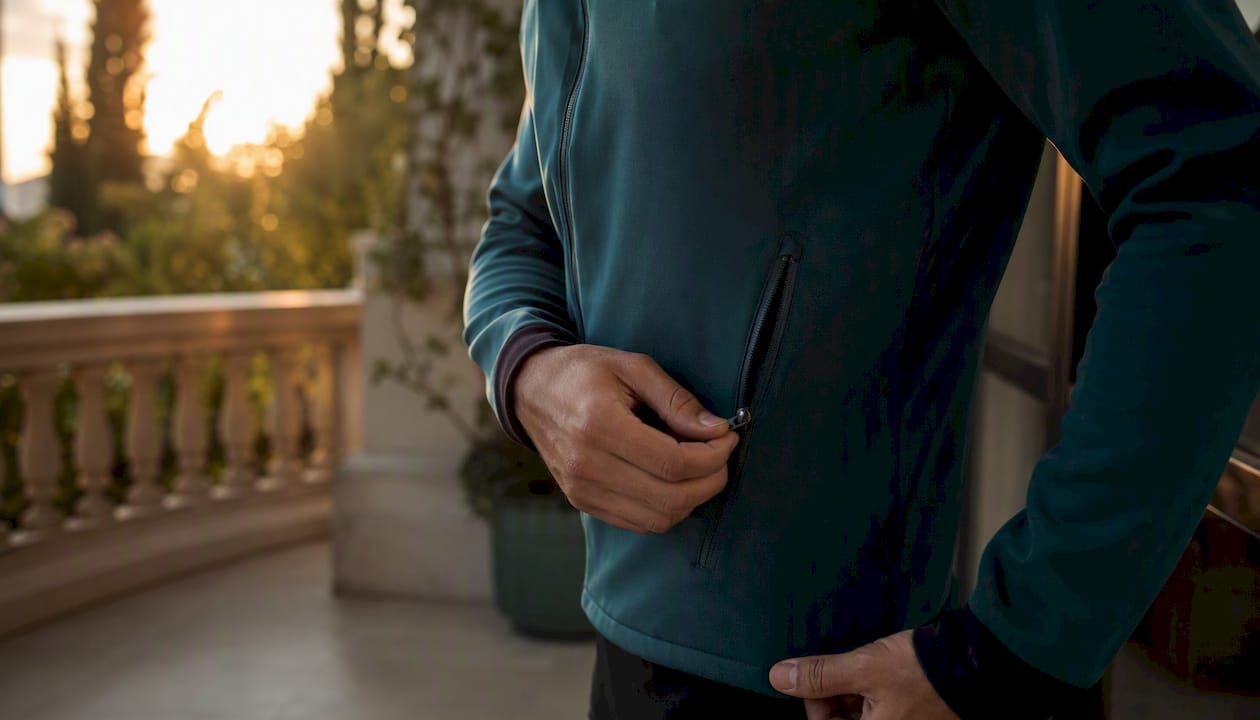
Zippered side pockets are the only reliable option for workouts. Kangaroo pockets shift weight forward and bounce during running. Sleeve pockets work for a single key but nothing else. For commuting, two zippered hand pockets plus an interior chest pocket is the practical maximum.
Seams and construction
Flatlock seams lie flat against the skin and prevent chafing under a loaded barbell or backpack strap. Double-needle stitching at stress points (underarm, pocket edges, cuffs) adds years to a hoodie’s life. Bar tacks at pocket corners are a small detail that separates a $30 hoodie from a $90 one.
Ventilation and odor control
Technical hoodies use mesh panels, body-mapped ventilation zones, and quarter or half zips to manage heat during higher-intensity sessions. A full zip lets you vent completely; a quarter zip handles moderate regulation without removing the garment. Antimicrobial finishes (silver-ion or zinc-based treatments) reduce odor between washes but may lose effectiveness after many wash cycles. Washing more frequently with a technical detergent is a longer-term solution than relying on the finish alone.
Pro Tip: Test ventilation before you buy: zip the hoodie halfway and do 10 jumping jacks in the store or your living room. If you’re already overheating, the fabric weight or zip placement isn’t right for high-intensity use.
Why a workout hoodie helps beyond basic warmth
Cold muscles tear. That’s the short version of why warm-up matters, and a hoodie is one of the simplest tools for managing tissue temperature in the first 10–15 minutes of a session. It traps heat generated by early movement, which keeps joints lubricated and muscles pliable before you load them.
Beyond the gym floor, a midweight hoodie covers commute, cool-down, and travel without requiring a separate layer. That versatility is what makes it the highest-utility single purchase for most active people.
Pro Tip: Wear your hoodie for the first two working sets, then remove it. You get the warm-up benefit without overheating once your core temperature rises.
How a hoodie should fit and how to layer it for different activities
Fit rules by activity are simple once you know them. For running and warm-up cardio, a trim fit reduces fabric flutter and wind resistance. For strength training and gym work, a relaxed athletic cut gives shoulder room without excess bulk. Oversized fits belong in recovery and street contexts only; they restrict movement and catch on equipment.
Before buying, run through these movements in the fitting room: arm circles, an overhead reach (both arms), a simulated bent-over row (hinge at the hips, arms extended), and a squat setup. If the hoodie rides up past your waistband or pulls across the shoulders in any of these, size up or try a different cut. The athletic fit guide from Moreciandco covers sleeve and shoulder measurement checks worth reviewing before you order online.
For layering, a midweight hoodie (280–320 gsm) sits cleanly over a compression base layer or a standard tee. Under a softshell or light rain jacket, it adds warmth without bulk. Quarter-zip and full-zip styles make mid-session venting fast; pullovers are better for steady-state activities where you won’t need to remove them quickly.
Pro Tip: If you train in a cold gym and then commute home, a full-zip midweight is the most practical single layer. You can open it fully between sets and zip it closed the moment you step outside.
What different fabrics do: cotton, blends, synthetics, merino, and recycled options
GSM (grams per square meter) is the one objective spec that cuts through marketing language. A practical midweight range is 280–320 gsm, which balances warmth, breathability, and layering for most activities. Below 260 gsm is lightweight territory, suited for running and high-sweat sessions. Above 340 gsm is heavyweight, best reserved for recovery and cold-weather outdoor use.
| Fabric type | Moisture control | Odor resistance | Durability | Best use |
|---|---|---|---|---|
| 100% cotton | Absorbs, stays wet | Low | Moderate | Recovery, casual |
| Cotton-poly blend | Faster dry than cotton | Moderate | Good | Gym, commute |
| Polyester/nylon/elastane | Fast-drying | Moderate (with finish) | High | Running, HIIT |
| Merino wool blend | Wicks and regulates | High (natural) | Moderate | Outdoor, travel |
| Bamboo blend | Wicks, soft hand | High (natural) | Moderate | Recovery, studio |
| Recycled polyester (GRS) | Fast-drying | Moderate | High | General training |
Blended performance fleece and polyester/nylon mixes dry faster and retain shape better than 100% cotton. Cotton-heavy pieces feel softer but hold sweat against the skin, which becomes uncomfortable mid-session. For a deeper look at why cotton underperforms during active training, the Moreciandco guide on cotton’s moisture drawbacks is worth a read.
On care labels, look for: fiber percentage, GSM (not always listed, but worth asking the retailer), pre-shrunk callout, and recommended wash temperature.
Which hoodie suits which workout: practical pairings by activity
| Activity | Fit | Fabric / GSM | Ventilation | Key feature |
|---|---|---|---|---|
| Running / light cardio | Trim | Poly/nylon blend, <260 gsm | Mesh panels, half-zip | Reflective details, low bulk |
| Strength / lifting | Relaxed athletic | Cotton-poly or tech fleece, 280–320 gsm | Quarter-zip or pullover | Raglan sleeve, flatlock seams |
| HIIT / studio | Trim to standard | Technical blend, 260 gsm | Full-zip or quarter-zip | Fast venting, stretch panels |
| Recovery / travel | Relaxed to oversized | Bamboo blend or heavyweight cotton, >320 gsm | Pullover | Soft hand, drape |
| Commuting / errands | Standard | Midweight blend, 280–320 gsm | Full-zip | Zippered pockets, clean profile |
For HIIT and studio work, the high-intensity apparel guide from Moreciandco covers quick-dry fabric specs and fit considerations worth checking alongside this table.
How to care for your hoodie and realistic lifespan expectations
Wash cold, skip fabric softener, and air-dry when possible. Fabric softener coats synthetic fibers and degrades moisture-wicking treatments faster than regular washing does. Tumble drying on low is acceptable for most blends; high heat is the primary cause of premature shrinkage and elastic breakdown at cuffs.
Durability signals to check before buying: double-needle stitching at underarm and cuff, reinforced seam tape at stress points, and metal or nylon zipper pulls (plastic pulls crack within a year of regular use). Flat-lay measurements, seam reinforcement, and zipper hardware are more reliable durability indicators than any promotional claim.
Price-to-lifespan roughly breaks down like this: under $40 typically buys 1–2 years of regular use before pilling and seam failure; $50–$75 gets you 2–4 years with proper care; above $75 from a construction-focused brand can last 5 or more years. Replace a hoodie when pilling covers the chest and sleeves, seams separate at stress points, stretch is gone at cuffs, or odor persists after a proper cold wash.
Pro Tip: Turn hoodies inside-out before washing. It protects the outer face fabric from abrasion against other garments and extends the life of any printed graphics or surface treatments.
Representative hoodie types and what they do well
- Midweight performance pullover (e.g., Ten Thousand Midweight Tech Pullover): Built around a technical fleece that manages heat without overheating; the standout feature is its athletic cut that doesn’t restrict shoulder movement during pressing.
- Lightweight running hoodie (e.g., Brooks Notch Thermal Hoodie): Prioritizes breathability and a trim silhouette; the notch collar and mapped ventilation make it the go-to for outdoor runs where you need warmth at the start and airflow once you’re moving.
- Training pullover with compression-friendly fit (e.g., Nike Tech Fleece / training line): Pairs well over a compression base layer; the tapered sleeve keeps fabric away from the elbow during rows and curls.
- Soft-touch recovery option (e.g., Vuori Pima cotton or half-zip): Pima cotton’s longer fiber length produces a noticeably softer hand; best for post-session and travel rather than active training.
- Studio and HIIT quarter-zip (e.g., Gymshark training hoodies): The quarter-zip placement allows fast venting without full removal; works well for circuit-style sessions where intensity fluctuates.
- Heavyweight recovery pullover (e.g., Under Armour Project Rock heavyweight): Dense fleece construction for cold-weather warm-ups and post-lift cool-downs; too heavy for sustained cardio but excellent for outdoor lifting in winter.
- Budget-accessible fleece (e.g., Reebok Identity Fleece): Straightforward cotton-poly blend that covers casual gym use; construction is functional rather than technical, which is reflected in the price.
- Lounge-to-gym crossover (e.g., Saxx Trailzer Lounge Hoodie): Bamboo-blend fabric gives it a softer hand than most synthetic options; the fit is relaxed enough for recovery but structured enough for a light gym session.
Scan before you checkout: a quick buying checklist
- GSM and fiber content: Check the spec page or product description; if GSM isn’t listed, ask or skip.
- Flat-lay measurements: Verify chest width and sleeve length against your measurements; size charts vary significantly between brands.
- Pocket closures: Confirm zippered pockets if you train with a phone or keys; kangaroo pockets are not workout-safe.
- Ventilation type: Match zip style to your primary activity (full-zip for HIIT, quarter-zip for gym, pullover for recovery).
- Care instructions: Cold wash and air-dry callouts signal a better-constructed fabric; “machine wash warm, tumble dry high” on a performance blend is a red flag.
- Return policy: For online orders, confirm free returns before buying; movement tests in-store are always worth the extra five minutes.
- Customer reviews: Filter for consistent complaints about pilling after a few washes, sleeve length running short, or shrinkage after the first wash.
Windproofing and water resistance for outdoor training
Insulation weight alone doesn’t protect you outdoors. Wind chill drops perceived temperature fast, and a standard fleece hoodie offers almost no wind resistance. For outdoor training in variable conditions, look for a DWR (durable water repellent) coating on the outer face fabric or a bonded wind-resistant layer. DWR treatments bead water off the surface but are not waterproof; they handle light rain and wind without the stiffness of a full shell.
Body-mapped construction places wind-resistant panels at the chest and shoulders (where wind hits first) while keeping stretch fabric at the sides and underarms for mobility. This approach appears in technical outdoor hoodies and is worth the price premium if you run, cycle, or train outside regularly. The Moreciandco outdoor workout apparel guide covers windproofing and thermal layering in more detail for athletes who train outside year-round.
How a hoodie fits into your full layering system
A midweight hoodie is the middle layer in a three-piece system: base layer (moisture management), mid layer (insulation and warmth), outer shell (wind and water protection). It works in both directions: over a compression tee for gym use, or under a softshell for outdoor training. That flexibility is what makes it the most versatile single purchase in an athletic wardrobe.
For gym-only use, a hoodie over a standard tee is usually enough. For outdoor sessions, pair a moisture-wicking base layer with the hoodie and add a packable shell when conditions require it. Full-zip and quarter-zip styles make mid-layer removal fast without disrupting the base layer underneath. Pullovers are better suited to steady-state indoor activities where you won’t need to vent quickly.
Coordinating with lower-body training apparel is straightforward: a relaxed athletic hoodie pairs cleanly with fitted training shorts or joggers. Oversized hoodies can bunch under a lifting belt or catch on equipment, so keep the fit proportional to your lower-body pieces.
Why midweight performance hoodies are the right default
Most buyers overthink this. The midweight performance blend covers the widest range of use cases without a meaningful tradeoff in any single direction. It’s warm enough for a cold gym, breathable enough for a moderate-intensity session, and structured enough to wear on a commute without looking like you just rolled out of bed.
The brands that get this right share one thing: they publish actual fabric specs. GSM, fiber percentage, seam construction details. That transparency is the same standard Moreciandco applies across its apparel line, from the bamboo-cotton Complesso Tee to its broader guides on construction and fit. If a brand won’t tell you what’s in the fabric, that’s information too.
One thing most guides skip: the difference between a hoodie that lasts one season and one that lasts five years is almost never the fabric weight. It’s the seam construction, the zipper hardware, and whether the brand pre-shrunk the fabric before cutting. Those three details are worth more than any marketing claim about “premium fleece.”
Sources
- Best workout hoodies (Gear Patrol)
- How to Choose a Hoodie: A Practical 2024 Guide
- Best gym hoodies and pullovers