


Low-profile hats sit close to the head, with a relatively short crown height, and suit a snug, understated look. High-profile hats stand taller, usually 4 inches or more, giving you a roomier fit and a bolder silhouette. Mid-profile hats split the difference at 3 to 4 inches, and they’re the safest bet if you’re not sure which way to go.
Here’s the quick version:
- Choose low profile if you want a hat that molds to your head, works with thick hair, and reads casual.
- Choose mid profile if you want a balanced, classic look that works across most head shapes.
- Choose high profile if you want more room, a structured front, or a bigger canvas for a logo.
TL;DR:
- Choose mid-profile hats for most daily wear, as they offer a balanced look and comfortable fit across different head shapes and hair types.
- High-profile caps are best for individuals with thick or long hair, or those who prefer extra headroom, but may look bulky on smaller heads.
- Proper measurement of crown height and trying the hat on with head movements are essential steps to ensure a good fit before purchase.
- Structure and material significantly influence appearance and comfort, with stiffer fronts suited for embroidery and softer crowns better for minimal logos.
- The Cappellino Baseball Hat exemplifies a versatile, relaxed mid-to-low profile style ideal for casual, everyday use.
Table of Contents
- What Is Hat Profile, Really?
- How Does Fit Feel Different at Each Profile?
- Which Hat Styles Use Low, Mid, and High Profiles?
- How to Choose Between Low and High Profile Hats
- What Materials and Structure Work Best for Each Profile
- How Do You Measure Crown Height Yourself?
- What the Data Actually Tells You About Choosing a Profile
- Where the Cappellino Baseball Hat Fits In
- Key Takeaways
- Sources
What Is Hat Profile, Really?
“Profile” refers to crown height, the vertical distance from where the brim meets the hat to the highest point of the top panels. It’s the single measurement that determines whether a cap looks sleek or stacked, and it’s the number you should check before adding anything to your cart.
Crown-height ranges vary slightly by brand, but the industry generally lands in three buckets:
- Low profile: a short crown height
- Mid profile: a moderate crown height
- High profile: a tall crown height
Columbia’s hat FAQ uses these same brackets to explain fit differences between structured and relaxed styles, and most reputable hat makers follow suit.
A structured front changes how tall a hat looks even at the same crown height. Buckram or foam lining stiffens the front panels, so a 3-inch structured cap can look taller than an unstructured 3.5-inch dad hat that slouches. That’s worth remembering when you’re comparing specs across two different brands. We’ll cover exact measuring steps later, but for now, know that the number on a product page and the number you’d get with a tape measure don’t always match perfectly once you account for structure.
How Does Fit Feel Different at Each Profile?
Crown height doesn’t just change how a hat looks. It changes how it feels on your head for eight hours straight.
Low-profile hats hug the skull. There’s less interior air space, so they mold to your head shape faster and feel less bulky, which is exactly why Monterey Company’s breakdown of hat profiles points to low crowns as the pick for anyone who dislikes feeling like they’re wearing something on top of their head. The tradeoff: if you have thick or long hair, a low crown can feel tight by hour three.

Mid-profile hats are the compromise most people should start with, since they balance silhouette and comfort without committing hard in either direction.
High-profile hats give you extra headroom, which matters more than people expect if you’ve got a lot of hair or just prefer a looser feel. The tradeoff runs the other way here: too much crown on a smaller head and the hat can look like it’s floating, with the front panel gapping instead of sitting flush.
- Thick hair or dreadlocks: lean mid to high profile
- Shaved head or short hair: low profile will sit closer and look more intentional
- Sensitive scalp or long wear: mid profile usually wins on comfort
Pro Tip: If you’re between sizes, try the hat on and shake your head side to side. A profile that’s too tall for your head shape will rock or shift; the right one stays put without a strap.
Which Hat Styles Use Low, Mid, and High Profiles?
Once you know the crown-height brackets, you’ll start noticing them everywhere. Different styles default to different profiles, and matching the name to the number makes shopping faster.
- Low profile: dad hats, relaxed cotton caps, most unstructured six-panel styles
- Mid profile: classic baseball caps, many adjustable truckers, the cap you probably picture when someone says “baseball hat”
- High profile: snapbacks, A-frame truckers, some fitted caps with foam fronts characterized by their taller crowns.
Non-baseball styles fit the same logic even though the terminology shifts. A bucket hat has almost no vertical crown to speak of, so it behaves like an extreme low profile. A fedora’s crown height varies by block style, but a tall, pinched crown reads closer to high profile in how it sits and how much room it gives your head.
How to Choose Between Low and High Profile Hats
Run through this checklist before you buy, whether you’re shopping online or standing in front of a mirror.
- Match profile to head shape and hair. Rounder faces and thicker hair often look and feel better in mid to high profile; smaller heads and shorter hair usually suit low profile.
- Match profile to activity. Sport and high-movement use favor low or mid profile since less material means less wind resistance and less bounce.
- Match profile to decoration. Want a tall embroidered logo or a 3D puff design? You need the structure a high crown provides.
- Try it on and check brim clearance. The brim should clear your eyebrows without tilting into your sightline.
- Run the two-finger test. You should fit two fingers between your head and the sweatband at the temple and back, no more, no less.
- Move your head. Nod, shake, look up. If the hat shifts or gaps at the forehead, size down or drop a profile tier.
Watch for red flags: a logo that warps or bubbles on a soft, unstructured panel; a crown that feels crowded against your scalp; or a visible gap between your forehead and the hat’s front seam. Any of those means you picked the wrong profile, not the wrong size.
Pro Tip: When in doubt, mid profile is the least risky purchase. It’s the one style that rarely looks wrong on a head it wasn’t designed for, which is exactly why it’s the default recommendation for first-time buyers building out a rotation.
What Materials and Structure Work Best for Each Profile
High crowns almost always pair with structured fronts, buckram or foam lining that holds its shape and gives embroidery something solid to sit on. That’s why Foremost Hat’s comparison of profile types notes that heavy embroidery and 3D puff logos need that stiffness to read cleanly. Low crowns skip the structure, which is exactly why they pair better with woven or leather patches and simple, minimal logos instead of tall lettering.
- Cotton and cotton blends: breathable, classic, works at any profile
- Bamboo-cotton blends: softer hand feel and better moisture wicking for warm-weather wear
- Mesh panels: best for high-movement, high-heat use, usually on mid or low crowns
A wide brim and tightly woven fabric add real sun protection, but a hat alone isn’t a full sun-safety plan. The FDA recommends pairing hats with sunscreen and sunglasses, not relying on brim coverage by itself.
How Do You Measure Crown Height Yourself?
Confirming a product’s stated profile takes two minutes with a soft measuring tape or a ruler and some string.
- Lay the hat flat and measure from the base of the front panel, where it meets the brim, straight up to the highest point of the crown.
- Compare that number against the profile brackets: 2 to 3 inches is low, 3 to 4 is mid, 4-plus is high.
- Try the hat on and check your sightline. The brim should sit just above your eyebrows without blocking your vision.
- Run the two-finger check at the temple and back of the sweatband.
- Move your head side to side and up and down. Slippage or gapping means you should size up, size down, or switch profile tiers entirely.
- Cross-reference the crown height listed on the product page against what you measured. A half-inch discrepancy is normal once structure is factored in; more than that suggests inconsistent sizing.
What the Data Actually Tells You About Choosing a Profile
Most buying guides treat profile as a pure style choice, and that’s where the conventional advice falls short. Crown height changes comfort, how a logo reads over time, and how a hat holds up to daily wear. Treating it as an aesthetics-only decision is how people end up with a drawer full of caps they never reach for.
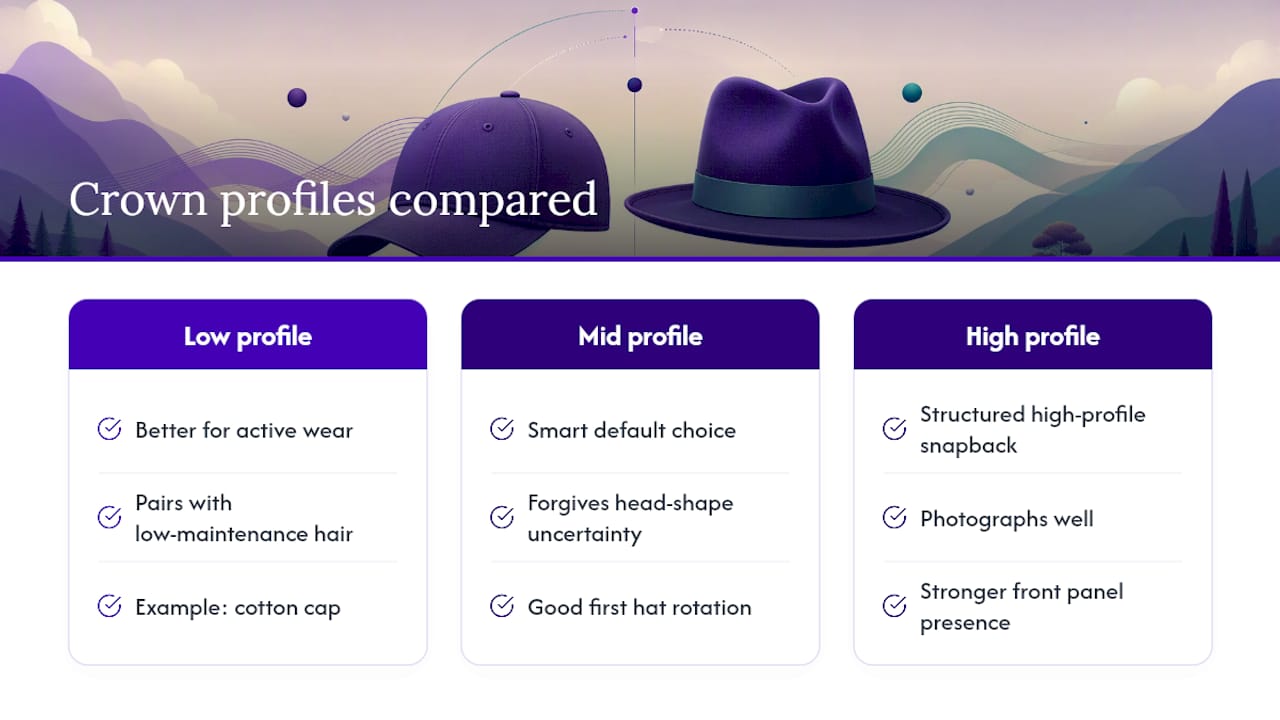
If I had to give one piece of advice, it’s this: buy for hair and activity first, look second. A structured high-profile snapback might photograph well, but if you’re active six days a week and have a low-maintenance haircut, a low-profile cotton cap will get more actual wear. Mid profile remains the smartest default for anyone building a first hat rotation, since it forgives uncertainty about head shape better than either extreme.
The other thing worth saying plainly: structure and material matter as much as the crown-height number itself. Two hats can share the same measurement and feel completely different depending on whether the front panel is stiff or soft. Read the construction details, not just the inch count, before you decide.
— Giuseppe
Where the Cappellino Baseball Hat Fits In
If you’ve read this far, you already know the mid-to-low profile range is the most forgiving place to start, and that’s exactly where the Cappellino Baseball Hat sits. It’s built with a relaxed crown and minimal, unbranded styling, which means no oversized logo fighting for space and no stiff front panel dictating how it has to look.
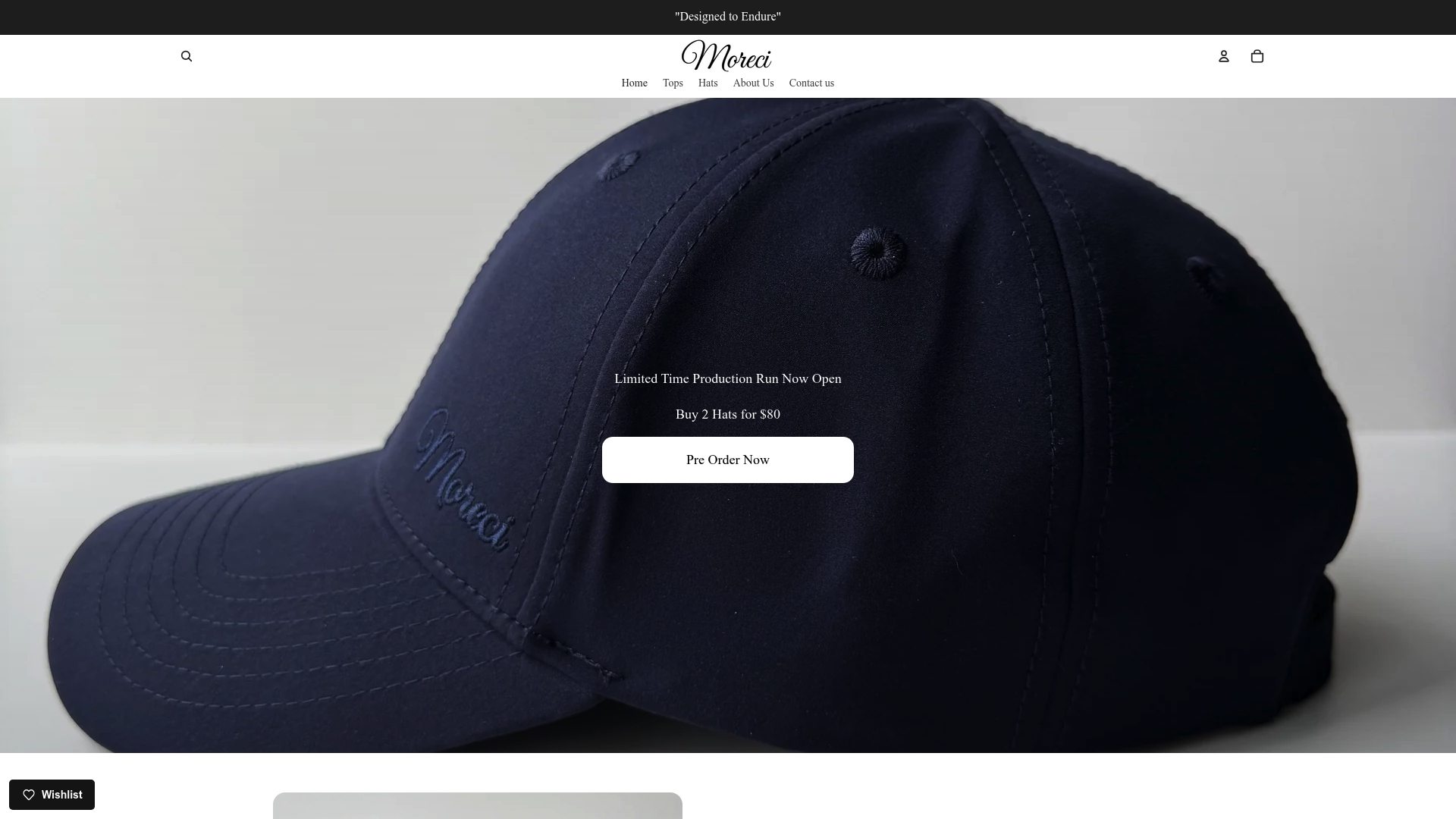
The Cappellino works for the everyday premium menswear buyer, someone who wants a hat that pairs cleanly with a polo or a blazer without shouting for attention. Its quality construction and tailored fit mean it holds its shape wear after wear instead of collapsing into a shapeless rag after a few washes, which is the usual failure point of cheaper low-profile caps. Browse the full accessories collection to see how it pairs with the rest of the lineup, or head to the Moreci and Co. store to check current availability and pick your size.
Key Takeaways
Crown height, measured in inches from brim to crown apex, is the single most reliable number for predicting how a hat will fit and look.
| Point | Details |
|---|---|
| Know the ranges | Low profile runs about 2 to 3 inches, mid profile 3 to 4 inches, high profile 4-plus inches. |
| Structure changes perception | Buckram or foam fronts make a hat look taller than the same crown height without structure. |
| Match profile to hair and activity | Thicker hair and low-movement use favor mid to high profile; short hair and sports favor low profile. |
| Verify before buying | Measure the crown yourself and run the two-finger and head-movement test at try-on. |
| Start with a versatile pick | The Cappellino Baseball Hat from Moreciandco offers a relaxed, unbranded mid-to-low profile fit suited to everyday wear. |
Sources
- Low-profile VS Mid-profile VS High-profile Hats: What’s the Difference — Foremost Hat
- Tips to stay safe in the sun — FDA