


For most golfers, a built-in 4 to 6 can insulated pocket beats a bulky standalone cooler because it keeps drinks cold without adding weight or a separate item to carry. If your bag lacks one, a slim removable cooler that slides into a standard side pocket delivers nearly the same result. The Moreci Lusso 14 Stand Bag checks both boxes with a dedicated insulated compartment sized for a real round.
TL;DR:
- A welded seam and waterproof liner are more important for durability and leak prevention than cooler capacity alone.
- Built-in pockets are ideal for walking rounds with low hydration needs, while removable liners suit cart rounds with longer drink requirements.
- Cooler capacity should be measured carefully to fit the pocket dimensions, with 4 to 6 cans suitable for short rounds and 6 to 9 for longer rounds or shared carts.
- Checking liner material, seam construction, and drainage features during purchase ensures a reliable and long-lasting cooler.
- Proper packing, drying, and maintenance significantly extend the cooler’s ability to keep drinks cold and prevent odors or mold buildup.
Table of Contents
- What Are the Different Types of Golf Bag Cooler Pockets?
- Should You Choose a Built-In or Removable Cooler?
- How Do You Measure Your Bag for the Right Cooler Size?
- What Materials Actually Keep Drinks Cold Longer?
- What Should You Check Before Buying a Golf Bag With a Cooler?
- How Do You Pack and Care for a Golf Bag Cooler Pocket?
- Why the Standard Cooler-Buying Advice Misses the Point
- Where the Moreci Lusso 14 Fits This Checklist
- Sources
What Are the Different Types of Golf Bag Cooler Pockets?
Three formats dominate the market, and each solves a slightly different problem. A built-in insulated pocket is sewn directly into the bag, usually lined with foam or foil-backed insulation and sealed against the rest of your gear. A removable liner cooler is a soft-sided insert that clips or zips into a cart bag’s dedicated slot, so you can pull it out entirely. A slip-in soft cooler is an independent bag that you feed into any standard side pocket, whether or not the bag was designed for one.
Here’s how they stack up:
- Built-in pockets stay put, need no separate packing step, but usually cap out around 4 to 6 cans.
- Removable liners pull free for a hose-down or dishwasher-safe cleaning, and cart bags often size these for four to six 12-ounce cans.
- Slip-in soft coolers, like the Kanga Midnight Hideaway, hold around six cans and work in almost any pocket, but they eat into space you’d otherwise use for rain gear or valuables.
Walking golfers tend to prefer built-in pockets for the lower profile. Cart players who haul more drinks per round usually lean toward removable liners.
Should You Choose a Built-In or Removable Cooler?
The right call depends on how you play more than what looks nicer on the shelf.
- Walking rounds with light hydration needs. A built-in pocket wins here. It’s already balanced into the bag’s weight distribution and doesn’t require you to think about it.
- Cart rounds where you’re stocking drinks for four hours plus. A removable cooler, especially one rated for 4 to 6 cans, gives you room to restock at the halfway house and clean it afterward without scrubbing the whole bag.
- Frequent bag switching. If you rotate between a stand bag for weekends and a cart bag for league play, a slip-in cooler travels with you instead of staying locked to one bag.
Course rules occasionally restrict visible coolers on carts, so check local policy before assuming either format is fair game.
Pro Tip: If you’re torn, buy the removable option first. You can always leave it home on days you don’t need it, but a built-in pocket can’t be added after the fact.
How Do You Measure Your Bag for the Right Cooler Size?
Capacity claims mean nothing if the cooler doesn’t physically fit. Retailers commonly list on-bag coolers in the 4-can to 9-can range, and each step up adds real bulk.
- 4 to 6 cans suits a 9-hole round or a golfer who drinks water plus one or two beers.
- 6 to 9 cans suits foursomes sharing a cart cooler or longer summer rounds.
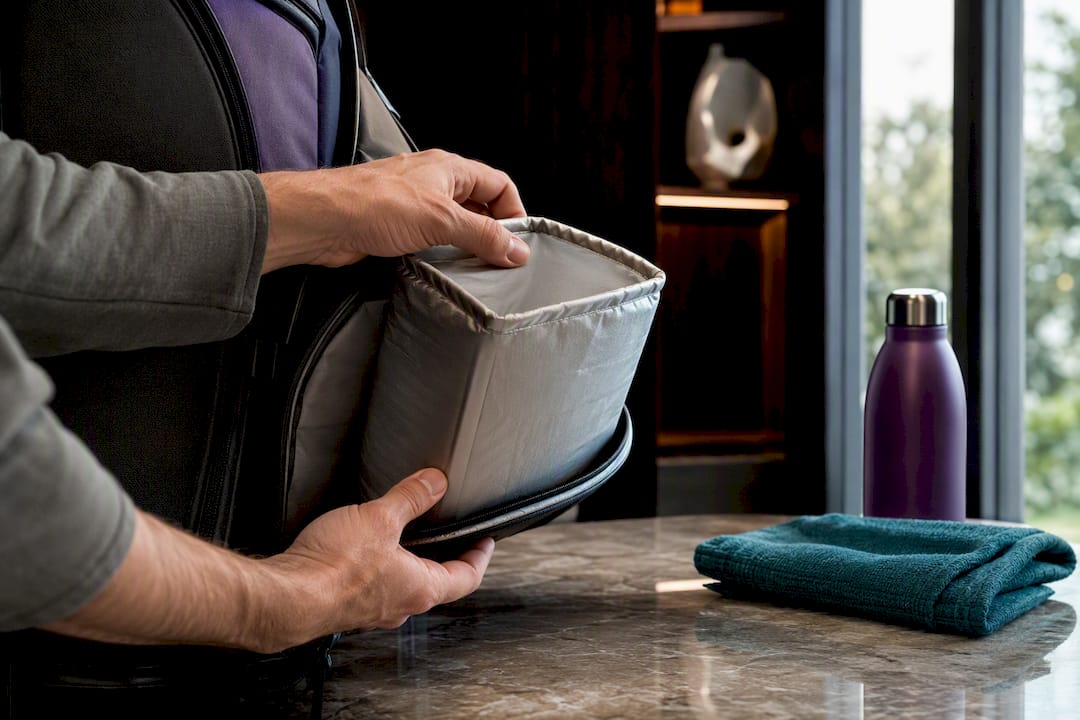
- Measure before you buy: open the target pocket fully, measure width, depth, and height at the narrowest point (usually near the zipper track), and subtract half an inch for seam allowance.
- Check zipper clearance with the pocket empty and again with a rolled towel inside to simulate a full cooler.
- If the numbers don’t work, a slim slip-in cooler or a strap-on cooler that clips to the bag’s exterior loop solves the fit problem without forcing a new bag purchase.
What Materials Actually Keep Drinks Cold Longer?
Spec sheets throw around words like “insulated” and “waterproof” loosely, so it helps to know what actually predicts performance.
- Foil-backed foam liners hold cold longer than basic nylon linings and resist punctures better.
- Welded seams matter more than fabric weight. Welded construction eliminates the needle holes that stitched seams leave behind, which is where most leaks start.
- Waterproof inner liners stop condensation from soaking into your glove or scorecard sitting in the next pocket.
- Drain ports at the pocket’s base let melted ice escape instead of pooling.
Some coolers pair their capacity with an internal ice-pack system rather than loose ice, and these designs are marketed as holding cold for hours without the mess. Thicker insulation extends hold time, but it also stiffens the pocket and can make cans harder to load one-handed. If you’re deciding between a cooler with slightly less capacity but better welded seams, take the seams every time. A leak-proof liner beats an extra can of capacity you’ll never use anyway.
What Should You Check Before Buying a Golf Bag With a Cooler?
Run through this list before you click purchase, whether you’re buying a full bag or an add-on cooler.
- Confirm actual capacity in cans, not liters. Liters sound impressive but don’t tell you if a 12-ounce can fits upright.
- Get exact pocket dimensions, not just “fits most bags.”
- Ask if the liner is removable. A fixed liner you can’t pull out is harder to clean over a full season.
- Look for drainage details. If the listing doesn’t mention it, assume there isn’t one.
- Check the warranty and return window. Insulated pockets that fail after one summer should be covered.
Watch for listings with no interior photos, vague capacity language like “holds several drinks,” or reviews mentioning zipper failure within the first season. If a seller won’t answer a direct question about seam construction or liner material in their Q&A section, that’s a signal to look elsewhere.
Pro Tip: Ask the seller directly whether the liner is welded or stitched before you buy. Most won’t advertise stitched seams, but they’ll usually confirm it if you ask.
How Do You Pack and Care for a Golf Bag Cooler Pocket?
Getting the advertised cold time out of any cooler pocket comes down to how you load it, not just what you bought.
- Layer cans with a reusable ice pack placed in the middle rather than on top, so cold air sinks evenly through the stack.
- Keep a dry barrier, like a small towel, between the cooler and any adjacent pocket holding your phone or wallet.
- Wipe down the liner after every round with a damp cloth, then leave the pocket unzipped to air dry before storing the bag.
- Check for pooled condensation at the bottom of the pocket weekly during summer play, especially if your cooler lacks a drain port.
Some personalized slip-in coolers add a small zip pocket for valuables alongside the main insulated compartment, which keeps your keys separate from any moisture. For deeper packing strategy across your whole bag, this pocket-organization guide covers the rest of your gear.
| Care step | Why it matters |
|---|---|
| Center ice pack in the stack | Distributes cold evenly, avoids one warm can |
| Air dry after each round | Prevents mildew and odor buildup |
| Use a dry barrier pocket | Protects electronics from condensation |
| Check drainage weekly | Stops pooled water from soaking the liner |
Why the Standard Cooler-Buying Advice Misses the Point
Most buying guides fixate on can count, as if six cans always beats four. That’s backwards. Capacity is the easiest spec to compare and the least predictive of whether you’ll actually like the pocket in July. What predicts satisfaction is seam construction and liner quality, because that’s what determines whether your scorecard stays dry and whether the pocket smells fine in August or sour by June.
The other blind spot is treating built-in and removable coolers as a simple upgrade ladder. They’re not. A removable liner isn’t automatically better just because it detaches. It’s better only if you actually clean it, and most golfers don’t. If you know you won’t bother, a built-in pocket with a wipeable liner will serve you better over a season than a removable cooler collecting mildew in your garage.
Prioritize the seam and the liner first. Capacity second. Everything else, including looks, comes last.
— Giuseppe
Where the Moreci Lusso 14 Fits This Checklist
Everything above points to the same short list: welded seams, a waterproof liner, honest pocket dimensions, and a capacity that matches how you actually play. The Moreci Lusso 14 Stand Bag is built around that exact list, with a dedicated insulated pocket sized for a real round and PU leather construction that holds up better than typical nylon shells over a full season.
![CTA Image]
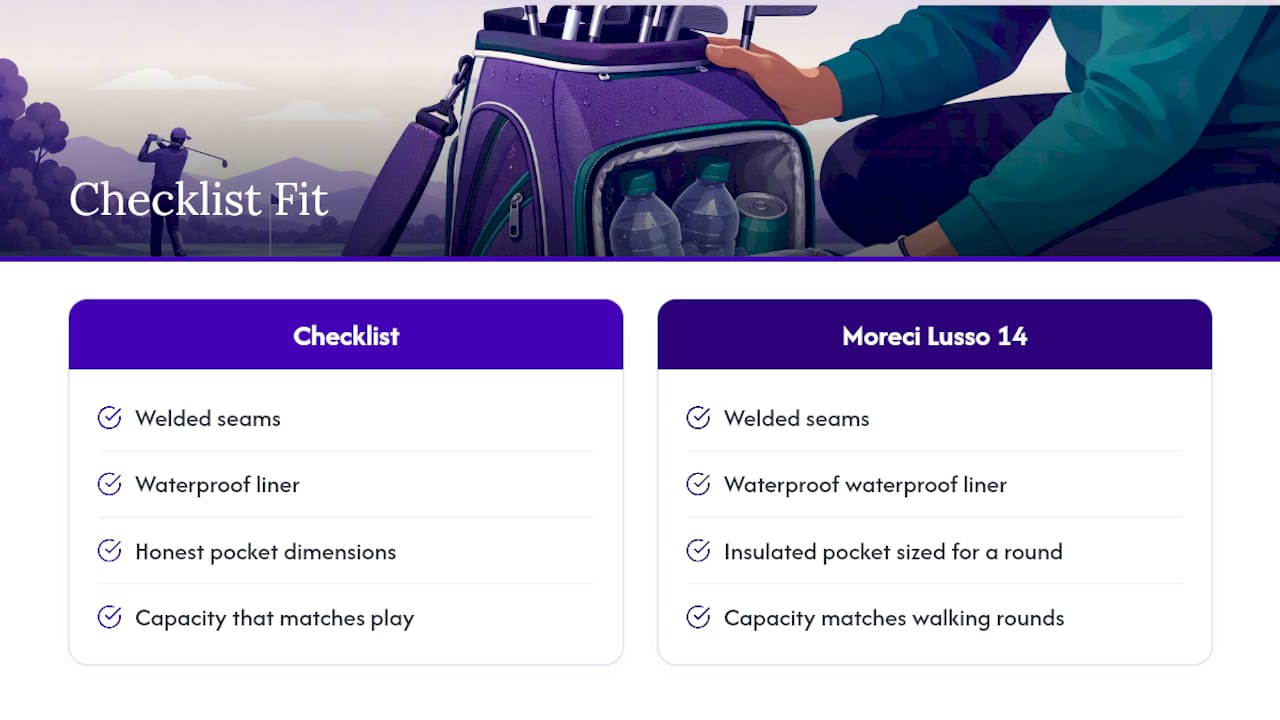
Moreci and Co built this bag for golfers who got tired of choosing between style and function, since most stand bags with coolers look like they were designed for one or the other. If you walk more rounds than you cart, and you’d rather buy a bag once than swap coolers every season, this is the option that matches your checklist without a compromise column. For golf-focused reading beyond gear, Manny’s Variety Picks covers the course side of the game. Check the Moreci Lusso 14 product page for current availability and sizing details before your next round.
Sources
- Midnight Hideaway™ – Kanga Coolers
- Birdie Brew Golf Cooler - Personalized Leather Patch | Fits Golf Bag - Groovy Golfer
- Bag Boy Chiller Pro Cart Golf Bag – Dynamic Brands