


A performance t-shirt is a purpose-built garment engineered with hydrophobic synthetic fabrics like polyester to move sweat away from your skin, dry fast, and protect you during physical activity. In the performance t-shirt vs regular shirt debate, the core difference comes down to fabric science. Regular shirts, most commonly made from cotton, absorb moisture and hold it against your body. Brands like Patagonia Capilene, Nike Dri-Fit, and Custom Ink have built entire product lines around this distinction. The right choice depends on what you’re doing, how hard you’re working, and how long you plan to be out there.
How do performance t-shirts wick moisture vs. regular shirts?
Performance t-shirts dry 50–70% faster than cotton shirts. That gap exists because of a fundamental difference in how each fabric handles water.
Cotton is hydrophilic. It pulls moisture in and holds it. When you sweat in a cotton shirt, the fabric saturates, grows heavy, and clings to your skin. That wet, clingy feeling is not just uncomfortable. It raises your risk of chafing, disrupts your body’s ability to regulate temperature, and slows you down mentally.

Polyester is hydrophobic. It repels water at the fiber level and pushes sweat outward toward the fabric’s surface, where it can evaporate. Engineered performance fabrics take this further by using directional knit structures that create a one-way moisture transport system. Sweat moves from the inner layer to the outer layer and stays there until it evaporates.
Here is what that means in practice:
- Cotton shirts become noticeably heavier and wetter within 15–20 minutes of intense exercise
- Performance shirts maintain a drier feel against the skin throughout a full session
- In a 90-minute training session, moisture-wicking gear maintains lower wetness levels, improving both comfort and focus
- Knit architecture matters: two polyester shirts can perform very differently depending on how they are constructed
That last point is worth emphasizing. Fabric knit design directly affects moisture spreading speed and one-way transfer capability. A cheap polyester tee from a discount bin is not the same as an engineered performance shirt. The fiber type is only part of the equation.
Pro Tip: When shopping for a performance shirt, look for terms like “directional moisture transport” or “engineered knit” on the label. Generic polyester without these features will not perform like true activewear.
What other benefits do performance shirts offer?
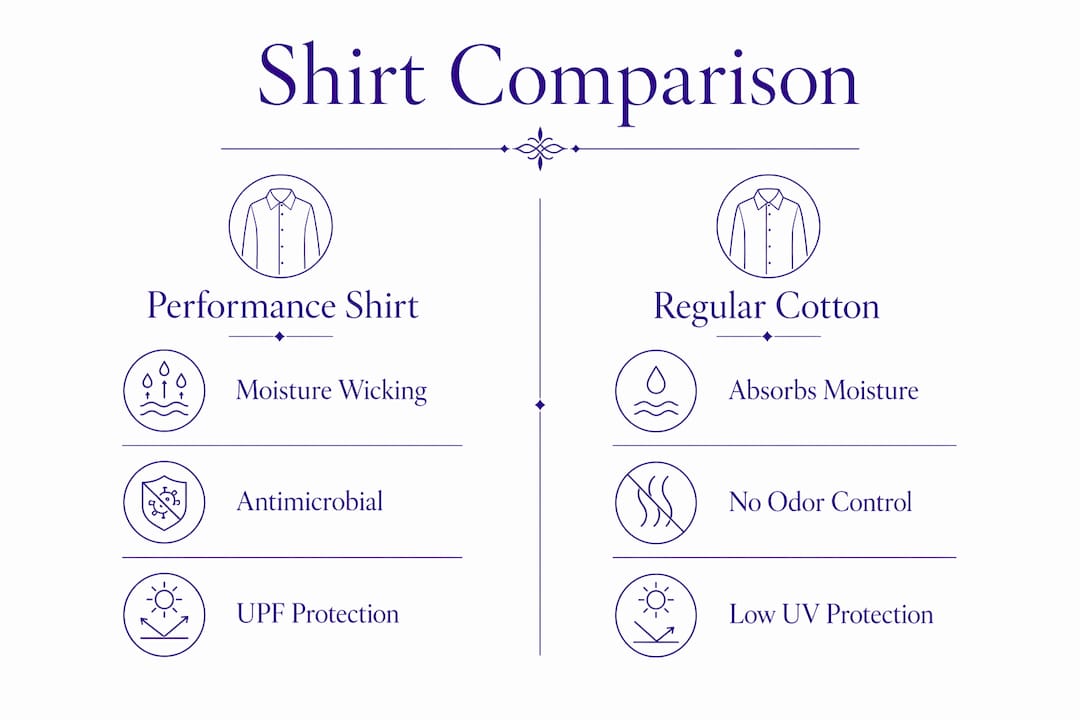
Moisture management is the headline feature, but modern performance garments combine moisture-wicking polyester with several other functional treatments that regular cotton shirts simply cannot match.
Odor control and antimicrobial finishes
Performance shirts frequently include antimicrobial treatments applied at the fiber level. These finishes inhibit the bacteria that cause odor during and after exercise. Cotton shirts have no such treatment. After a hard workout, a cotton shirt smells. A quality performance shirt can be worn through a full session and still feel fresh enough for a post-gym errand.
Sun protection that actually works
Regular cotton t-shirts carry a UPF rating around 5, which means they block almost nothing. Performance shirts with certified UPF 40–50+ ratings block at least 98% of UVA and UVB rays. The critical advantage is consistency. Certified UPF clothing maintains that protection even when the fabric is wet or stretched, unlike cotton, which loses what little protection it has the moment it gets damp. If you run, hike, or work outdoors, this matters more than most people realize.
Durability that outlasts cotton
Polyester filament fabrics withstand 20,000–40,000 abrasion cycles compared to 5,000–10,000 for cotton. That is a four-to-one durability advantage. Polyester also retains 100% of its tensile strength when wet, while cotton weakens. Over dozens of washes, a performance shirt holds its shape, color, and structure far better than a cotton tee.
Here is a direct comparison of the two shirt types across key performance metrics:
| Feature | Performance Shirt | Regular Cotton Shirt |
|---|---|---|
| Moisture management | Wicks and evaporates sweat fast | Absorbs and holds moisture |
| Drying speed | 50–70% faster than cotton | Slow; stays wet after activity |
| Sun protection | UPF 40–50+ certified | UPF ~5, degrades when wet |
| Odor resistance | Antimicrobial finishes available | None; odor builds quickly |
| Abrasion resistance | 20,000–40,000 cycles | 5,000–10,000 cycles |
| Shape retention | Holds form after repeated washes | Stretches and fades over time |
The numbers tell a clear story. For any activity involving sustained effort, a performance shirt is the more functional garment across every measurable category.
When does choosing a performance shirt actually matter?
The honest answer is that cotton works fine for low-intensity or short-duration activities. A 10-minute walk to the coffee shop in a cotton tee is perfectly comfortable. The gap between shirt types becomes significant when intensity, duration, or environmental conditions increase.
Performance shirts provide the most noticeable advantages in these scenarios:
- Gym training lasting 45 minutes or more: Sweat accumulation in cotton becomes a real distraction by the halfway point
- Running outdoors: Wind chill on a wet cotton shirt creates discomfort that performance fabrics eliminate
- Hiking in heat or sun: UPF protection and moisture management work together to reduce fatigue and sun exposure risk
- Outdoor labor or sports: Abrasion resistance and shape retention extend the life of the garment significantly
- Travel: Performance shirts pack light, dry overnight in a hotel sink, and resist wrinkles better than cotton
Cotton shirts have their place. A relaxed weekend brunch, a casual office setting, or a short errand run are all situations where the softness and familiarity of cotton wins on comfort. The mistake most people make is wearing cotton into high-sweat situations out of habit, not preference.
Pro Tip: If you want one shirt that works for both the gym and casual outings, look for a performance shirt with a clean, structured cut. Many newer styles from brands focused on gym-to-street transitions are designed to look sharp outside the gym without sacrificing function inside it.
How to choose the right shirt: performance vs. regular
Choosing between the two types comes down to four decision factors: sweat intensity, activity duration, climate, and fabric feel preference.
Work through these questions before buying:
- How hard will you be working? Light activity favors cotton comfort. Moderate to intense activity favors performance fabrics.
- How long will you wear it? Sessions under 30 minutes in mild conditions are fine in cotton. Anything longer or hotter calls for moisture management.
- What is the climate? Hot, humid environments amplify every weakness of cotton. Performance fabrics manage the microclimate between your skin and the fabric, which is critical in hot-environment training.
- Do you have sensitive skin? Some people find synthetic fabrics irritating. Cotton-polyester blends (typically 60/40 or 50/50) offer a middle ground with improved moisture management over pure cotton and better softness than pure polyester.
On pricing, performance shirts typically cost more upfront. A quality performance tee runs $30–$80, while a standard cotton tee can be found for $10–$25. The durability advantage of polyester means the cost-per-wear often favors performance shirts over a two-to-three year period.
When reading product labels, look for these specific claims:
| Label Claim | What It Means |
|---|---|
| Moisture-wicking | Fabric moves sweat to the surface for evaporation |
| UPF 40+ or UPF 50+ | Certified UV blocking, tested and consistent |
| Antimicrobial finish | Odor-control treatment applied to fibers |
| 4-way stretch | Fabric moves with your body in all directions |
| Quick-dry | Engineered for fast evaporation, not just wicking |
A shirt that claims “breathable” without any of the above certifications is likely just a marketing term applied to a standard fabric. True performance apparel specifies the technology behind the claim. If the label is vague, the performance probably is too.
For a deeper look at how these principles apply to other athletic tops, the performance polo guide from Moreciandco covers the same fabric science in a more versatile silhouette.
Key takeaways
Performance shirts outperform regular cotton shirts in every functional category that matters for active use, from moisture control and UV protection to durability and odor resistance.
| Point | Details |
|---|---|
| Moisture management is the core difference | Performance shirts dry 50–70% faster than cotton and keep skin drier during activity. |
| Not all polyester is equal | True performance fabrics require engineered knit structures, not just synthetic fiber content. |
| Sun protection is a real advantage | Certified UPF 50+ shirts block 98% of UV rays and hold that rating even when wet. |
| Cotton works for low-intensity use | Short, casual, low-sweat situations are where cotton comfort still makes sense. |
| Durability favors performance fabrics | Polyester withstands up to four times more abrasion cycles than cotton over its lifespan. |
What i’ve learned after years of wearing both
I used to default to cotton for everything. It felt natural, familiar, and soft right out of the dryer. Then I started paying attention to how I actually felt 45 minutes into a workout, and the picture changed fast.
The thing most people get wrong about cotton is the breathability myth. Cotton does breathe in the sense that air moves through it. But once it saturates with sweat, it stops doing anything useful. It just holds moisture against your skin and gets heavier. That is not breathability. That is a sponge.
What changed my thinking was understanding that performance advantage comes from fabric construction, not just fiber type. I have worn cheap polyester shirts that performed no better than cotton because the knit was wrong. I have also worn well-engineered performance shirts that stayed noticeably dry through a full hour of hard training. The difference was not the material on the label. It was the engineering behind it.
The other thing worth saying: not every situation calls for a performance shirt. I still reach for a good cotton tee on a slow Sunday. But for anything that involves real effort, real heat, or real sun exposure, I stopped compromising years ago. The comfort gap is too wide to ignore once you have felt it.
If you are buying a performance shirt, spend the extra money on a brand that specifies its fabric technology. Vague claims like “breathable” or “lightweight” are not the same as certified moisture-wicking construction. You will feel the difference within the first 20 minutes of wearing it.
— Giuseppe
Upgrade your wardrobe with Moreciandco performance shirts
Moreciandco was built on one idea: you should get exactly what you pay for. That means shirts that actually perform, not just ones that look good on a hanger.
The Complesso Collection brings together luxury performance shirts with certified UPF protection, moisture-wicking construction, and cuts designed to move from training to everyday wear without missing a beat. Every piece is built to last, hold its shape, and feel as good on day 200 as it did on day one. Pair your shirt with the Cappellino Baseball Hat for complete sun protection on outdoor runs or hikes. Visit Moreciandco to explore the full collection and find out what getting what you pay for actually feels like.
FAQ
What is the main difference between a performance and regular shirt?
A performance shirt uses hydrophobic synthetic fabrics like polyester to wick sweat away from the skin and dry faster, while a regular cotton shirt absorbs and holds moisture against the body.
Are performance shirts worth the higher price?
Yes, for active use. Polyester performance shirts withstand up to four times more abrasion cycles than cotton and hold their shape longer, making the cost-per-wear competitive over time.
Can i wear a performance shirt casually, not just for workouts?
Performance shirts with structured cuts work well for casual wear, travel, and everyday use. Many are designed specifically to transition from gym to street without looking out of place.
Do performance shirts really protect against the sun?
Yes. Certified UPF 50+ performance shirts block at least 98% of UV rays and maintain that protection even when wet, unlike cotton shirts with a UPF rating of around 5.
Is a cotton-polyester blend a good middle ground?
A 50/50 or 60/40 cotton-polyester blend offers improved moisture management over pure cotton and better softness than pure polyester, making it a reasonable choice for moderate activity or mixed use.