


Reflective details on activewear materially improve how far away drivers can spot you in low light, and the science behind why is more specific than “shiny stripe on a jacket.” Retroreflection bounces headlight beams straight back to a driver’s eyes, and when that reflective material sits on your moving joints, ANSI/ISEA 107 and EN ISO 20471 guidance treats that placement as functionally different from a static vest.
- The verdict: targeted reflective elements at wrists, ankles, and knees beat blanket coverage for actual detection distance.
- The takeaway: if you run, ride, or walk at dawn, dusk, or after dark, build reflective placement into your gear choices, not as an afterthought.
Key Takeaways
Reflective details placed on moving joints outperform blanket reflective coverage for driver recognition distance, and that placement principle should drive every purchase decision.
| Point | Details |
|---|---|
| Placement beats coverage | Ankle, knee, wrist, and elbow strips increase recognition distance far more than large flat panels. |
| Retroreflection needs the right material | Microprismatic film generally outlasts glass-bead tape through repeated wash cycles. |
| Comfort trade-offs are real | Dense reflective panels can stiffen seams and cause chafe; targeted placement avoids most of it. |
| Care routine protects performance | Cold water, inside-out washing, and air-drying preserve reflective function longest. |
| Match visibility to activity | High-intensity sessions call for minimal motion-zone reflectivity; dawn or dusk workouts call for broader coverage. |
Table of Contents
- What role do reflective details play in activewear safety?
- What types of reflective technology show up in activewear?
- Where should reflective details go for maximum visibility?
- Do reflective features affect comfort and performance?
- How do you keep reflective details working wash after wash?
- How do you choose the right reflective activewear?
- Sources
- FAQ
What role do reflective details play in activewear safety?
The role of reflective details in activewear comes down to one mechanism: retroreflection sends light directly back toward its source, which is exactly where a driver’s eyes happen to be. A dark hoodie absorbs headlight beams. A reflective strip on your ankle throws that light back at the windshield.
The placement matters as much as the material. Biomotion research found drivers recognized pedestrians wearing reflective strips positioned on wrists, ankles, knees, and elbows at significantly farther distances compared to a standard reflective vest, and far beyond dark clothing. The human brain reads joint movement as a person shape faster than it reads a static glowing rectangle.
- Predawn runs on suburban roads: low sun angle and dim streetlights mean a runner in dark leggings is nearly invisible until headlights are almost on top of them; ankle and knee strips change that math.
- Dusk commutes on a bike: the transition light between sunset and full dark is when many drivers haven’t switched on headlights yet, so torso and pedal-adjacent reflectivity does the heaviest lifting.
- Urban night rides: streetlight glare competes with your visibility, so joint-based reflective placement cuts through the visual noise better than a single reflective panel.
A cyclist descending a hill at dusk with reflective ankle bands moves in a rhythmic flash pattern that a driver’s peripheral vision catches almost instinctively. That’s biomotion working exactly as designed.
What types of reflective technology show up in activewear?
Not all “reflective” activewear uses the same technology, and the differences affect how the garment performs after your tenth wash.
- Glass-bead retroreflective tape: tiny embedded spheres bounce light back; affordable and common, but tends to lose reflectivity faster through repeated washing.
- Microprismatic film: engineered prism facets return more light more consistently, and testing on retroreflective materials shows this construction generally holds up better across wash cycles than glass-bead tape.
- Reflective yarns and prints: woven or printed directly into stretch fabric, offering better flexibility for high-motion garments at some cost to peak brightness.
- Fluorescent background materials: these boost daytime visibility, not nighttime detection. Standards like EN ISO 20471 pair fluorescent panels with retroreflective tape because each solves a different half of the problem.
- Thermoreflective coatings: an emerging category that adds a reflective layer without heavy stitched tape, though wash durability data is still limited.
| Technology | Best for | Stretch compatibility | Wash durability |
|---|---|---|---|
| Glass-bead tape | Night, budget garments | Low | Moderate |
| Microprismatic film | Night, high-use gear | Moderate to high | High |
| Reflective yarns/prints | Night, flexible layers | High | Moderate to high |
| Fluorescent backgrounds | Daytime visibility | High | High |
| Thermoreflective coatings | Night, lightweight builds | Moderate | Limited data |
Manufacturers building activewear to safety standards typically choose microprismatic constructions for garments marketed on visibility performance, precisely because stretch fabrics need materials that survive being pulled and washed repeatedly without cracking.
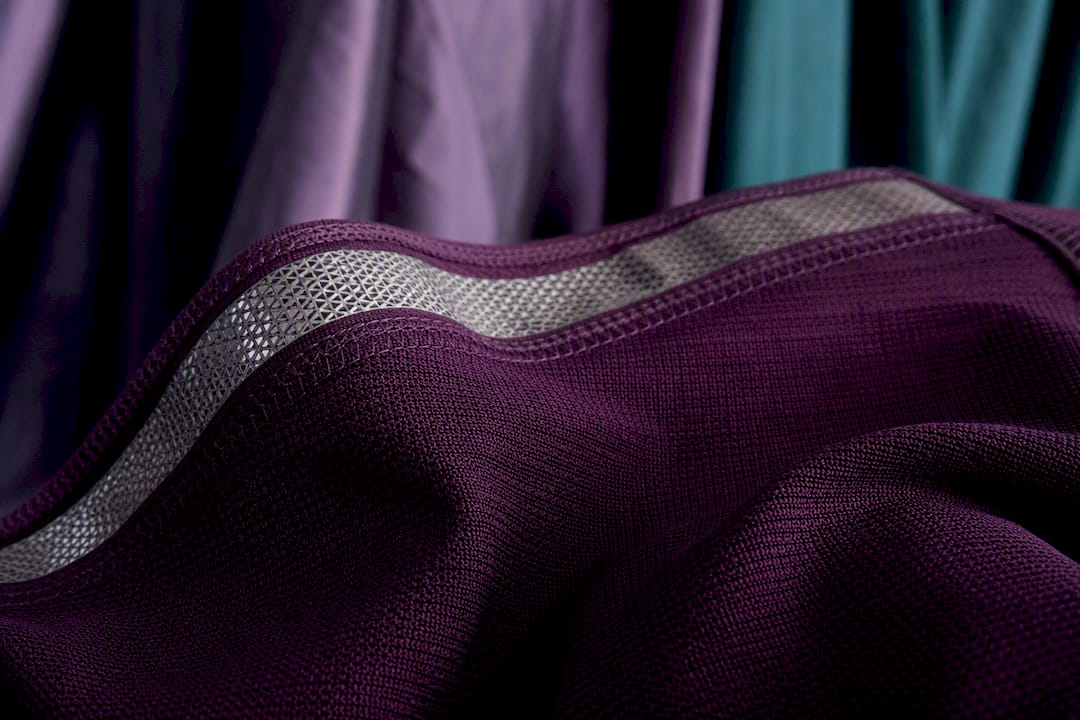
Where should reflective details go for maximum visibility?
Placement decides whether reflective details actually work or just look good on a hanger. Headlights point down and at an angle, which is why reflective gear research from performance brands consistently points to knees and ankles as the highest-value zones. Wrists and elbows come next because arm swing creates the same recognizable motion signature drivers’ brains are wired to notice.
- Lower body first: ankle and knee placement catches headlight beams at the angle they actually travel.
- 360-degree coverage beats front-only: a strip only on your chest does nothing for a driver approaching from behind or the side.
- Torso-encircling patterns on jackets or vests solve the all-angle problem better than a single reflective logo.
- Daytime aesthetics matter too: subtle piping, tonal reflective yarn, or patterned strips look like normal detailing in sunlight and activate fully under headlights.
- Integrated vs. removable: built-in reflective elements get worn every time; clip-on accessories get left in a drawer.
Pro Tip: Stand in front of a car with its headlights on and have someone walk toward you wearing the gear you’re considering. If you can’t tell it’s a person by silhouette and motion alone before the reflective flash catches your eye, the placement needs work, not more material.
Do reflective features affect comfort and performance?
Adding reflective material to stretch fabric always involves trade-offs, and pretending otherwise does readers no favors. Bonded strips can stiffen seams, and dense reflective panels can trap heat or reduce breathability exactly where you need airflow most.
- Chafe risk rises where a rigid reflective strip crosses a high-friction zone like the inner thigh or underarm.
- Weight and breathability take a small hit when reflective coverage is heavy rather than targeted.
- Stretch-compatible prismatic films and vapor-deposited coatings reduce stiffness compared to older bonded tape.
- Activity intensity matters: a high-output sprint session calls for minimal, motion-zone-only reflectivity, while a slower dusk walk can tolerate broader coverage without performance cost.
Functional fabric research on activewear construction backs this up. Studies on trilaminated fabric design show that thermophysiological comfort and mobility have to be engineered in from the start, not bolted on after the fact. That principle applies directly to reflective integration.
Pro Tip: Prioritize placement over surface area. A small strip exactly on your ankle bone beats a large reflective panel across your back that a driver’s headlights barely graze.
How do you keep reflective details working wash after wash?
Reflective performance degrades gradually, usually from the same mistakes: hot water, fabric softener, and tumble drying at high heat all break down the adhesive bond and crack the reflective surface.
- Wash reflective activewear inside-out in cold water, and skip fabric softener entirely since it coats the reflective surface.
- Air-dry when possible; heat is the fastest way to crack bonded tape or glass-bead coatings.
- Inspect strips every few months for cracking, peeling edges, or dulled reflectivity under direct light.
- Store folded rather than crumpled to avoid permanent creasing across reflective panels.
- Small peeling edges can sometimes be reattached with fabric-safe adhesive; widespread cracking means it’s time to replace the piece.
Following a basic durability checklist for your gear catches early wear before it becomes a safety gap.
How do you choose the right reflective activewear?
Choosing reflective activewear comes down to matching placement and material to how and when you actually train.
- Check placement first. Ankle, knee, wrist, and elbow coverage matters more than total reflective area.
- Ask about 360-degree visibility. Does the reflective element wrap the torso, or only face forward?
- Confirm stretch compatibility. Reflective yarns and microprismatic films move with fabric better than rigid glass-bead tape.
- Ask about wash durability. A garment that loses reflectivity after ten washes isn’t solving your problem for long.
- Match visibility level to your activity. Short daytime runs need less coverage; predawn long runs or urban commuter cycling call for higher-visibility integration.
- For short neighborhood runs, subtle reflective piping is often enough.
- For trail runs near roads at dawn or dusk, prioritize ankle and knee strips over torso panels.
- For urban cycling, look for torso-encircling reflectivity plus pedal or ankle placement.
- For commuter walking, integrated jacket strips beat clip-on accessories you’ll forget to attach.
For more on matching fabric performance to your training style, how to spot high-performance sportswear materials and layering for outdoor training both go deeper into the fabric side of this decision.
Author and testing notes
Giuseppe covers product-performance content, focused on how apparel construction holds up under real training conditions. Evaluating reflective activewear here meant checking three things: a simple night-driveway recognition test with headlights, a wash-cycle inspection for cracking or dulling, and a basic field-use checklist for chafe points.
The clearest test costs nothing: stand your gear in front of a car’s headlights at dusk and watch whether the reflective element flashes with your motion or just sits there as a dim patch.
For product context and durability guidance, see the Moreci Store landing page.
Why I look for reflective details before anything else
I train early enough that dawn light is unreliable most of the year, and reflective placement has changed how confident I feel running near traffic. I look at ankle and knee zones first, not the marketing copy about “enhanced visibility.” Next time you’re gear shopping, do the headlight test yourself before you trust the label.
Sources
- Biomotion and conspicuity research (QUT eprints)
- How reflective tape works | Retroreflective Hi-Vis Science
- Reflective running gear technology (Brooks Running)
- Reflective activewear production technology and safety standards (UGA Wear)
- Functional wool fabric design: optimizing the comfort of activewear (Universidade Lusófona research)
FAQ
Does the role of reflective details in activewear actually change safety outcomes? Yes. Placement on moving joints increases driver recognition distance well beyond what a static reflective panel achieves, based on biomotion research.
Should you wear reflective activewear for daytime workouts? Fluorescent background material helps daytime visibility more than retroreflective tape does, since retroreflection depends on a direct light source like headlights.
How long do reflective details last before they need replacing? It depends on the technology and care routine, but cracking, peeling edges, or visibly dulled reflectivity under direct light are signs it’s time to inspect or replace the garment.
Are reflective yarns as effective as bonded reflective tape? Reflective yarns and prints offer better flexibility for stretch garments, though bonded microprismatic tape often delivers higher peak brightness in a fixed spot.
What’s the single most important placement zone for reflective details? Ankles and knees, since headlights point down and at an angle, and joint motion there reads as human movement fastest to a driver’s eyes.