


Choose slim when you want a closer, contemporary silhouette on a lean-to-athletic frame; choose classic when you need more room and comfort for broader or variable proportions. The gap between the two comes down to ease, meaning how much extra fabric sits between your body and the garment. Slim fit typically runs 2 to 3 inches of chest ease, while classic or regular fit runs 4 to 6 inches. That’s the whole tradeoff: silhouette versus room to move.
- Lean or athletic build: slim fit will follow your shape without pulling at the seams.
- Broader chest, thicker arms, or a variable frame: classic fit gives you breathing room where slim tends to strain.
- Occasion shorthand: slim reads modern and works for creative offices or date nights; classic reads conservative and suits traditional business or formal settings.
- Measurement reminder: always check the finished garment measurements, not just the fit label.
Pro Tip: Fit names aren’t standardized across brands. A “slim” shirt from one label can measure the same as a “regular” from another, so try both cuts in the same brand before deciding which one actually fits you.
Key Takeaways
Choosing between slim and classic fit comes down to matching chest, waist, and seat ease to your body proportions and the formality of your occasion.
| Point | Details |
|---|---|
| Ease is the real measurement | Slim runs 2 to 3 inches of chest ease; classic runs 4 to 6 inches. |
| Body type decides more than trend | Lean and athletic builds lean slim; broader and stockier builds lean classic. |
| Garment type changes the rule | Suits, shirts, and trousers each show the slim/classic split differently. |
| Buy for shoulders, tailor the rest | Shoulder seams can’t be altered cheaply, but waists and hems can. |
| Moreciandco splits the difference | The Complesso Collection offers a tapered, tailored-ready fit for readers stuck between slim and classic. |
Table of Contents
- How to Choose Between Slim vs Classic Fit
- How Does Fit Change Across Shirts, Suits, and Trousers?
- Which Fit Works Best for Your Body Type?
- How Do You Check Fit in the Mirror Before Buying?
- Does Fabric Change Which Fit You Should Choose?
- What Do Tailoring and Alterations Cost?
- 60-Second Decision Checklist: Slim or Classic?
- Moreciandco’s Approach to Fit
- How I Decide Between Slim and Classic
- Ready to Try a Fit That Actually Works?
- Sources
How to Choose Between Slim vs Classic Fit
The decision hinges on three things: your build, what you’re wearing it for, and how much tailoring you’re willing to pay for. Slim fit tapers close to the body at the chest, waist, and thigh. Classic fit keeps a straighter line down from the shoulders with more room to spare. Neither one is objectively better. What matters is whether the extra fabric in a classic cut serves you (room to move, forgiveness for a broader frame) or works against you (looks baggy on a lean frame, hides your shape entirely).
Ease is the technical term worth knowing here, since it’s what separates every fit category on a size chart. It measures the gap between your actual body measurement and the garment’s finished measurement. A shirt with a 40 inch chest built for a 38 inch chest has 2 inches of ease. That number is what turns “slim” and “classic” from marketing language into something you can actually verify with a tape measure.
Here’s how the ranges typically break down by category, based on chest ease data across major fit tiers:
- Skinny fit: 0 to 1 inch of chest ease. Very little room, closest possible taper.
- Slim fit: 2 to 3 inches of chest ease. Contoured but not restrictive.
- Regular or classic fit: 4 to 6 inches of chest ease. Roomier through the torso, straighter line.
- Relaxed fit: 6 to 8+ inches of chest ease. Built for layering or maximum comfort.
Visual cues back up the numbers. Slim shirts and jackets taper noticeably from chest to waist, with narrower sleeves and shorter hems. Classic pieces hang straighter, with fuller sleeves and lapels that run wider on suits. Trouser legs tell a similar story: slim trousers narrow toward the ankle, while classic trousers keep a straighter leg from thigh to hem.
One catch worth repeating: fit labels are not standardized industry-wide. A “slim” pair of chinos from one retailer might carry the same finished waist measurement as a “classic” pair somewhere else. The label is a starting point, not a guarantee. Pull up the brand’s own size chart and compare finished measurements against your body before you buy, especially online.
How Does Fit Change Across Shirts, Suits, and Trousers?
The same fit label means something different depending on what you’re buying. A slim shirt and a slim suit jacket solve different problems, and knowing the distinction saves you from buying the wrong cut for the wrong reason.
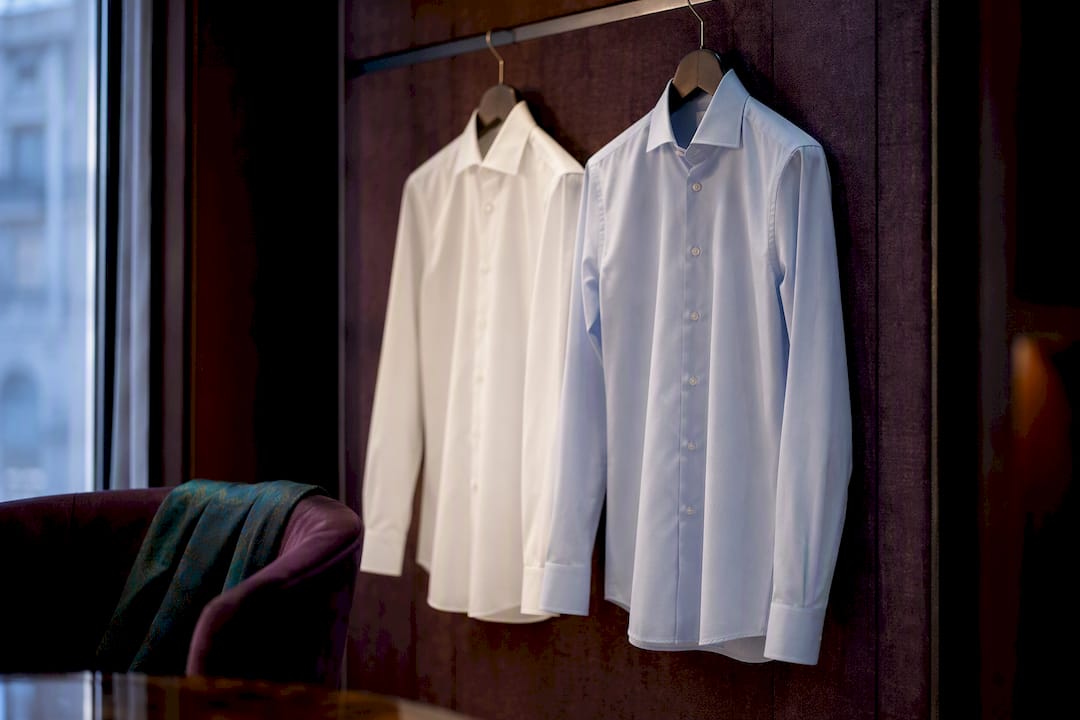
Shirts show the difference most in the torso and sleeves. A slim dress shirt tapers in sharply at the waist, uses a narrower sleeve, and usually runs a shorter hem meant to stay tucked. A classic shirt keeps a straighter drop from chest to waist, giving you room to move and a longer hem that handles untucked wear better. If you’re between sizes or plan to wear a shirt untucked over trousers, classic tends to behave more predictably. Our shirt fit comparison breaks down exactly how tuck behavior changes between the two.
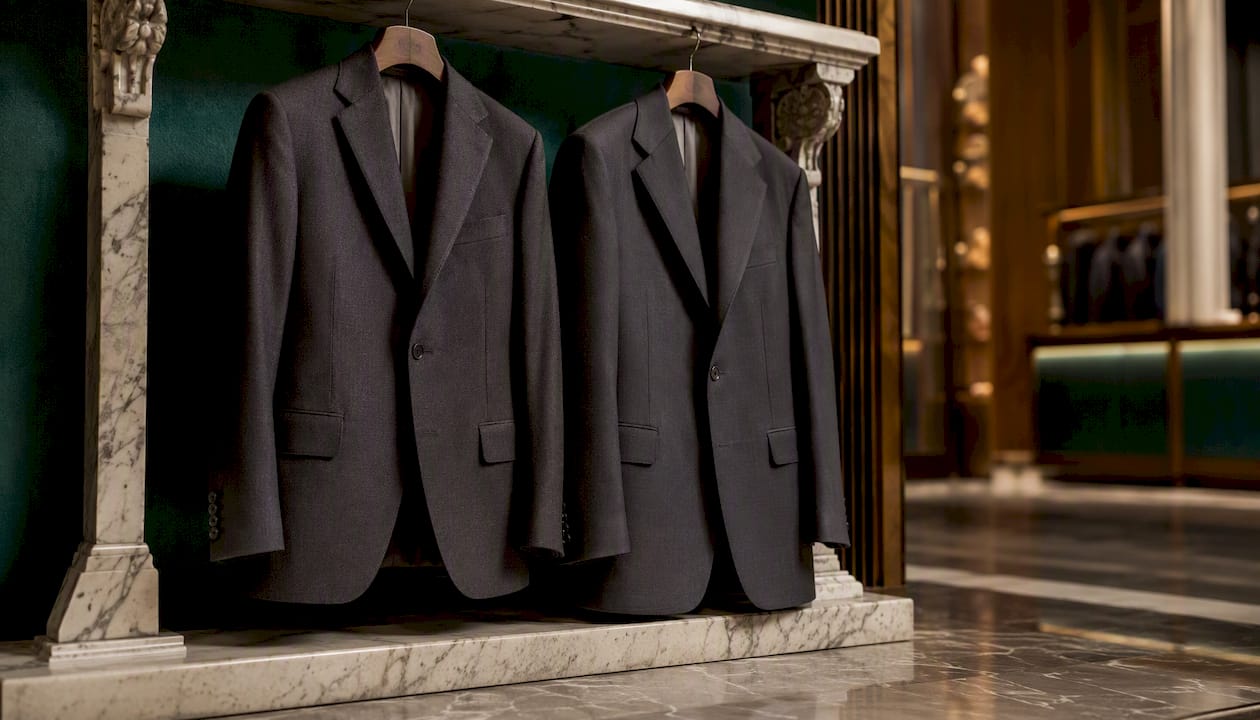
Suits carry the biggest visual swing. A slim suit jacket cuts close through the waist, sits on higher armholes, and pairs with narrower lapels. A classic suit jacket stays roomier through the torso, with a straighter cut and standard lapel width that reads more traditional. Jacket length follows the same logic: slim jackets often run slightly shorter to keep the silhouette tight, while classic jackets extend a bit longer for coverage. Trousers paired with slim suits taper noticeably at the ankle; classic suit trousers keep a straighter leg throughout.
Trousers on their own follow a similar rule, whether they’re suit trousers, chinos, or jeans. Slim trousers typically carry 1 to 1.5 inches less thigh ease than a regular cut, plus a narrower leg opening at the hem. Regular trousers keep an extra 1 to 4 inches in the seat and thigh depending on the brand, which translates directly into how easily you can sit, bend, or climb stairs without feeling a pull across the leg.
Occasion adds another layer on top of all this. Slim fit across any garment tends to read as more current and slightly more formal in a modern sense, useful for client meetings in creative industries or evening events. Classic fit reads as conservative and safe, which is exactly what a traditional law firm, courtroom, or black-tie event calls for. Neither signal is wrong. Match the silhouette to the room you’re walking into.
Which Fit Works Best for Your Body Type?
Body type drives this decision more than any style trend. The same jacket that looks sharp on a lean frame can pull across the chest on a broader build, and a classic cut that flatters a stockier frame can swallow someone leaner. Here’s how the common builds tend to map:
- Short and lean: slim fit almost always wins here. Extra fabric on a smaller frame just adds visual bulk and makes proportions look off.
- Average build: either fit works, so occasion and personal preference should decide it. This is the group with the most flexibility.
- Tall and lean: slim fit again, though watch sleeve and trouser length closely since taller frames often need longer proportions paired with a tapered cut.
- Athletic or muscular: this is the tricky one. Standard slim cuts often pull across the chest and thighs while still fitting loose at the waist. A tapered athletic fit solves that mismatch better than either strict slim or classic.
- Stocky or larger frame: classic fit gives the room needed through the chest, waist, and seat without straining seams or restricting movement.
When one measurement doesn’t match another, which happens constantly with athletic builds, prioritize shoulder fit first. A jacket’s shoulder seam can’t be let out without major surgery on the garment, but a tailor can take in the waist or taper trouser legs relatively easily. Buy for your biggest problem measurement and adjust the rest.
If you’ve tried both strict categories and neither quite works, you’re not stuck choosing the lesser evil. A slim-straight or tapered athletic cut splits the difference: narrower through the waist and thigh, but without constricting below the knee. Suit brands increasingly offer a “modern” or “tailored” fit for the same reason, sitting between slim and classic to reduce the need for major alterations that an extreme cut in either direction usually requires.
| Body Type | Recommended Fit | Why |
|---|---|---|
| Short/lean | Slim | Avoids excess fabric that adds visual bulk |
| Tall/lean | Slim, longer proportions | Taper works, but watch sleeve and inseam length |
| Athletic/muscular | Tapered athletic or slim-straight | Standard slim often pulls at chest and thighs |
| Stocky/larger frame | Classic | Needs room through chest, waist, and seat |
How Do You Check Fit in the Mirror Before Buying?
A tape measure tells you the numbers, but a mirror check confirms whether those numbers actually work on your body. Run through this before you commit to any purchase:
- Check the shoulder seam. It should sit right at the edge of your shoulder bone, not drooping past it or pulling inward.
- Button the jacket or shirt. There should be no horizontal pulling or an “X” pattern forming across the chest.
- Check sleeve length. Shirt sleeves should end at your wrist bone; jacket sleeves should show a half inch of shirt cuff.
- Check jacket length. It should cover your seat and end roughly where your fingers curl when your arms hang relaxed.
- Sit down in the trousers. If the seat or thigh pulls tight when seated, the cut is too aggressive for your build.
- Raise your arms overhead. If the shirt or jacket hem rides up dramatically, the torso is cut too short or too slim.
Beyond the mirror, compare these finished measurements against the brand’s size chart: chest, waist, hip or seat, thigh, inseam, and sleeve length. Pay particular attention to the seat and thigh numbers on trousers since that’s where slim cuts fail most often for athletic or stockier builds.
One rule worth following: when a garment fits at the shoulders and chest but feels tight at the waist or thigh, size up and have a tailor take in the rest. The reverse fix, buying smaller and hoping to add fabric, isn’t possible. If pulling or bunching shows up at the shoulder seam itself, that’s a red flag no tailor can cleanly solve. That’s a sign the cut is wrong for your frame, not just the size.
Does Fabric Change Which Fit You Should Choose?
Fabric matters as much as the pattern itself. A slim shirt cut from 100% rigid cotton behaves nothing like the same cut with a few percent of elastane woven in. Stretch fibers let a closer cut move with your body instead of against it, which is why athletic-leaning slim garments almost always include some elastane or spandex blend.
Weight and drape flip the equation depending on which fit you’re wearing. Heavy fabrics like thick wool flannel or dense twill can make a slim cut look stiff and bulky rather than sleek, since there’s less fabric to begin with and it has to work harder to drape. Lightweight fabrics like a fine cotton poplin or a bamboo-cotton blend do the opposite: they can make a classic cut look shapeless if there isn’t enough structure to hold the line.
- Travel or long desk days: favor a stretch-blend slim or tapered cut for comfort without extra bulk.
- Layered looks in cooler weather: classic fit gives room for an undershirt or sweater beneath a jacket.
- Warm weather or all-day wear: lightweight, breathable fabric matters more than the fit label itself.
Pro Tip: A bamboo-cotton blend holds a slim silhouette without the stiffness of pure cotton, which is why it works for a tailored tee that still moves with you through a full workday.
What Do Tailoring and Alterations Cost?
Almost no off-the-rack garment fits perfectly everywhere, and that’s fine. The goal is buying a starting point close enough that a tailor can finish the job affordably.
Some fixes are cheap and nearly always worth it: hemming trousers, taking in a waist, or tapering a trouser leg typically cost $15 to $40 per alteration at a local tailor. Others run more expensive because they involve restructuring the garment: taking in a jacket’s side seams or shortening sleeves at the shoulder can run $50 to $100 or more, and some changes (like widening a shoulder) simply aren’t possible.
- Jacket sleeves: inexpensive if just shortening length, pricier if restructuring the shoulder.
- Waist suppression: moderate cost, commonly done on both slim and classic jackets.
- Trouser taper or hem: usually the cheapest fix across any fit category.
- Side seams (shirts, jackets): moderate cost, effective for small size adjustments.
The buying rule that saves the most money: prioritize shoulder fit first, then chest, then waist, and buy for whichever measurement runs largest on your body. Everything smaller than that can be taken in. If your proportions consistently fall between standard sizes or between slim and classic, made-to-measure tailoring may cost more upfront but eliminates the alteration guesswork entirely.
60-Second Decision Checklist: Slim or Classic?
Run through these checks in order. Whichever fit passes more of them is your answer.
- Body type check: lean or athletic leans slim; broader or stockier leans classic.
- Occasion check: creative or modern settings favor slim; conservative or formal settings favor classic.
- Movement check: if you need to bend, sit, or move all day, classic (or a stretch-blend slim) wins.
- Tailoring check: willing to pay for alterations, slim works; want it right off the rack, classic is more forgiving.
- Action step: try both cuts in the same brand and pick whichever passes more checks on your actual body.
Moreciandco’s Approach to Fit
Moreciandco builds around a philosophy that sits between the two extremes: tailored enough to look sharp, roomy enough to actually wear all day. Rather than forcing a strict slim or classic choice, the goal is a modern silhouette that respects real body proportions instead of a mannequin’s.
- Start with the Complesso Collection if you want tailored pieces that split the difference between slim and classic.
- Try a tapered athletic cut if standard slim garments pull at your chest or shoulders.
- Check finished measurements against your own numbers before ordering. Since made-to-measure tailoring can eliminate the slim-versus-classic tradeoff entirely by building the silhouette around you.
How I Decide Between Slim and Classic
I keep it simple: buy for the shoulders, decide the rest at the mirror. A few years back I bought a slim jacket that fit my chest and waist perfectly but pulled across the back the second I raised my arms. That’s the athletic-build trap almost everyone runs into eventually.
My rule now is three checks: shoulder seam first, sit-down test second, arms-overhead test third. If a garment fails any of those, no amount of tailoring saves it cheaply. Everything else, the waist, the taper, the hem, is negotiable with a good tailor.
Ready to Try a Fit That Actually Works?
Standard slim cuts crowd athletic builds and standard classic cuts swallow lean frames, which is exactly the gap Moreciandco was built to close.
Instead of forcing you to choose between too tight and too loose, Moreciandco’s Complesso Collection uses a tapered, tailored-ready cut designed to move with real bodies, not just look good on a hanger. The Complesso Tee is a good place to feel the difference firsthand: a bamboo-cotton blend that holds a slim line without the stiffness that makes cheaper slim-fit fabric bunch or pull. If you’ve been going back and forth on fit for months, that’s usually a sign you need a hybrid cut rather than another guess at slim or classic. Head to the Moreciandco store to browse current sizing and start with one piece before building out the rest of your wardrobe.
Sources
- Slim Fit vs Regular Fit vs Relaxed Fit: What Each One Means
- Slim vs. Modern vs. Classic Fit: The Main Differences - Suits Expert
- Slim Fit vs Classic Fit: Which Suit Style Is Right for You?