


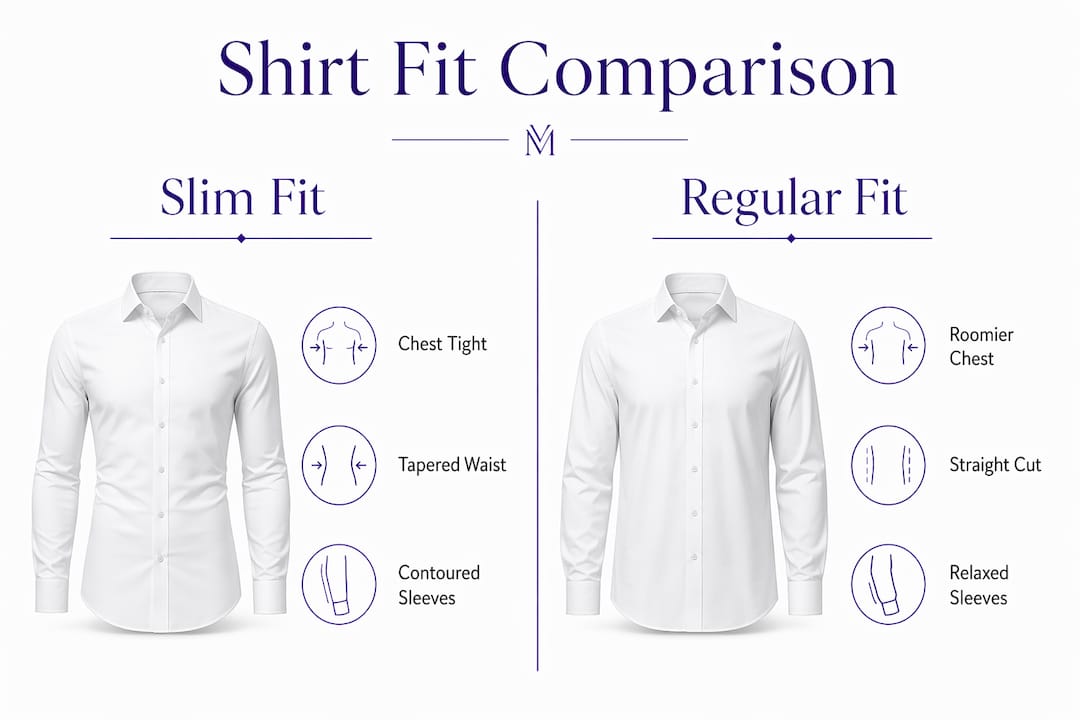
Slim fit and regular fit shirts differ in one fundamental way: how much fabric sits between the shirt and your body. A slim fit shirt follows the natural line of your torso with minimal excess fabric, creating a modern, shaped silhouette. A regular fit shirt provides more room through the chest, waist, and arms for a classic, relaxed shape. Understanding what is slim vs regular fit shirt means looking past the label and into the actual construction. Guides from SOLOS Life, Marks & Spencer, and P&M all confirm that shoulder seam placement, chest room, and waist taper tell you more than any tag ever will.
What are the defining characteristics of a slim fit shirt?
A slim fit shirt is defined by its close relationship to the body, not by tightness. Fit terminology varies widely across brands, so the construction markers matter far more than the label on the collar.
Here is what a properly fitting slim fit shirt actually looks like:
- Shoulder seams sit exactly where your shoulder ends, not drooping onto the upper arm
- Chest has a couple of centimeters of slack but the placket does not pull or gape
- Waist tapers slightly inward, creating a shaped look without squeezing
- Sleeves are narrower through the arm without cutting off circulation
- Hem ends just below the belt line, sitting cleanly whether tucked or untucked
The most common misconception about slim fit is that it means tight. Slim fit means contouring without restriction. A shirt that strains at the buttons or pulls across the back is simply the wrong size, not a correct slim fit.
Pro Tip: Run the placket stress test before buying. Button the shirt fully and raise both arms above your head. If the placket pulls open or the shirt rides up past your waistband, size up or try a stretch fabric option.
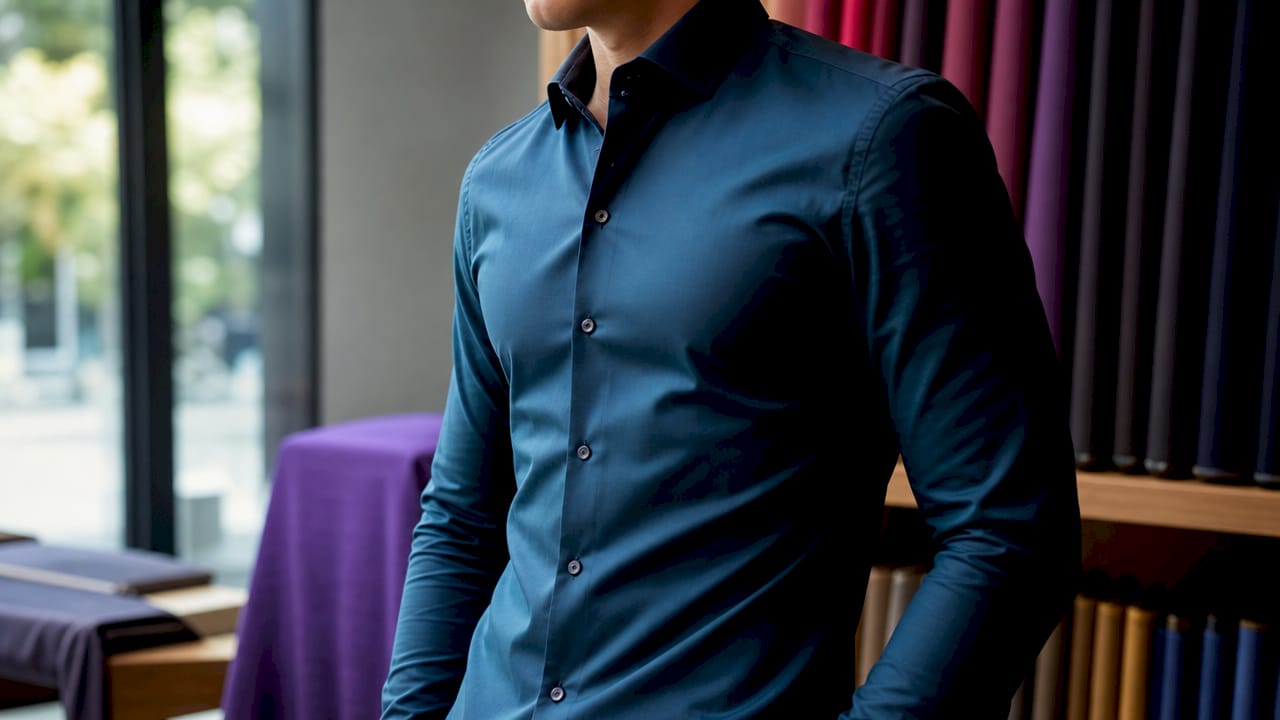
Marks & Spencer’s fit guidance identifies chest fit as the most critical measurement point. The chest should allow easy movement without more than a fist’s worth of pulled fabric. A slim fit shirt that passes the chest test and sits cleanly at the shoulder is doing its job correctly.
One detail most men overlook is hem behavior. A quality slim fit shirt tapers at the waist but should not balloon outward below the hip. Assess waist taper and hem behavior together. A shirt that pulls at the chest but flares at the hem is poorly cut, regardless of what the label says.
How does a regular fit shirt differ in cut and silhouette?
A regular fit shirt is a classic, moderate cut that prioritizes comfort and freedom of movement over body contouring. Regular fit provides controlled ease rather than a body-hugging shape, making it the most versatile option in most men’s wardrobes.
The key differences from slim fit show up in these areas:
- Torso: More room through the chest and midsection, with no strong inward taper at the waist
- Arms: Wider sleeves that allow full range of motion without any snugness
- Shoulder seams: Sit at the shoulder end with controlled ease, not pulled tight
- Silhouette: Straighter lines from chest to hem, with no pronounced shaping
- Comfort: Designed for all-day wear, physical activity, and layering over base layers
| Feature | Slim fit | Regular fit |
|---|---|---|
| Chest room | Minimal, close to body | Moderate, controlled ease |
| Waist taper | Slight inward taper | Straight or minimal taper |
| Sleeve width | Narrower | Wider |
| Silhouette | Shaped, modern | Classic, relaxed |
| Best for | Lean to athletic builds | All body types, broader frames |
| Occasion | Formal, layering under jackets | Casual to formal, daily wear |
Regular fit is the classic and comfortable choice, according to Marks & Spencer. P&M describes it as a comfortable, moderate compromise between slim and loose fits, making it the best starting point for men who are unsure which direction to go.
Regular fit shirts suit broader or fuller builds particularly well. Slim fit rarely flatters heavier builds. A regular fit maintains a clean silhouette without emphasizing torso lines in ways that feel unflattering. Men with athletic builds who carry width across the shoulders and chest also often find regular fit more comfortable, even if they prefer the look of slim fit elsewhere.
What are the real-world differences when wearing each fit?
The practical difference between slim and regular fit shirts shows up the moment you start moving. Slim fit shirts work best in controlled environments like offices, formal events, or layered under a blazer. Regular fit shirts handle physical activity, outdoor settings, and casual wear with far less friction.
Here is how to assess fit in real-world conditions before you commit to a purchase:
- Sit down fully. A slim fit shirt should not ride up or pull across the back when seated. If it does, the shirt is too small.
- Reach forward with both arms. The shirt should move with you. Sleeve seams pulling toward the front signal a chest that is too tight.
- Raise one arm overhead. The hem should stay tucked if you intend to wear it tucked. Untucked shirts should not expose the waistband.
- Check the placket standing still. Buttons should lie flat with no horizontal tension lines between them.
- Breathe deeply. The chest should expand without the fabric straining.
If buttons pull in slim fit, size up or choose a stretch fabric. This is the single most practical piece of advice for men shopping slim fit for the first time.
Slim fit shirts layer cleanly under structured jackets because the reduced fabric bulk keeps the jacket’s shoulders and chest sitting correctly. Slim fit is sleek and great under jackets, while regular fit is the better choice for standalone casual wear where comfort takes priority.
Pro Tip: When shopping online, check the fabric composition before ordering a slim fit. Shirts with at least 2–5% elastane or stretch cotton give you the close fit without the restriction. Pure woven cotton in slim fit leaves almost no margin for error in sizing.
Regular fit shirts also perform better in warm weather. The extra room allows air to circulate, and the wider sleeves reduce friction during movement. For men who wear shirts through long workdays or in environments without reliable air conditioning, regular fit is the practical choice.
How to choose the right shirt fit for your body type
Choosing between slim and regular fit starts with three measurements: chest, waist, and shoulder width. These numbers, compared against a brand’s size chart, tell you more than any fitting room mirror on its own.
Use these guidelines to match fit to body type:
- Lean or slim build: Slim fit works well. The close cut adds visual structure and prevents the shirt from looking oversized.
- Athletic build (broad shoulders, defined chest): Try slim fit in a size up from your chest measurement, or choose regular fit for comfort across the shoulders and chest.
- Broader or fuller build: Regular fit is more flattering and comfortable. Forcing a slim fit on a broader frame creates pulling and an awkward silhouette.
- Average build: Either fit works. Start with regular fit if comfort is the priority. Try slim fit if you want a more modern look.
| Body type | Recommended fit | Key reason |
|---|---|---|
| Lean | Slim fit | Adds visual structure |
| Athletic | Slim (size up) or regular | Accommodates shoulder and chest width |
| Broader or fuller | Regular fit | Avoids pulling and awkward lines |
| Average | Either | Personal preference drives the choice |
Measure chest under armpits and waist at the narrowest point, then check shoulder seam placement against the brand’s chart. Never rely on a size label alone. A size medium slim fit from one brand can fit identically to a size small regular fit from another.
For online shopping, read the product’s specific measurements rather than the size name. Check whether the brand lists chest width, body length, and sleeve length in the product details. Brands that publish these numbers give you a real way to compare across fits and labels. Moreciandco’s approach to quality means the fit details matter as much as the fabric, so checking those specifics before ordering saves you a return.
When layering, always size for the outermost layer. If you plan to wear a shirt under a suit jacket, the shirt’s shoulder seam placement becomes critical. A suit fit guide for men can help you understand how shirt fit interacts with jacket structure. Getting both right at the same time is what separates a sharp look from a sloppy one.
Key Takeaways
Slim fit and regular fit shirts serve different purposes, and the right choice depends on your body type, intended use, and how the shirt is actually constructed, not just what the label says.
| Point | Details |
|---|---|
| Slim fit definition | Follows the body’s natural line with minimal excess fabric and slight waist taper. |
| Regular fit definition | Provides controlled ease through the chest, waist, and arms with a straighter silhouette. |
| Fit check priority | Chest room and shoulder seam placement matter more than the brand’s fit label. |
| Body type match | Lean builds suit slim fit; broader or fuller builds are better served by regular fit. |
| Practical test | Use the placket stress test and slack test at the chest before committing to any fit. |
Why I think most men are choosing the wrong fit for the wrong reasons
Most men pick slim fit because it looks good on a mannequin or on someone else. Most men pick regular fit because it is what they have always worn. Neither reason is wrong, but neither is right either.
The real issue is that fit labels are marketing, not measurement. I have tried on shirts labeled slim fit that were roomier than some regular fit shirts from other brands. The label tells you almost nothing. What tells you everything is where the shoulder seam sits, how the chest behaves when you move, and whether the waist tapers or just hangs straight.
My honest recommendation: try both fits in person before forming a preference. Wear each shirt through a full range of motion. Sit down, reach forward, and breathe deeply. The fit that disappears on your body, the one you stop thinking about after five minutes, is the right one. A shirt that makes you adjust, pull, or tug is always the wrong fit, regardless of how it looks in the mirror standing still.
Fabric matters as much as cut. A slim fit shirt in a stiff, non-stretch woven cotton will feel restrictive even in the correct size. The same slim fit cut in a bamboo-cotton blend or stretch fabric will feel entirely different. Understanding dress shirt fabric types is the step most men skip, and it explains why two shirts with the same label can feel completely different on the same body.
Confidence in how a shirt fits is not a small thing. It changes how you carry yourself. Get the fit right, and everything else follows.
— Giuseppe
Moreciandco shirts built to fit the way you actually wear them
Moreciandco was built on one idea: you should get exactly what you pay for. That means shirts that fit correctly, feel good all day, and hold up over time.
The Complesso Collection includes shirts cut in both slim and regular fits using bamboo-cotton blends that move with your body instead of against it. The fabric breathes, the construction is clean, and the fit details are done right from the shoulder seam down to the hem. If you have been settling for shirts that almost fit, Moreciandco’s full shirt range is worth a look. Quality that shows up in the fit, the fabric, and the feel every single time you put it on.
FAQ
What is the main difference between slim and regular fit shirts?
Slim fit shirts follow the body’s natural line with minimal excess fabric and a slight waist taper. Regular fit shirts provide more room through the chest, waist, and arms with a straighter, more relaxed silhouette.
Is slim fit the same as tailored fit?
Not always. A tailored fit shirt is typically cut even closer to the body than slim fit, with more pronounced shaping at the waist. Slim fit sits between regular and tailored fit on the spectrum of dress shirt styles.
How do I know if a slim fit shirt is too tight?
If the placket pulls open between buttons or you see horizontal tension lines across the chest, the shirt is too tight. A proper slim fit allows a couple of centimeters of slack at the chest without any pulling.
Can a broader build wear slim fit shirts?
Technically yes, but it rarely looks or feels right. Slim fit on broader builds tends to pull across the chest and emphasize torso lines awkwardly. Regular fit is the more flattering and comfortable choice for broader or fuller frames.
Does shirt fit affect how a jacket looks over it?
Yes, directly. A slim fit shirt reduces fabric bulk under a jacket, keeping the jacket’s shoulders and chest sitting correctly. Marks & Spencer’s fit guidance confirms that slim fit is the better choice for layering under structured jackets and formal wear.