


Tapered athletic fit is defined as a garment cut that provides extra room in the chest, shoulders, seat, and thighs while narrowing at the waist and tapering from the knee to the ankle. This construction solves a real problem: standard sizing forces athletic builds to choose between pants that fit their thighs but balloon at the waist, or jackets that close across the chest but pull at the shoulders. The tapered athletic fit, sometimes called an athletic cut in tailoring, addresses all three zones at once. Understanding this fit helps you shop by construction, not just by the label on the tag.
What is tapered athletic fit and how is it built?
Tapered athletic fit is a specific garment pattern, not a marketing label applied to standard sizing. Eric Marvin, writing for RNK Apparel Co., makes this distinction clearly: athletic cut affects the chest, shoulders, and thighs through deliberate pattern changes, not simply by scaling a regular fit up or down. That distinction matters because two garments can share the same size label and fit completely differently.
The construction logic follows the shape of an athletic torso. Shirts and jackets built on this pattern add space in the chest and shoulders while pulling the fabric inward at the waist to reflect a V-shaped silhouette. Pants follow the same principle: wider through the seat and thigh, then narrowing below the knee to create a proportionate, modern shape.
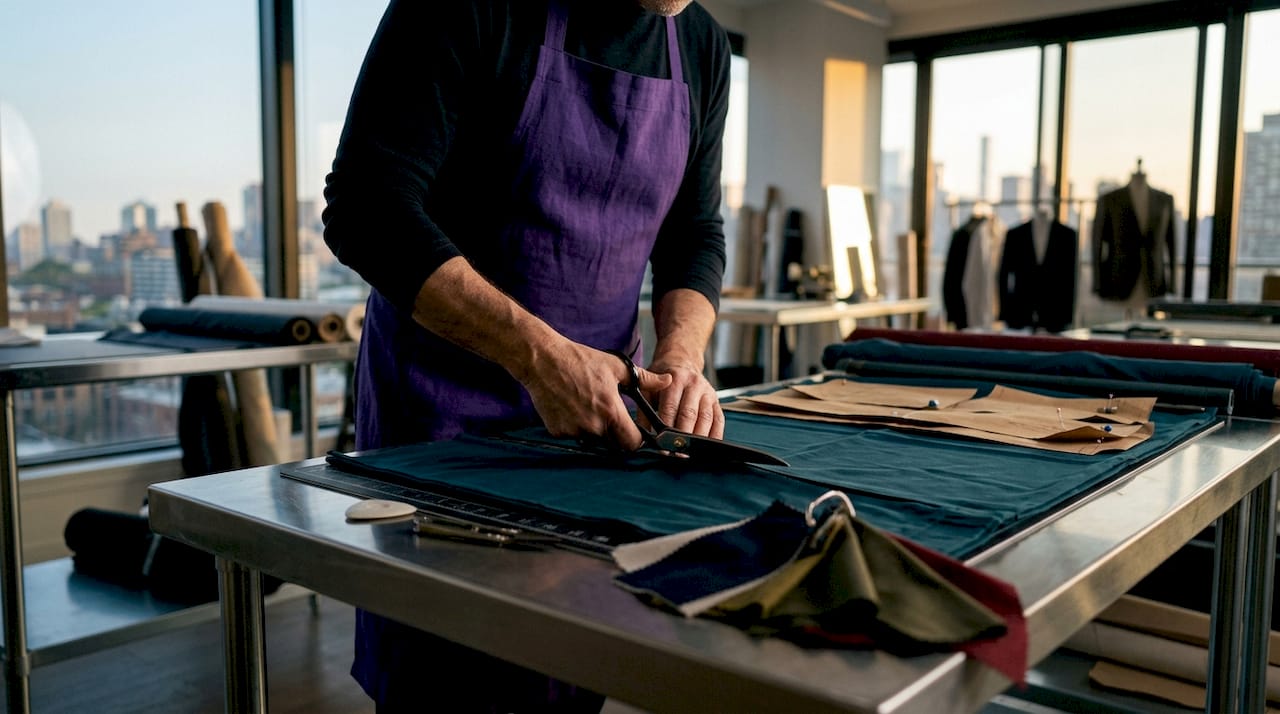
Tailored suits take this further through drop sizing. A drop 7 or drop 8 measurement describes the difference in inches between the chest and waist circumference. A drop 8 suit, for example, is cut for a chest that is 8 inches larger than the waist. That gap is the technical signature of a true athletic cut in suiting.
Key design features at a glance
- Chest and shoulders: Extra fabric volume to prevent pulling across the back and shoulders
- Waist: Taken in to follow the natural taper of an athletic torso
- Seat and thighs: 14–15 inch leg openings are common, wider than slim fits, to accommodate muscle mass without bunching
- Knee to ankle: A gradual taper that keeps the lower leg clean without restricting movement
- Fabric: Stretch fabric blends are standard in athletic tapered jeans and pants, supporting flexibility during dynamic movement
Pro Tip: Check the actual garment measurements listed on the product page, not just the size label. Thigh width and leg opening numbers tell you far more than “athletic fit” printed on a tag.
How does tapered athletic fit differ from slim and regular fits?
The three most common fits, regular, slim, and tapered athletic, each solve a different problem. Knowing where they diverge saves you from buying the wrong cut twice.
Regular fit is cut with generous room throughout: chest, waist, thighs, and leg opening. For athletic builds, that generosity creates a shapeless result. A shirt that fits across the shoulders often has excess fabric at the waist. Pants that clear the thighs tend to look baggy below the knee.
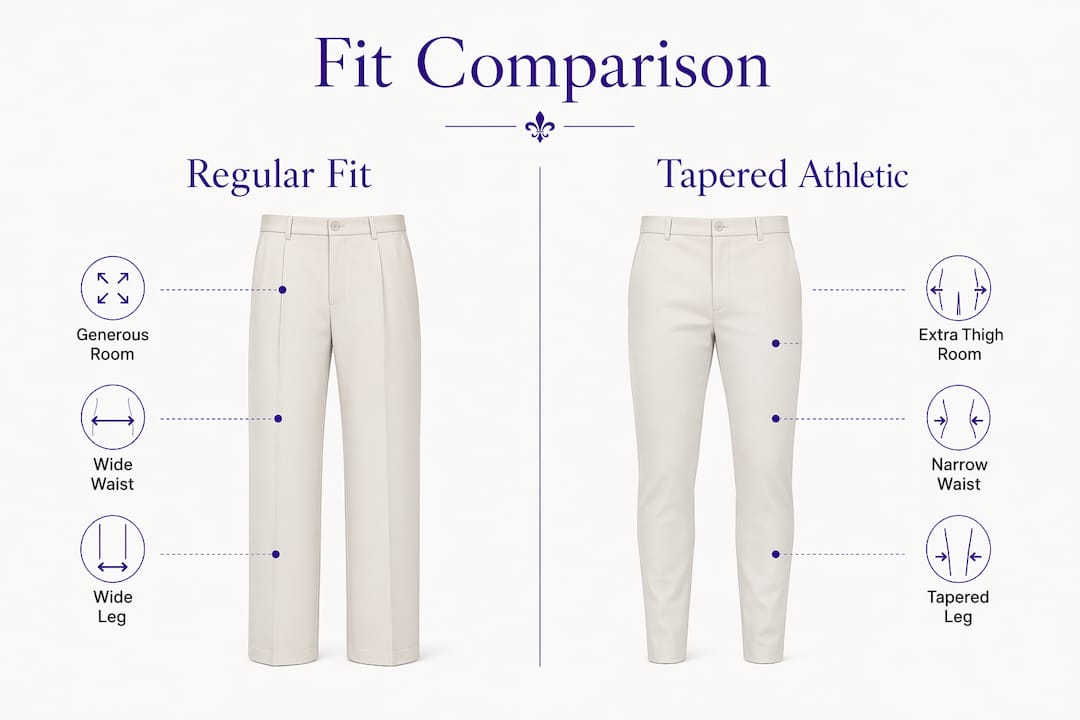
Slim fit moves in the opposite direction. It is uniformly narrow from hip to ankle, which works well for lean, straight builds. For muscular legs, slim fit creates what ApartStyle calls the “thigh trap”: the fabric pulls tight across the thighs while the waist fits correctly, or the waist is sized up to clear the thighs and then gaps at the back.
Tapered athletic fit sits between these two extremes by design. FashionBeans describes this balance as full upper leg volume paired with controlled tapering below the knee, maintaining proportion without being tight or baggy. The result is a silhouette that reads as modern and fitted without restricting movement.
| Fit type | Thigh room | Waist | Leg opening | Best for |
|---|---|---|---|---|
| Regular fit | Generous | Relaxed | Wide | Straight or larger builds |
| Slim fit | Narrow | Close | Narrow | Lean, straight builds |
| Tapered athletic | Wide | Tapered in | Moderate | Muscular, V-shaped builds |
The gradual narrowing from thigh to ankle in tapered fits is what separates them from slim jeans, which maintain consistent snugness throughout. That single design difference is why tapered athletic fits work for muscular legs where slim fits fail. For a deeper look at how these fits compare in shirts and jackets, the slim vs regular fit breakdown at Moreciandco covers the upper body in detail.
Who benefits most from tapered athletic fit clothing?
Tapered athletic fit clothing is built for a specific body profile. Those with a chest-to-waist drop of seven inches or more and muscular legs get the most out of this cut. People with less pronounced athletic builds often find slim or modern fits more flattering, since the extra thigh room in athletic cuts can look disproportionate on leaner frames.
The body types that benefit most share a few common traits:
- Broad shoulders and a developed chest that pull standard shirts tight across the upper back
- Muscular thighs that cause slim and straight-cut pants to bind or restrict movement
- A defined waist that creates a visible drop from chest to midsection
- Active lifestyles that demand fabric with stretch and durability through a full range of motion
Accurate measurement is the most important step before buying. Chest, waist, seat, and thigh circumference all matter. Relying on a size label alone leads to poor results because many consumers misinterpret “athletic fit” labels, and brands apply the term inconsistently. Checking actual garment dimensions against your own measurements removes the guesswork.
Pro Tip: Measure your thigh at the widest point and compare it directly to the garment’s thigh measurement. A difference of less than one inch on each side signals a fit that will restrict movement.
Athletes, gym-goers, and anyone who trains regularly will find this cut works across contexts, from the gym to casual outings. The athletic shirt fit guide at Moreciandco explains how these same principles apply across tops, making it easier to build a consistent wardrobe around your build.
How to style tapered athletic fit clothing for different occasions
The tapered athletic cut is one of the most versatile silhouettes available because it reads as both fitted and relaxed. Styling it well comes down to matching the proportions of the garment to the rest of your outfit.
-
Casual daily wear: Pair tapered athletic jeans with a fitted crewneck or a structured tee. The narrowed leg opening works best with low-profile sneakers or clean leather trainers. Chunky boots can overwhelm the taper, so keep footwear proportionate to the leg line.
-
Business casual: A tailored shirt tucked into tapered athletic chinos creates a sharp, modern look. Choose a shirt with a slight taper at the waist to mirror the pants. An unstructured blazer in a drop 7 or drop 8 cut completes the silhouette without adding bulk.
-
Activewear and gym-to-street: Athletic tapered joggers or training pants in stretch fabric blends move from the gym to the street without looking out of place. Layer with a fitted zip-up or a structured bomber jacket. The key is keeping the upper body proportionate to the tapered lower half.
-
Layering for colder weather: A slim-fitting base layer under a structured overshirt or field jacket works well with tapered athletic bottoms. Avoid oversized outerwear, which breaks the clean line the taper creates. For ideas on making this transition work, the gym wear to street style guide at Moreciandco covers current approaches in detail.
-
Fabric selection by occasion: Stretch denim works for casual and smart-casual settings. Wool-blend tapered trousers suit business environments. Performance fabrics with moisture management belong in activewear contexts. Matching fabric weight and texture to the occasion keeps the look intentional.
The tapered athletic silhouette pairs well with clean, simple tops because the fit itself does the visual work. Avoid oversized or boxy upper layers, which cancel out the structured shape the cut creates below.
Key Takeaways
Tapered athletic fit is the most practical cut for muscular builds because it solves the thigh-waist conflict that standard sizing cannot.
| Point | Details |
|---|---|
| Core definition | Extra room in chest, shoulders, seat, and thighs with a narrowed waist and tapered leg. |
| Drop sizing matters | A drop 7 or drop 8 measurement signals a true athletic cut in suits and structured jackets. |
| Not the same as slim fit | Slim fit is uniformly narrow; tapered athletic widens at the thigh and narrows below the knee. |
| Measure before you buy | Check actual garment thigh and leg opening dimensions, not just the size label. |
| Styling principle | Keep upper body proportionate and footwear low-profile to preserve the tapered silhouette. |
Why fit knowledge changed how I shop
Athletic builds have been underserved by mainstream sizing for a long time. I spent years buying pants a size up to clear my thighs, then having the waist altered, or buying shirts that fit my chest but looked like a tent at the sides. The tapered athletic cut was not a new invention. It was always there in tailoring. What was missing was the language to ask for it.
The shift I noticed is that knowing the pattern name changes the conversation entirely. You stop asking “does this fit?” and start asking “what is the thigh measurement?” That is a better question. It gets you a better answer. The label on the tag is marketing. The number on the spec sheet is construction.
The fashion industry has gotten better at accommodating athletic builds, but inconsistency across brands remains real. One brand’s athletic fit is another brand’s slim fit with a different name. The only reliable filter is your own measurements against the garment’s actual dimensions. Drop sizing in suits is the clearest technical signal of a genuine athletic cut. For everything else, the thigh measurement is your most useful data point.
Fit confidence is not about finding clothes that “work.” It is about understanding why a garment works, so you can replicate that result every time you shop.
— Giuseppe
Moreciandco’s take on quality that fits your build
Moreciandco was built on the idea that you should get exactly what you pay for, and that starts with fit. Athletic builds deserve clothing that is constructed for them, not altered after the fact.
The Complesso Collection at Moreciandco features garments made with tailored proportions and quality materials, including the Complesso Tee, a bamboo-cotton blend made in Portugal that sits correctly on broader shoulders without excess fabric at the sides. The full Moreciandco store carries pieces built around the same principle: clothing that fits the way it should, without compromise on material or construction. If you have been settling for close enough, this is where that stops.
FAQ
What is the tapered athletic fit definition?
Tapered athletic fit describes a garment pattern with extra room in the chest, shoulders, seat, and thighs, paired with a narrowed waist and a gradual taper from knee to ankle. It is a specific construction designed for muscular, V-shaped body types.
How does tapered athletic fit differ from slim fit?
Slim fit is uniformly narrow from hip to ankle, while tapered athletic fit widens through the thigh and seat before narrowing below the knee. This makes tapered athletic fit far more comfortable for muscular legs without sacrificing a modern silhouette.
What body type suits tapered athletic fit best?
People with a chest-to-waist drop of seven inches or more and muscular thighs get the best results from this cut. Those with leaner or straighter builds typically find slim or modern fits more proportionate.
What does drop sizing mean in athletic fit clothing?
Drop sizing measures the difference in inches between chest and waist circumference. A drop 7 or drop 8 suit is cut for a chest that is 7 or 8 inches larger than the waist, which is the technical standard for a true athletic cut in tailored garments.
Can tapered athletic fit clothing work for everyday wear?
Yes. Stretch fabric blends in athletic tapered jeans and chinos support movement and hold their shape through daily activity. The silhouette works across casual, business casual, and active contexts when paired with proportionate tops and footwear.