


Muscle fit shirts are garments cut specifically to follow the contours of a muscular physique, hugging the chest and shoulders while tapering sharply at the waist. This cut solves a real problem: standard and slim fit shirts either balloon around the midsection or pull tight across the chest, forcing athletic men to choose between comfort and appearance. The role of muscle fit shirts goes beyond aesthetics. They signal effort, sharpen your silhouette, and give you a polished look whether you are heading to the office or stepping out after the gym. Moreciandco builds its entire shirt philosophy around this principle.
What distinguishes muscle fit shirts from slim fit and regular fit shirts?
Muscle fit shirts use a pattern built for athletic proportions. Cotton-elastane blends in ratios like 95/5 or 98/2 give the fabric stretch and shape retention that pure cotton cannot provide. Non-stretch cottons cause visible pulling across the chest and restrict movement in men with developed upper bodies.
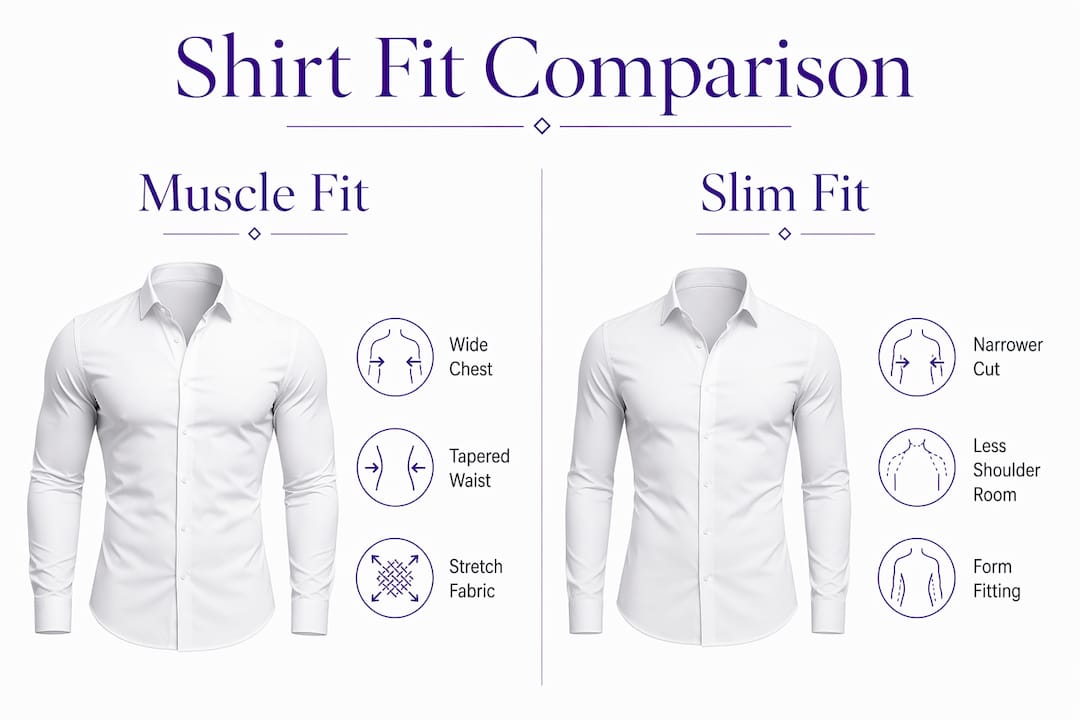
The cut itself is the defining feature. Broader chest and shoulders taper intentionally at the waist to follow muscular contours without excess fabric ballooning around the midsection. Sleeves typically end at mid-bicep with narrower openings, which reduces bunching and keeps the arm line clean.
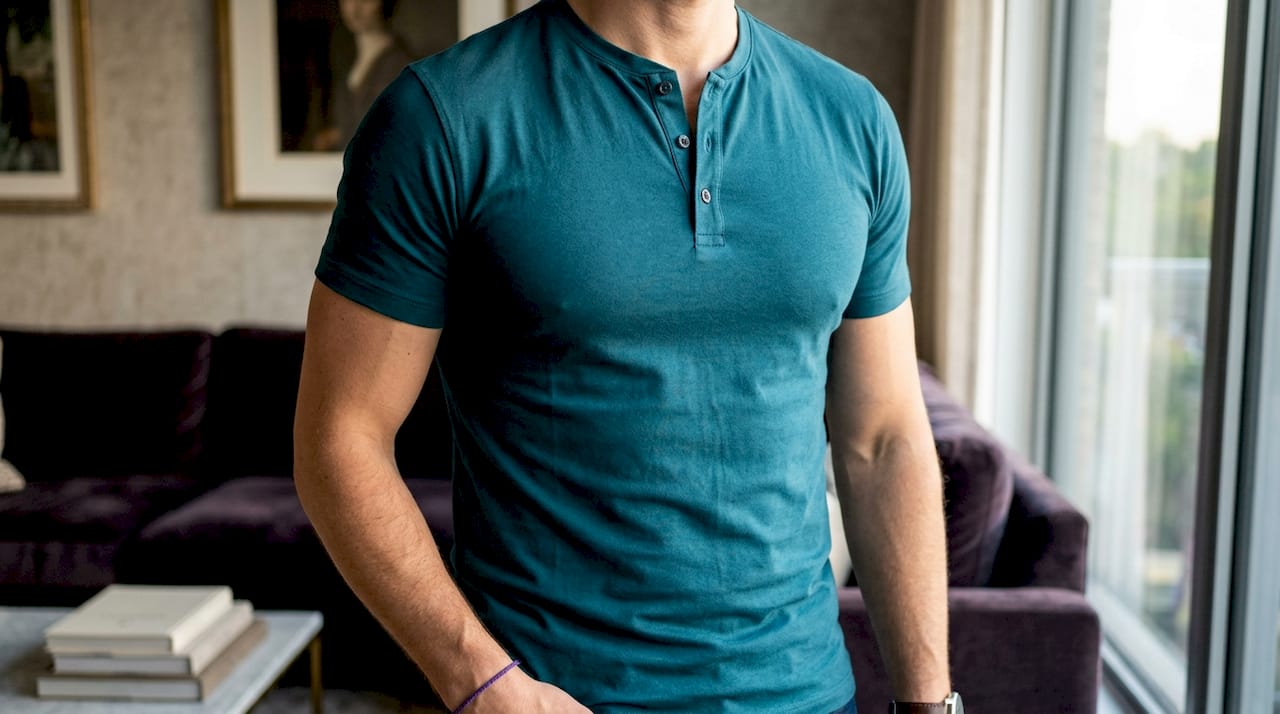
Slim fit shirts taper through the body but are not built for wide shoulders and a thick chest. They gap at the buttons and pull across the back on athletic frames. Regular fit shirts solve that problem by adding width everywhere, but the result is a boxy silhouette that hides the physique entirely. For a deeper look at how these cuts compare, the slim vs regular fit breakdown explains the trade-offs clearly.
The table below shows how the three fits differ across the key design dimensions.
| Feature | Muscle fit | Slim fit | Regular fit |
|---|---|---|---|
| Chest and shoulder room | Wide, built for athletic builds | Moderate, suits lean frames | Generous, suits all builds |
| Waist taper | Strong taper to follow V-shape | Moderate taper | Minimal taper |
| Sleeve cut | Narrow, ends at mid-bicep | Standard length | Relaxed, full length |
| Fabric stretch | Cotton-elastane blend standard | Often pure cotton | Usually pure cotton |
| Best for | Muscular, athletic physiques | Lean to average builds | All body types |
What are the benefits of muscle fit shirts for physique and comfort?
The primary benefit is visual. A well-cut muscle fit shirt accentuates the V-taper, the ratio of broad shoulders to a narrow waist that signals a trained physique. Well-fitted clothing enhances self-perception and posture, boosting confidence and reinforcing the effort you put into training. That psychological lift is real and consistent.
The functional benefits matter just as much. Cotton-elastane blends with 2–5% elastane provide stretch and recovery, letting the shirt move with your body through the day. Non-stretch cottons restrict movement and cause visible pulling at the chest and underarms, which defeats the purpose of a fitted shirt. A good muscle fit shirt stays comfortable from morning meetings to evening plans.
Muscle fit shirts are not compression gear. There is a clear line between a shirt that defines your physique and one that clings like a second skin.
- A proper muscle fit defines the chest and shoulders without pulling at the buttons.
- The fabric should lie flat across the back with no horizontal stress lines.
- You should be able to raise your arms without the hem rising above your waistband.
- The shirt should not outline your midsection the way compression wear does.
- Breathability stays intact because the fabric is not stretched to its limit.
Pro Tip: When trying a muscle fit shirt, do the overhead reach test. Raise both arms above your head. If the hem stays near your waistband and the fabric does not pull across the chest, the fit is right.
How to wear muscle fit shirts for professional and casual occasions
Muscle fit shirts work across a wide range of settings, but the styling approach changes depending on the context. Formal corporate environments that prioritize uniformity still favor looser standard fits. Semi-casual offices, creative workplaces, and client-facing roles are where muscle fit shirts genuinely shine.
- Tuck into chinos or dress trousers. Tucking a muscle fit shirt into tailored chinos maintains the visual V-taper and reads as polished without being stiff. Choose a solid color or a subtle pattern to keep the look professional.
- Choose the right collar. A spread collar or a button-down collar adds structure and signals intention. For collar options that complement athletic builds, the collar style guide covers the key differences.
- Roll your sleeves just below the elbow. Rolling sleeves to just below the elbow emphasizes the forearms and creates a relaxed but deliberate look. This works for both casual and semi-professional settings.
- Pick colors that work with your build. Dark solids and medium tones read as sharp and controlled. Lighter colors highlight the chest and shoulders more aggressively, which works if your proportions are balanced.
- Layer with purpose. An open overshirt or a lightweight jacket worn over a muscle fit shirt adds dimension without hiding the silhouette underneath.
Pro Tip: Avoid horizontal stripes on a wide chest. They amplify width rather than length, which can make the upper body look blocky instead of athletic. Vertical patterns and solid colors are your best options.
For men who want to take the look from the gym to the street, the gym to street style guide covers the transition in practical detail.
What muscle fit shirt styles and fabrics are popular in 2026?
Fabric weight is the detail most men overlook. A shirt that is too light clings to imperfections and loses structure by midday. A shirt that is too heavy restricts movement and traps heat. Fabric weight between 180 and 220 GSM hits the balance point: enough structure to hold the silhouette, light enough for all-day comfort.
The table below shows the most popular muscle fit shirt styles in 2026 and their best use cases.
| Style | Fabric | Best occasion | Key feature |
|---|---|---|---|
| Crew neck tee | 95/5 cotton-elastane | Casual, gym, weekend | Frames shoulders and chest |
| Performance polo | Cotton-elastane blend | Semi-casual, office | Collar adds formality |
| Short-sleeve button-down | Stretch cotton | Smart casual, client meetings | Versatile, tucks cleanly |
| Long-sleeve crew | 98/2 cotton-elastane | Layering, cooler months | Clean base layer option |
Crew necks frame the upper body effectively for muscular men by drawing attention to the shoulders and chest. Short sleeves ending at mid-bicep highlight arm development without looking forced. The performance polo adds a collar, which gives the shirt enough formality for a semi-casual office while keeping the athletic silhouette intact. For a full breakdown of polo options, the performance polo guide covers fabric and fit in detail.
Athletic fit shirts eliminate excess fabric around the waist while providing better mobility than standard cuts. They deliver a polished look suitable for everyday wear without requiring a tailor. The 2026 trend leans toward cleaner silhouettes, fewer logos, and fabrics that perform across multiple settings.
Key Takeaways
Muscle fit shirts are the most effective cut for athletic men because they are the only shirt pattern built specifically for wide shoulders, a thick chest, and a tapered waist.
| Point | Details |
|---|---|
| Fabric matters most | Choose 95/5 or 98/2 cotton-elastane at 180–220 GSM for structure and stretch. |
| Cut defines the benefit | Broader shoulders with a tapered waist creates the V-taper that standard fits cannot achieve. |
| Fit has a limit | A good muscle fit defines the physique without pulling, clinging, or resembling compression gear. |
| Styling unlocks versatility | Tucking in, choosing the right collar, and rolling sleeves extends muscle fit shirts into professional settings. |
| Crew necks and polos lead | These two necklines frame the upper body best and work across casual and semi-casual occasions. |
What I have learned from wearing and studying muscle fit shirts
The biggest mistake men make with muscle fit shirts is sizing up to avoid tightness. It feels like the safe choice, but it defeats the entire purpose of the cut. A shirt one size too large on an athletic frame looks like a regular fit shirt with extra fabric pooling at the waist. The fit should feel snug across the chest and shoulders without any pulling at the buttons.
The second thing I have noticed is that most men underestimate the power of fabric quality. A cheap cotton-elastane blend loses its shape after a few washes. The elastane breaks down, the shirt stretches out, and the silhouette disappears. Spending more on a shirt with a quality blend and a proper GSM weight means the shirt still looks sharp after a year of regular wear. That is what getting what you pay for actually means.
Tailoring is the underused solution for men who sit between sizes. If a shirt fits perfectly across the chest but has too much fabric at the waist, a tailor can take in the sides for a fraction of the shirt’s cost. The result is a fit that no off-the-rack option can match. Posture changes when the fit is right. You stand taller, move with more confidence, and carry yourself differently. That is not a small thing.
— Giuseppe
Moreciandco’s muscle fit shirts: built for men who train
Moreciandco was built on one idea: you should get exactly what you pay for. That means quality fabric, a cut that actually works for athletic builds, and a shirt that holds its shape past the first wash.
The Complesso Tee is a luxury bamboo-cotton muscle fit shirt made in Portugal, built to the 180–220 GSM standard with a cut that follows the V-taper without clinging. The Complesso Collection extends that standard across tailored pieces designed for men who want their wardrobe to reflect the work they put in. Browse the full range at Moreciandco and find the fit that actually fits.
FAQ
What is a muscle fit shirt?
A muscle fit shirt is a garment cut with extra room through the chest and shoulders and a strong taper at the waist to follow a muscular physique. It uses cotton-elastane blends for stretch and shape retention.
How does muscle fit differ from slim fit?
Slim fit shirts taper through the body but are not built for wide shoulders and a thick chest. Muscle fit shirts add width at the chest and shoulders while keeping the same waist taper, making them the better choice for athletic builds.
Are muscle fit shirts appropriate for the office?
Muscle fit shirts work well in semi-casual and creative professional environments. Formal corporate settings that prioritize uniformity still favor standard looser fits, so context matters.
What fabric should a muscle fit shirt use?
The best muscle fit shirts use cotton-elastane blends in 95/5 or 98/2 ratios at a fabric weight of 180–220 GSM. This combination provides stretch, shape retention, and enough structure to hold the silhouette through the day.
How tight should a muscle fit shirt be?
A muscle fit shirt should define the chest and shoulders without pulling at the buttons or creating horizontal stress lines across the back. It should not resemble compression gear or outline the midsection like a second skin.