


Seven types of training leggings dominate men’s gym wear, and each one solves a different problem. Running tights handle mile repeats and long miles. Compression tights support recovery and heavy training blocks. Base layer or thermal tights keep you warm when the temperature drops. Lifting or strength tights trade sheerness for durability under a barbell. 3/4 and short tights cut heat for speed work. Recovery tights apply graduated pressure after the workout is done. Athleisure leggings are built for comfort, not performance, and shouldn’t be mistaken for the rest.
Here’s the one-line cheat sheet:
- Running tights — fitted, breathable, built for range of motion on the road or treadmill.
- Compression tights — snug, supportive, best for recovery days and heavy training weeks.
- Base layer/thermal tights — brushed interior, wind-resistant panels, made for cold-weather sessions.
- Lifting/strength tights — thicker fabric, reinforced gusset, made to survive squats and sled pushes.
- 3/4 and short tights — less fabric, more airflow, ideal for tempo runs and hot HIIT.
- Recovery tights — graduated compression designed for post-workout blood flow, not the workout itself.
- Athleisure leggings — soft, casual builds meant for errands and lounging, not training.
The checklist below walks through fit, fabric, and features so you can match the right pair to your actual training, not just what’s on sale.
Key Takeaways
Matching fabric, fit, and features to your specific training type matters more than any single “best” pair of leggings.
| Point | Details |
|---|---|
| Match type to activity | Running tights for mileage, compression for recovery, thermal for cold, lifting tights for barbell work. |
| Prioritize gusset construction | A flat, gusseted crotch panel prevents fabric migration during squats and long runs. |
| Layer for cold weather | Insulated base layers under a shell outperform one heavy outer layer in low temperatures. |
| Wash cold, skip softener | Fabric softener degrades elastane’s stretch recovery over repeated washes. |
| Pair with premium tops | Moreciandco’s bamboo-cotton Complesso Tee complements fitted training bottoms for gym-to-street versatility. |
Table of Contents
- What Are the Different Types of Training Leggings for Men?
- Fabrics and Construction That Change How Leggings Perform
- How Should Training Leggings Fit on Men?
- Which Type of Leggings Fits Your Workout?
- What Functional Features Actually Matter?
- How Do You Wash Training Leggings Without Ruining Them?
- How Do You Choose the Right Training Leggings?
- What Do Real Product Examples Look Like?
- What Do Experts Say About Fit and Cold-Weather Performance?
- Round Out Your Training Wardrobe With Moreciandco
- Frequently Asked Questions
- Sources
What Are the Different Types of Training Leggings for Men?
Every type of training leggings starts with the same question: what does the fabric need to do for you during the actual movement? A running tight and a lifting tight look similar folded on a shelf, but they behave completely differently once you’re 40 minutes into a session.
Running tights are cut close but not compressive. They prioritize four-way stretch and moisture-wicking polyester or nylon blends because the leg needs to swing freely through a full stride. Running-focused product testing separates these into regular tights, thermal versions, compression tights, and shorter 3/4-length cuts, treating insulation and pocket placement as the main differentiators between them.
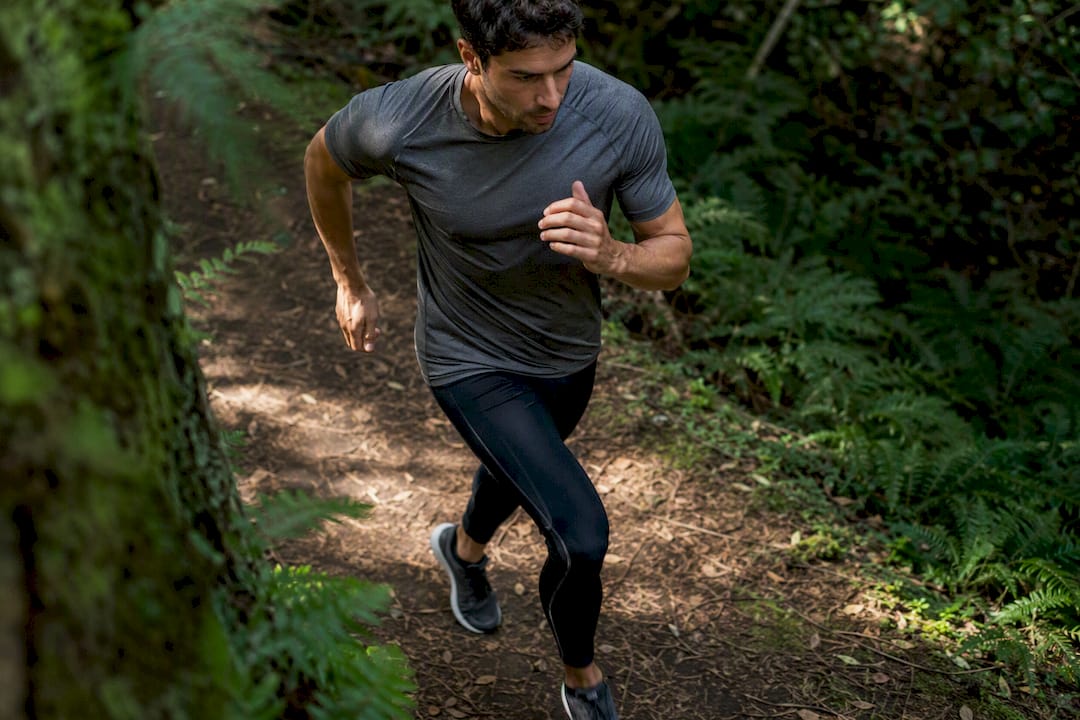
Compression tights fit tighter through the thigh and calf on purpose. The graduated pressure is meant to support muscle during high-volume training blocks and speed up recovery afterward. Verywell Fit’s testing found fitted tights prioritize a close, mobile fit while compression tights lean harder into support, which is why lifters wear compression styles on heavy squat days even outside of running.
Base layer or thermal tights bring a brushed interior face and sometimes a windproof membrane across the front panel. These aren’t really “workout” leggings in the traditional sense. They’re insulation, meant to be worn under shorts or alone as a cold-weather layer.
Lifting or strength tights get overlooked in most buying guides, but they matter if you train heavy. They use thicker, less sheer fabric and a reinforced crotch gusset built to handle repeated squatting and hinging without stretching thin or riding up.
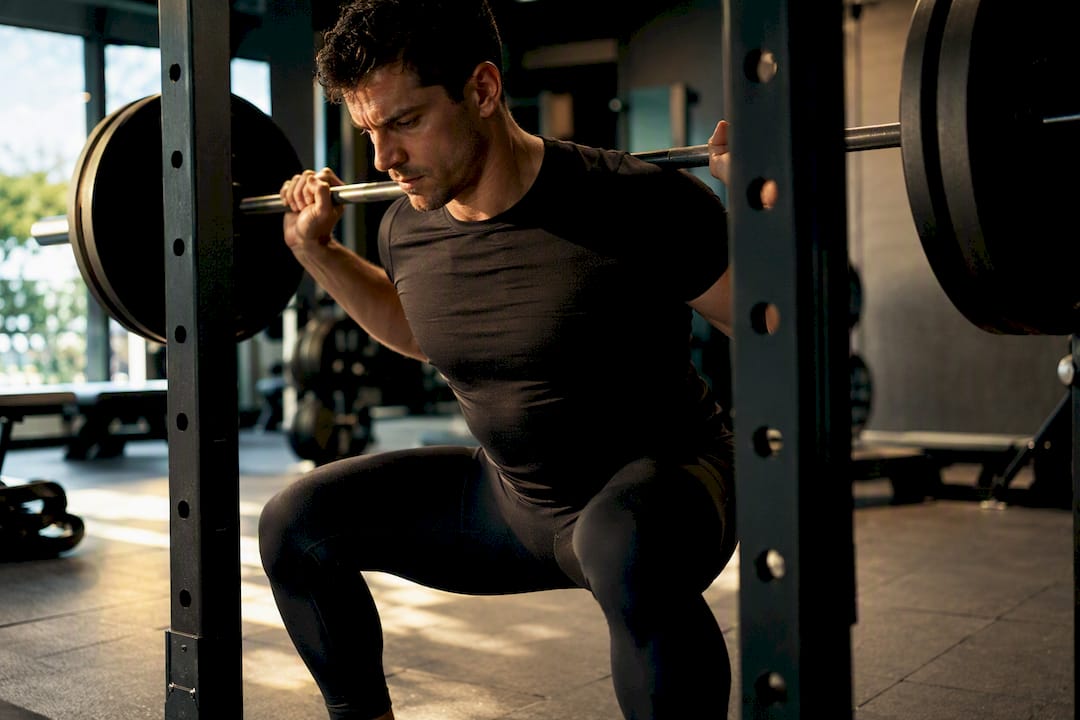
Pro Tip: Hold the fabric up to a light before buying. If you can see your hand through it, skip it for barbell work. Sheer fabric that looks fine standing up gets embarrassing fast at the bottom of a squat.
3/4 tights and short tights trim the leg length to reduce heat retention, which is why sprinters and summer HIIT athletes reach for them. Recovery tights apply compression specifically for post-session blood flow rather than in-workout performance, and athleisure leggings are the odd ones out. They’re built from softer, less technical fabric meant for comfort and casual wear, not squat depth or sweat management.
Naming conventions across the industry track these use cases closely. Diguan Apparel’s breakdown of men’s legging terminology confirms that “running tights,” “compression tights,” “base layer tights,” and “half tights” are named for exactly what they do, not for marketing flourish.
Fabrics and Construction That Change How Leggings Perform
The blend printed on the tag tells you almost everything about how a legging will behave. Polyester/elastane blends dominate running and lifting tights because polyester wicks moisture fast and elastane gives the four-way stretch needed for a full range of motion. Nylon/elastane blends feel slightly smoother and often resist abrasion better, which matters if you’re dragging a sled or crawling on turf. Merino wool blends show up in thermal and base layer tights because merino manages odor and insulates even when damp, a real advantage on long cold runs where you can’t just throw the leggings in the wash after every session.
Beyond the blend, the knit and finish decide comfort under load:
- Brushed thermal interior traps warm air against the skin for cold-weather training.
- Windproof membrane panels block wind on the front of the thigh without sacrificing breathability on the back.
- Flatlock seams lie flat against the skin instead of sitting proud, which cuts down on chafing during long runs or repeated squats.
- Gusseted crotch panels add fabric exactly where movement demands it, instead of pulling tight across the hips.
If you’re training outdoors below freezing, a thermal or merino-blend base layer under a shell does more for performance than one heavy pair of pants ever will. Cold-weather exercise guidance recommends layering with insulated base pieces specifically because a single thick layer traps sweat and loses its insulating value once it’s wet, while a moisture-wicking base layer under a windproof outer keeps you both warm and dry.
For hot-weather sessions, skip the membrane entirely and look for a lightweight polyester/elastane blend with mesh ventilation panels behind the knee.
How Should Training Leggings Fit on Men?
Fit is where most guys get it wrong, mostly because “compression” and “fitted” get used interchangeably when they’re not the same thing. A fitted performance tight follows your leg shape closely but still has some give. A true compression tight applies measurable pressure meant to support the muscle, and it should feel noticeably tighter coming out of the package than a standard running tight does.
The crotch and gusset construction matters more than most buyers realize until they’re mid-set. A flat, gusseted crotch panel lets you hit full squat depth without the fabric riding up or cutting into your hip crease. Coaching-focused breakdowns of men’s leggings point out that seam placement and internal liner design directly affect comfort during heavy compound lifts, and a poorly placed seam can turn a working set into a distraction.
On sizing, go by your training goal rather than your usual pant size. Size down slightly for true compression tights since they’re meant to hug the muscle; size true to your normal fit for running or lifting tights where you still want freedom through the hip and knee. A wide, non-roll elastic waistband holds better under a loaded barbell than a thin drawcord alone, though a drawcord adds security for running when the waistband alone might not stay put over a long distance.
Pro Tip: If your tights don’t have a built-in liner or pouch, wear compression-friendly underwear underneath, not loose boxers. Loose fabric bunches under compression gear and causes far more chafing than going without.
Hold the fabric up to a bright window before your first wear, especially with lighter colors. Manufacturers don’t always flag opacity on the product page, and you don’t want to find out mid squat rack.
Which Type of Leggings Fits Your Workout?
Matching the legging to the activity is the fastest way to stop wasting money on the wrong pair. Here’s how it breaks down by training type:
- Long, steady runs: a fitted running tight in a polyester/elastane blend, with drop pockets for keys or a gel packet.
- Cold-weather runs: a thermal or merino-blend base layer tight, worn alone or under a shell if wind exposure is high.
- Heavy lifting days: a lifting-specific or compression tight with a reinforced gusset and minimal sheerness.
- Speed work and tempo runs: a 3/4 or short tight to cut heat retention without sacrificing hip mobility.
- Yoga and mobility work: a relaxed-fit performance tight with softer, more flexible fabric and minimal compression.
- HIIT circuits indoors: a fitted or lightweight compression tight that handles fast direction changes without bunching.
- HIIT or conditioning outdoors: a heavier fabric with a wind-resistant front panel if you’re training in cold or exposed conditions.
- Post-workout recovery: dedicated recovery tights with graduated compression, worn after training rather than during it.
Hybrid situations come up more than you’d expect. Outdoor HIIT in winter, for example, often needs a thicker, wind-resistant fabric that a standard summer running tight simply doesn’t have, even though both are technically “training tights.” If you’re not ready to commit to full tights for a given session, layering solves a lot of problems: wearing shorts over tights adds modesty and a pocket for your phone, while true 2-in-1 shorts skip the layering altogether by building compression lining directly into a shorts shell.
What Functional Features Actually Matter?
Not every feature on a product page earns its place. Pockets, zips, and reinforced panels only matter if they match how you actually train.
Rank your priorities like this before you shop:
- Pocket placement — drop pockets or a rear zip pocket matter most for long runs where you’re carrying keys, a phone, or fuel.
- Reinforced knees or seat panels — a real priority for sled work, ground work, or any lifting that involves kneeling or crawling.
- Ankle zips — useful if you train in cold weather and need to pull tights on and off over shoes quickly.
- Reflective piping — non-negotiable if you run near traffic in low light, largely irrelevant if you only train indoors.
- Flatlock seam construction — worth prioritizing for anyone doing high mileage or repeated squat volume, since it’s the detail that prevents chafing over time.
Testing editors focused on running gear treat pockets and insulation as the real differentiators between otherwise similar tights, which tracks with how most buyers actually complain about a pair after a few months of use. If you never run outdoors, deprioritize reflective detailing entirely and put that budget toward better waistband construction instead.
How Do You Wash Training Leggings Without Ruining Them?
Elastane breaks down faster than most guys expect, and bad laundry habits are usually the cause. Wash training leggings in cold water and skip fabric softener entirely. Softener coats the elastane fibers and reduces the fabric’s stretch recovery over time, which is exactly the property you’re paying for in a compression tight.
Skip the dryer when you can. Low heat or air drying protects both the elastic fibers and any bonded seams, since high heat is one of the fastest ways to degrade stretch performance.
Watch for three signs that a pair is done: visible pilling across the thighs, a waistband that no longer snaps back, and seams that have started to separate or fray. Once compression tights stop actually compressing, they’ve become expensive casualwear.
Pro Tip: Merino-blend thermal tights resist odor far longer between washes than pure synthetic blends, so you can stretch them across more wears in cold weather. Straight polyester leggings need a wash after nearly every hard session or they’ll hold onto sweat smell fast.
How Do You Choose the Right Training Leggings?
Work through this checklist before you check out:
- Name your primary activity — running, lifting, HIIT, or yoga each points to a different fit and fabric.
- Check the season — cold weather points to thermal or merino base layers; heat points to 3/4 or short tights.
- Decide your compression level — true compression for recovery and heavy training, fitted for range of motion.
- List your pocket needs — phone, keys, gels, or nothing at all changes which pockets actually matter.
- Test for opacity — hold the fabric to light before buying, especially in lighter colors.
- Set a budget with priorities attached — decide which features you’ll pay more for and which you’ll skip.
Before checkout, read the product specs for two details specifically: whether the waistband includes a drawcord, and whether the crotch is described as gusseted. Both details tend to separate genuinely durable tights from ones that look identical in a photo. For a broader buying framework beyond leggings alone, Moreciandco’s guide to choosing performance workout gear walks through the same value-versus-feature tradeoff across other categories.
What Do Real Product Examples Look Like?
Seeing how the taxonomy shows up on actual product pages makes the categories easier to recognize when you’re shopping. A running tight typically shows up labeled with terms like “run tight” or “performance tight,” built from a lightweight polyester/elastane blend with drop pockets called out directly in the description. A thermal or base layer tight usually lists a brushed interior fleece or a merino percentage front and center, since insulation is the entire selling point.
Retail listings for compression training leggings, like Myprotein’s men’s compression legging line, typically separate full-length compression tights from 3/4-length variants right in the product title, which mirrors exactly how the category breaks down industry-wide. A lifting-specific tight rarely gets marketed under that name directly. Instead, look for language around “durable gusset” or “squat-tested” fabric, which signals the same construction without the explicit label.
Always check the actual product page rather than assuming from the category name. Fabric percentage, pocket count, and compression level vary enough between brands that two “compression tights” can behave completely differently on your body.
What Do Experts Say About Fit and Cold-Weather Performance?
Sports medicine guidance backs up a lot of what experienced lifters and runners already know by feel. The American College of Sports Medicine recommends layering with insulated base pieces once temperature or wind exposure increases, treating a thermal base layer as safer and more effective than one heavy outer layer for maintaining performance in the cold.
Product testers reach similar conclusions from a different angle. Verywell Fit’s testing found that fitted tights and compression tights serve genuinely different purposes rather than being interchangeable marketing terms, which explains why a single “one tight fits all” purchase rarely satisfies a serious training schedule.
Strength coaches consistently prefer thicker, less sheer tights with gussets or built-in liners specifically to avoid seam irritation and fabric migration during heavy compound lifts, according to coaching-focused legging guidance.
That single detail, thickness over sheerness for anything barbell-related, is the one most buying guides skip entirely.
A practical note from the author
I reach for a compression tight more than anything else in my own rotation, mostly because it does double duty across heavy training days and easy recovery sessions without needing a separate pair for each. My honest advice: match the fabric to the activity in front of you, not whichever brand has the loudest marketing that week. Fit and construction win over logo every time.
Round Out Your Training Wardrobe With Moreciandco
Training leggings solve the bottom half of your kit, but what you wear above them changes how the whole outfit performs and looks once you leave the gym floor. Moreciandco built its bamboo-cotton tees and polos specifically for men who want a top layer that pairs cleanly with fitted training bottoms and still looks put-together running errands afterward, without the boxy fit or synthetic feel of typical gym shirts.
The Complesso Tee is a straightforward example: a bamboo-cotton blend cut with an athletic taper that sits well over compression or fitted running tights, whether you’re headed straight from a lift into the rest of your day. Moreciandco focuses on premium apparel and accessories rather than performance bottoms, so think of this as the wardrobe piece that completes the training kit rather than replaces it. Browse the full Complesso Collection to see the current lineup and find a top that fits your training rotation.
Frequently Asked Questions
What are the main types of training leggings for men? The core types are running tights, compression tights, base layer or thermal tights, lifting or strength tights, 3/4 and short tights, recovery tights, and athleisure leggings, each built for a distinct training purpose.
What’s the difference between compression leggings and regular fitted training leggings? Compression leggings apply graduated pressure meant to support muscle and speed recovery, while fitted leggings prioritize a close, mobile fit without the same level of built-in pressure.
Can I wear running leggings for lifting? You can, but a dedicated lifting tight with a reinforced gusset and thicker, less sheer fabric holds up better under repeated squatting and hinging than a lightweight running tight.
Do I need thermal leggings for cold-weather training? If you’re training outdoors below freezing or in high wind, a thermal or merino-blend base layer performs better than a single heavy outer layer, since it manages moisture while still insulating.
How do I know if training leggings are too sheer? Hold the fabric up to a bright light before wearing them publicly. If you can see your hand through it, especially in lighter colors, size up or choose a heavier, lifting-specific fabric instead.
Sources
- Acsm
- The 9 Best Men’s Running Tights and Leggings
- The 10 Best Running Tights for Men of 2026, Tested
- The Ultimate Guide to Leggings (Part 3): Men’s Leggings
- What Are Men’s Leggings Called? Running Tights & Shorts Guide – Diguan Apparel