


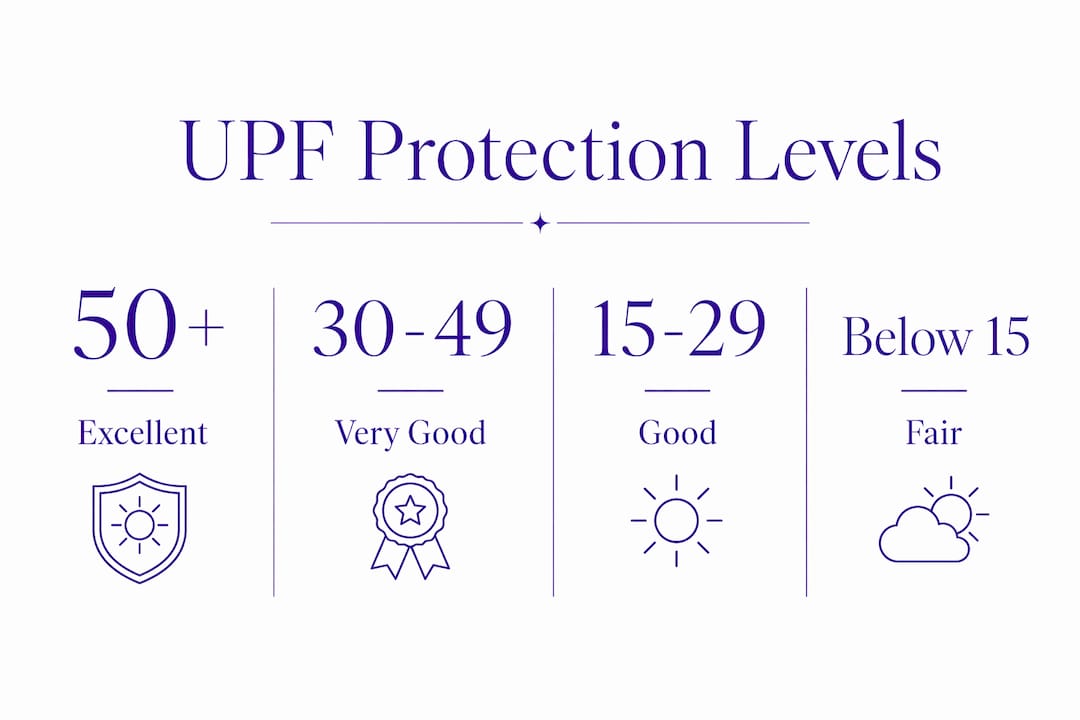
UPF, or Ultraviolet Protection Factor, tells you exactly how much UV radiation a fabric allows to reach your skin. The higher the number, the less UV gets through. Here’s the quick version:
- UPF 15: blocks most UV; about 1/15th passes through (about 93% blocked)
- UPF 30: blocks most UV; about 1/30th passes through (about 96.7% blocked)
- UPF 50+: blocks at least 98% of UV; no more than 1/50th (2%) gets through
Per US guidance, UPF 30–49 is considered very good protection, and UPF 50+ is excellent. If you’re buying sun-protective clothing, UPF 30 is the floor worth considering, and aiming for the highest available rating is ideal.
Table of Contents
- What does a UPF rating actually measure?
- How does UPF differ from SPF, and why do both matter?
- What makes clothing more or less sun-protective?
- How to read UPF labels and spot trustworthy certifications
- Does laundering and wear degrade UPF over time?
- When is UPF clothing enough, and when do you still need sunscreen?
- How to choose UPF clothing that actually works
- What dermatologists and public-health experts say about UPF clothing
- Key Takeaways
- The tradeoff nobody talks about enough
- Useful sources for further reading
What does a UPF rating actually measure?
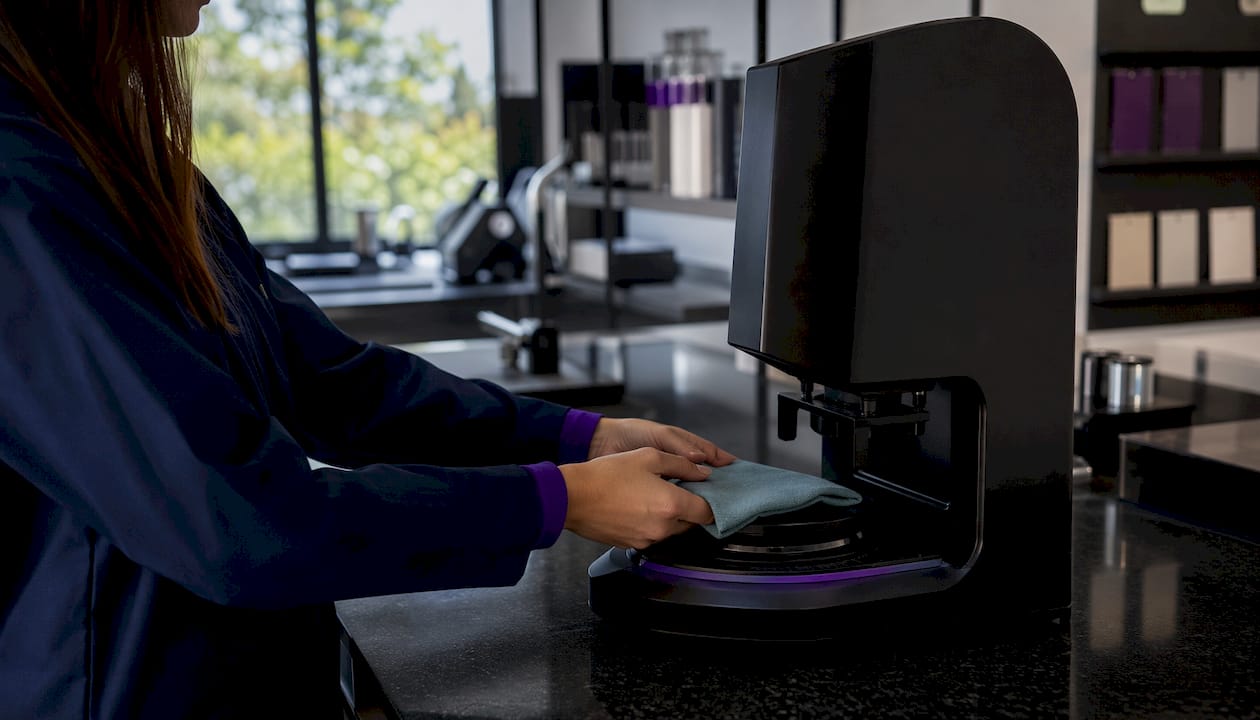
UPF is determined in a laboratory using a spectrophotometer, an instrument that measures how much UVA and UVB radiation transmits through a fabric sample. The test accounts for the full UV spectrum (290–400 nm), not just the wavelengths that cause sunburn. That’s a meaningful distinction: you get a number that reflects total UV exposure, not just the burn-causing portion.
The math is simple. The UPF number is the denominator of a fraction: UPF 50 means 1/50th of UV passes through. Here’s how the common ratings translate:
| UPF Rating | Fraction Passing Through | UV Blocked | Protection Category |
|---|---|---|---|
| UPF 15 | 1/15 (~7%) | about 93% | Good |
| UPF 30 | 1/30 (~3.3%) | about 96.7% | Very Good |
| UPF 50+ | ≤1/50 (≤2%) | ≥98% | Excellent |
UPF 50+ garments block at least 98% of UV radiation — the threshold the Skin Cancer Foundation requires for its Seal of Recommendation.
The jump from UPF 30 to UPF 50+ looks small on paper (96.7% vs. 98%), but it cuts UV exposure nearly in half again. For someone spending hours outdoors, that gap adds up.
How does UPF differ from SPF, and why do both matter?
SPF (Sun Protection Factor) and UPF measure different things, and confusing them leads to real gaps in protection.
UPF measures fabric transmittance of both UVA and UVB through cloth. SPF measures how long it takes for UV to redden skin when sunscreen is applied, and it focuses primarily on UVB. One is a textile test; the other is a skin test.
The practical differences matter just as much as the technical ones:
- UPF clothing protects only the skin it covers, but that protection holds as long as the garment is on and dry. No reapplication needed.
- SPF sunscreen protects exposed skin (face, neck, hands, arms) but degrades with sweat, water, and time. The American Academy of Dermatology recommends reapplying every two hours.
- UPF is better suited for prolonged, consistent coverage of large body areas. SPF fills the gaps clothing can’t reach.
- Neither replaces the other. A UPF shirt and SPF 30+ sunscreen on exposed skin is the combination dermatologists consistently recommend.
What makes clothing more or less sun-protective?
Not all fabric is equal, and the label on your shirt tells you almost nothing about UV protection unless it’s been tested. A standard white cotton T-shirt may offer a UPF of around 5, letting roughly 20% of UV through. That’s not a typo.
Weave, fiber, and color
Tightly woven fabrics like denim block UV far better than loose-knit cotton. Polyester and wool tend to outperform untreated cotton at equivalent weights. Darker colors absorb more UV than lighter ones, so a navy blue shirt typically offers more protection than a white one of the same fabric. Heavier fabrics generally block more UV than lightweight ones, though specially engineered UPF fabrics can use metal-oxide finishes to scatter and absorb UV even in lightweight constructions. Understanding how fabric construction works helps you read between the lines when a label is vague.
Stretch and wetness
This is where a lot of people get caught off guard. Some stretchy fabrics drop from a UPF of around 85 when unstretched to around 8 when worn stretched. The weave opens up under tension, and UV slips through. Wet fabric has the same problem: water fills the air gaps in a weave but also makes the fabric more transparent to UV. Swimwear is especially vulnerable here, which is why swim-specific UPF-rated garments are worth seeking out if you’re in the water for extended periods.
Garment design and coverage
A UPF 50+ fabric on a crop top still leaves most of your torso exposed. Coverage is as important as the rating itself. Long sleeves, high necklines, and longer hemlines protect more skin. For outdoor activities, consider layering for coverage rather than relying on a single high-rated piece that leaves gaps.
Pro Tip: Hold the fabric up to a bright light. If you can see daylight through the weave, UV is likely passing through too. It’s a rough check, not a substitute for a lab-tested UPF label, but it takes five seconds and catches the obvious offenders.
How to read UPF labels and spot trustworthy certifications
A garment that says “sun-protective” on the hang tag is not the same as one with a tested UPF rating. Marketing language is not regulated the same way a lab-certified number is.
Here’s what to look for on a tag or product listing:
- A specific UPF number (e.g., “UPF 50+”) rather than vague claims like “sun-safe” or “UV-resistant”
- Reference to a recognized test standard such as AATCC 183 or ASTM D6544, which are the primary US textile testing protocols
- The Skin Cancer Foundation Seal of Recommendation, which requires UPF 50+ and independent lab verification
- An explicit lab-test statement from the manufacturer, ideally naming the testing facility
One thing worth knowing: standards vary by region. European guidelines sometimes require a minimum UPF of 40 for a garment to carry a sun-protective label, while some other frameworks accept UPF 15 as a starting point. US shoppers will see both domestic and internationally tested garments, so checking the specific number and the standard it was tested to matters more than assuming any labeled item meets a consistent bar.
Does laundering and wear degrade UPF over time?
Yes, and the degree depends on the garment’s construction. Fabrics with chemical UV-absorbing finishes are more vulnerable than those that rely on tight weave and fiber type alone. Bleach is the most damaging agent: it breaks down both dye and finish, reducing UV absorption. Chlorine from pools has a similar effect on swimwear over repeated exposure.
Washing in cold water with a gentle detergent preserves finishes longer than hot-water cycles. Line drying in shade is preferable to high-heat tumble drying, which can stress both the fiber and any applied finish. Avoid fabric softeners on UPF garments; they can coat fibers in a way that subtly alters transmittance. Store UPF clothing away from prolonged direct sunlight when not in use.
Abrasion matters too. Areas that rub repeatedly against a backpack strap or seat belt will thin over time, and a thinned weave transmits more UV. The same applies to pilling: a heavily pilled fabric has a disrupted surface structure.
Pro Tip: Every few months, hold your most-used UPF garments up to a bright light again. If a shirt that used to look opaque now shows visible light through the fabric, it’s time to replace it. Fit matters too: if a once-comfortable piece now pulls tight across the shoulders or back, the weave is under constant stretch and the effective UPF is lower than the label states.
When is UPF clothing enough, and when do you still need sunscreen?
UPF clothing is one of the most reliable forms of sun protection available, but it only works where it covers. That’s the rule everything else follows.
Situations where UPF clothing is especially worth prioritizing:
- Long outdoor exposure (hiking, gardening, beach days, outdoor sports)
- Water activities, where sunscreen washes off quickly
- Children, whose skin is more sensitive to UV damage
- Anyone with photosensitivity or a history of skin cancer
- High-altitude environments, where UV intensity increases significantly
For any skin that isn’t covered by fabric, sunscreen is non-negotiable. That means face, neck, ears, hands, and any exposed forearms or legs. Apply SPF 30 or higher and reapply every two hours, or immediately after swimming or heavy sweating. A quick errand on a cloudy day is a different calculation than an all-day beach trip, but UV penetrates cloud cover, so even low-exposure days add up over a lifetime.
For children’s water activities specifically, purpose-built UV-protective swimwear like the Minoti rash bodysuit combines UPF-rated fabric with full-coverage design, which addresses both the rating and the coverage gap that regular swimsuits leave.
How to choose UPF clothing that actually works
Check the rating and certification first
- Look for a specific UPF number on the label. UPF 50+ is the target for maximum protection.
- Confirm the garment references a recognized test standard (AATCC 183 or ASTM D6544 for US-market products).
- Look for the Skin Cancer Foundation Seal of Recommendation if you want independent verification.
- Avoid garments that use only vague language (“UV-protective,” “sun-safe”) with no numeric rating.
- For swimwear, confirm the UPF rating applies when wet, or look for swim-specific tested garments.
Evaluate fit, coverage, and fabric
- Prioritize coverage: longer sleeves, higher necklines, and longer hemlines protect more skin regardless of UPF rating.
- Avoid overly stretchy fabrics for areas you need to protect most. A tight-fitting athletic shirt under tension may offer far less protection than its label suggests.
- Tightly woven, heavier fabrics generally outperform lightweight, loosely knit ones at equivalent UPF ratings.
- For performance and outdoor activities, look for fabrics that balance UPF with moisture management so you’ll actually wear them.
Read the care tag before you buy
- If the care instructions require dry cleaning or hand-washing only and you won’t follow them, the garment’s UPF will degrade faster than expected.
- Avoid garments that explicitly warn against chlorine if you plan to swim in them.
- Cold-water machine wash and line dry is the most preservation-friendly combination for most UPF garments.
What dermatologists and public-health experts say about UPF clothing
The expert consensus is consistent: UPF clothing is among the most effective and reliable forms of sun protection for the skin it covers. Unlike sunscreen, it doesn’t require reapplication, doesn’t wash off in the first wave, and doesn’t depend on how evenly you applied it.
The Cleveland Clinic notes that UPF garments provide persistent protection while dry and intact, making them particularly valuable for activities where sunscreen reapplication is impractical. Both the Skin Cancer Foundation and the American Academy of Dermatology endorse UPF clothing as part of a complete sun-safety approach.
The UPF 50+ threshold, which blocks at least 98% of UV radiation, is the benchmark both organizations point to for maximum protection. For context, a plain white cotton T-shirt at UPF 5 lets through ten times more UV than a UPF 50+ garment. That’s not a marginal difference.
Key Takeaways
UPF 50+ clothing blocks at least 98% of UV radiation, making it the most effective fabric-based sun protection available, but it only works where it covers your skin.
| Point | Details |
|---|---|
| UPF 50+ is the gold standard | It blocks ≥98% of UV; UPF 30–49 is very good, UPF 15 blocks at least 93%, which is the minimum rated category. |
| Stretch and wetness reduce protection | Some fabrics drop from UPF ~85 to ~8 when stretched; wet fabric transmits more UV. |
| Coverage matters as much as rating | A high-rated fabric on a short garment still leaves most skin exposed. |
| Always add sunscreen for exposed skin | UPF clothing protects only what it covers; apply SPF 30+ to face, neck, and hands. |
| Look for lab-tested labels | Seek a specific UPF number, a recognized test standard, or the Skin Cancer Foundation Seal. |
The tradeoff nobody talks about enough
There’s a gap between what UPF clothing promises and how people actually use it, and it mostly comes down to coverage. Shoppers focus on the number on the label and overlook the fact that a UPF 50+ short-sleeve shirt leaves your forearms, neck, and hands completely unprotected. The rating is real. The gap in coverage is also real.
The other thing worth saying plainly: comfort drives compliance. A technically excellent UPF garment that you find too hot, too stiff, or too unflattering will end up in a drawer by mid-July. A UPF 30 shirt you actually wear every day outdoors protects you far better than a UPF 50+ one you avoid. Lightweight, breathable fabrics in UPF 50+ do exist, and they’re worth the extra effort to find. For hot climates especially, fabric weight and moisture management matter as much as the UV-blocking number.
Style is a real consideration too, not a vanity one. If UPF clothing looks clinical or athletic when you want something that works in everyday settings, you’re less likely to reach for it. The good news is that the category has expanded considerably. Moreciandco’s Complesso Collection is built around the idea that quality construction and considered design aren’t mutually exclusive, and that extends to how fabric performs over time. You don’t have to choose between looking put-together and being protected.
The practical advice: buy UPF 50+ where you can, prioritize coverage over rating alone, and pair it with sunscreen on anything the fabric doesn’t reach. That combination, consistently applied, is what actually reduces UV exposure over a lifetime.
Useful sources for further reading
- Skin Cancer Foundation — Sun Protective Clothing: skincancer.org — the primary US reference for UPF ratings, the Seal of Recommendation, and sun-safety guidance
- Cleveland Clinic — Does Sun-Protection Clothing Actually Work: health.clevelandclinic.org — dermatologist perspective on UPF clothing vs. sunscreen
- MD Anderson Cancer Center — 7 Things to Know About UPF: mdanderson.org — practical breakdown of fabric factors, stretch, and wetness effects
- Northwell Health — SPF vs. UPF Explained: thewell.northwell.edu — clear comparison of the two rating systems for everyday readers
- ARPANSA — Labelling Sun-Protective Clothing: arpansa.gov.au — testing and labeling standards reference (Australian authority; useful for understanding international testing frameworks)
This article is general information, not medical advice. For guidance specific to your skin type, medical history, or sun-exposure situation, consult a dermatologist or check the current recommendations from the American Academy of Dermatology.