


A pique fabric polo shirt is a polo constructed from a distinctively knit fabric featuring a raised, textured weave that improves breathability, durability, and visual structure. The industry term for this fabric is piqué (pronounced “pee-KAY”), and it appears on clothing labels sometimes as “marcella,” a synonym for the same weave). Most shoppers encounter pique fabric without knowing its name, recognizing it only as that slightly textured, grid-patterned polo that holds its shape wash after wash. Understanding what sets pique apart helps you buy smarter and dress better.
What is pique fabric in a polo shirt?
Pique fabric is defined by its raised geometric texture), which appears as honeycomb cells, parallel cords, or waffle-like grids across the fabric surface. That texture is not decorative. It is structural, built directly into the weave or knit during production. The result is a fabric that feels substantial in your hand and holds a crisp shape on your body.
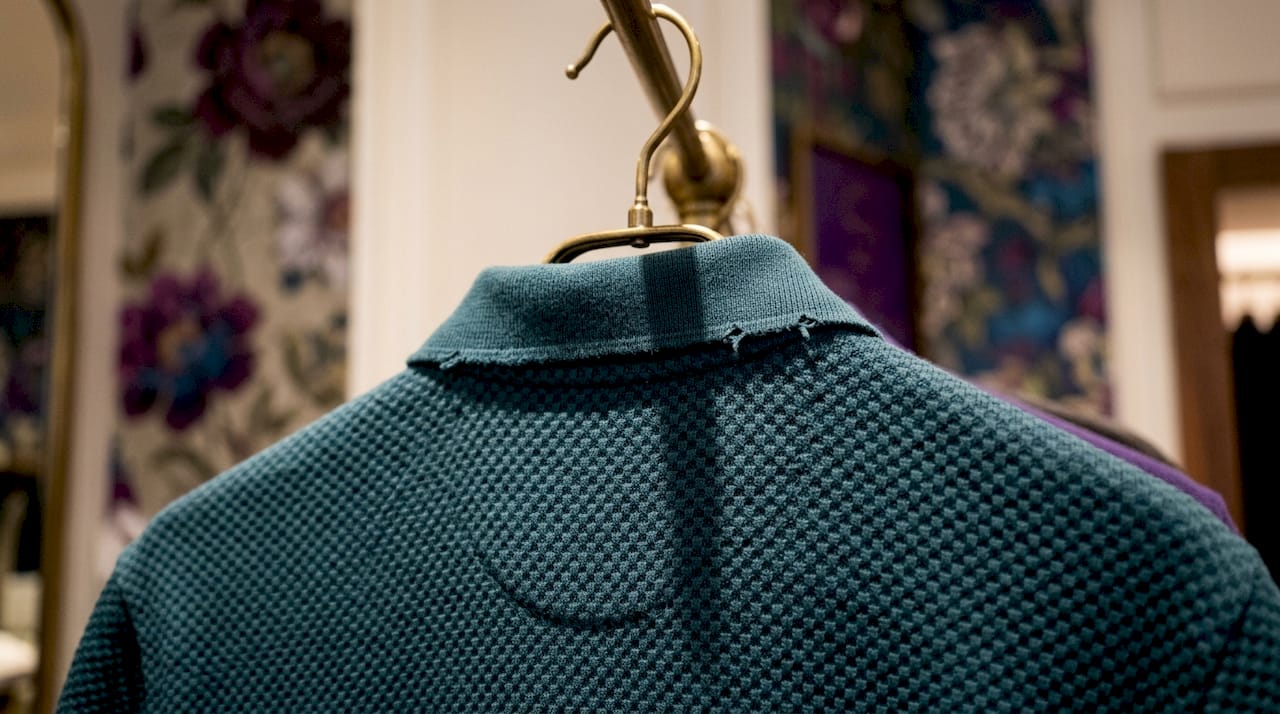
Two main construction methods produce pique. The first is knit pique, which uses a circular or flat knitting machine to create stretch and flexibility. The second is dobby-woven pique, which uses a loom to create a firmer, less stretchy fabric with a more formal appearance. Knitting versus dobby weaving) affects how much the fabric stretches, how it drapes, and how it responds to heat and washing.
The most common fiber in pique polo shirts is cotton. Cotton pique breathes well, feels comfortable against skin, and takes dye evenly for clean, rich colors. Many brands also use cotton-poly-spandex blends) to add moisture management and shape retention. The fiber content changes the softness and performance of the shirt, even when the pique texture looks identical on the surface.
- Cord pique: Parallel raised lines running vertically or horizontally across the fabric
- Honeycomb pique: Six-sided cell pattern that maximizes surface area and airflow
- Waffle pique: Deeper grid pattern, heavier feel, often used in cooler-weather polos
- Marcella pique: A finer, dressier version of cord pique, common in formal shirts and tuxedo fronts
Pro Tip: Check the GSM (grams per square meter) listed on a polo’s product page. A weight of 200–240 GSM signals a mid-weight pique that balances breathability with structure. Lighter than 180 GSM tends to feel flimsy; heavier than 280 GSM can feel stiff in warm weather.
How does pique compare to jersey and other polo shirt fabrics?
Jersey fabric has a smooth, flat surface. Pique fabric has a raised, textured surface. That single difference drives almost every other distinction between the two most common polo shirt fabrics.
Pique polos hold shape better and allow more airflow than jersey. Jersey polos feel softer and drape closer to the skin. Neither is universally superior. The right choice depends on what you need the shirt to do.
| Feature | Pique fabric | Jersey fabric |
|---|---|---|
| Surface texture | Raised, geometric | Smooth, flat |
| Breathability | Higher, due to air pockets | Lower, fabric sits closer to skin |
| Shape retention | Strong, holds structure | Moderate, can stretch out |
| Softness | Slightly firmer feel | Softer, more skin-friendly |
| Wrinkle resistance | Moderate | Higher |
| Best use | Smart casual, sport, warm weather | Casual, cooler weather, relaxed fit |
| Appearance | Structured, textured, polished | Relaxed, understated |
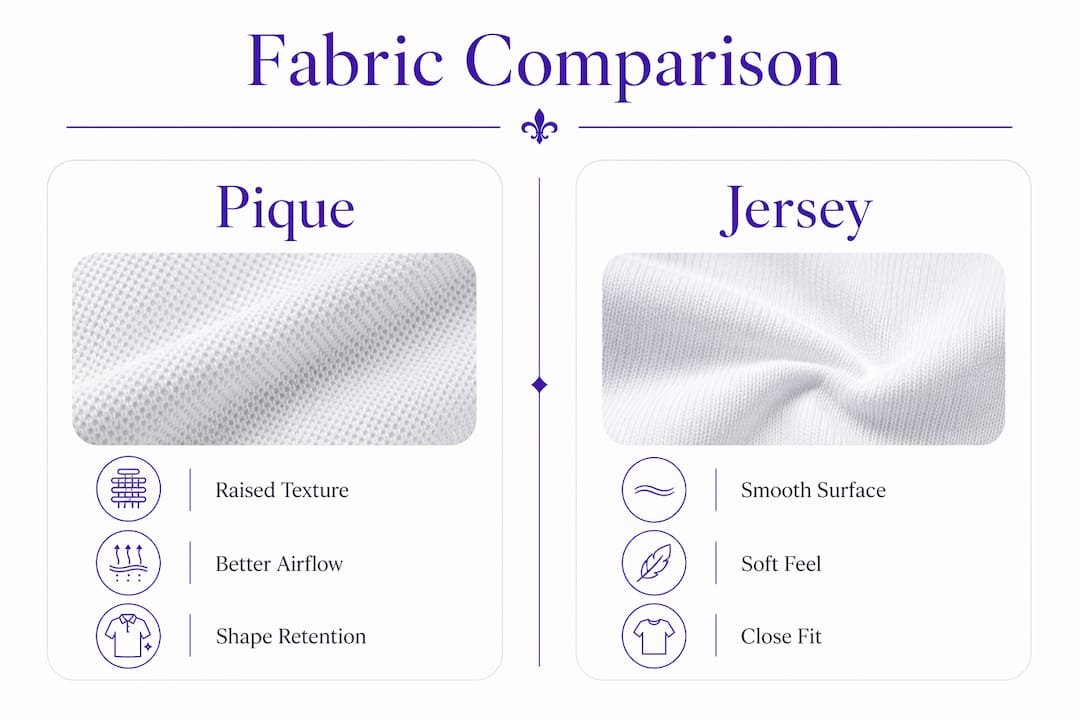
Jersey works well for relaxed weekend wear or layering under jackets in cooler months. Pique works better when you want a shirt that looks put-together without ironing and stays comfortable in heat. The performance polo shirt category almost universally uses pique or pique-blend fabrics because of this combination of structure and airflow.
When to choose pique over jersey:
- You need a polo that looks sharp after a full day of wear
- You are dressing for a smart casual setting like a golf course, restaurant, or office
- You run warm and need fabric that does not cling when you sweat
- You want a shirt that survives frequent washing without losing its shape
What are the benefits and drawbacks of pique fabric polos?
Pique fabric delivers real functional advantages, not just visual ones. The raised texture creates small air pockets between fabric and skin, which improves airflow and keeps you cooler than a flat-knit shirt in warm weather. This is the primary reason pique became the standard fabric for polo shirts worn in sport and outdoor settings.
The benefits of pique fabric polos, ranked by practical impact:
- Breathability. Air channels built into the weave circulate air against your skin. This matters most in summer or during physical activity.
- Durability. Pique polos resist pilling better than thinner materials and maintain their crisp, structured look after multiple washes.
- Shape retention. The fabric holds its form at the collar, chest, and hem without stretching out. A well-made pique polo looks as good after 50 washes as it did on day one.
- Comfort in heat. Pique texture prevents fabric from clinging to skin when sweating. The slight roughness that some people notice is the same property that keeps the shirt off your skin.
- Visual structure. The textured surface gives pique polos a polished, intentional look that plain jersey cannot replicate.
The drawbacks are real and worth knowing before you buy:
- Pique can feel slightly rougher than jersey, which some people find uncomfortable against sensitive skin
- The raised texture can trap lint and pet hair more readily than smooth fabrics
- Higher-quality pique polos cost more than basic jersey alternatives
- Pique can wrinkle if packed tightly or washed incorrectly
Pro Tip: Turn your pique polo inside out before washing. This protects the raised texture from friction inside the drum and keeps the surface looking sharp longer. Gentle washing preserves both the texture and the collar structure.
How to wear and style pique fabric polo shirts
Pique polos are highly versatile, moving easily between casual wear, sport, and smart casual settings. That versatility comes directly from the fabric’s structured texture, which reads as polished without requiring a tie or blazer.
For a classic smart casual look, pair a solid-color pique polo in navy, white, or forest green with chinos or tailored trousers. The fabric’s texture does the visual work, so you do not need a pattern or print to make the outfit interesting. Add leather loafers or clean white sneakers and the look works for a business lunch or a weekend dinner.
For sport and active wear, pique polos shine on the golf course, tennis court, or during outdoor events. The athletic polo category was built around pique fabric for exactly this reason. The breathability and shape retention mean you look composed even after hours of movement.
Styling tips for getting the most from a pique polo:
- Fit first. A pique polo should sit close to the shoulder seam and taper slightly through the torso. Excess fabric kills the structured look the fabric creates.
- Tuck or untuck with intention. Tucked into chinos reads smart casual. Untucked over shorts reads weekend casual. Both work, but commit to one.
- Layer in cooler months. A pique polo under a merino crewneck or over a fitted long-sleeve base layer extends its wearable season into fall.
- Color strategy. Solid colors show the pique texture most clearly. If you want the fabric to be the focal point, avoid busy patterns.
- Care preserves style. Cold water, gentle cycle, and air drying keep the collar crisp and the texture intact. Heat damages pique faster than almost any other treatment.
For a broader look at how pique polos fit into a complete casual wardrobe, the sport casual style guide covers the full picture of how to build outfits around structured, breathable fabrics.
Key takeaways
Pique fabric is the defining material of the classic polo shirt because its raised, textured weave delivers breathability, shape retention, and durability that flat-knit fabrics cannot match.
| Point | Details |
|---|---|
| Pique texture is structural | The raised weave creates air pockets that improve breathability and keep the shirt off your skin. |
| Marcella is the same fabric | Labels reading “marcella” indicate pique weave, useful when shopping formal or dress shirts. |
| Pique outperforms jersey in heat | Pique’s air channels make it cooler and more shape-retentive than smooth jersey in warm weather. |
| Care determines longevity | Gentle washing inside out and air drying preserves texture and collar structure across many washes. |
| Fiber content changes performance | Cotton pique breathes best; cotton-poly-spandex blends add moisture management and stretch. |
Why pique fabric earns its place in every serious wardrobe
I have worn a lot of polo shirts over the years, across a lot of different settings. The ones I keep reaching for are always pique. Not because they are the softest fabric I own. They are not. But softness is not what a polo shirt needs to do its job.
What pique does better than anything else is hold its shape and stay comfortable when the temperature rises. I have worn pique polos through long summer days, outdoor events, and travel days where I needed to look put-together without thinking about it. The fabric does not wilt. It does not cling. It still looks structured at the end of the day.
The texture is the part that surprises people who have only worn jersey polos. It feels slightly firmer at first. Within an hour, you stop noticing it. What you do notice is that the shirt is not stuck to your back.
My honest advice: do not buy a pique polo based on price alone. The collar and cuff construction, the GSM, and the finishing quality matter as much as the fabric itself. A cheap pique polo with a flimsy collar will look worse after three washes than a well-made jersey shirt. Buy fewer, buy better, and the fabric will reward you.
— Giuseppe
Quality pique polos worth wearing
Moreciandco was built on one idea: you should get what you pay for. That means fabric that performs, construction that lasts, and a shirt that looks as good on day 100 as it did on day one.
The Moreci Store carries premium pique fabric polo shirts selected for their fabric weight, collar structure, and finishing quality. These are not fast-fashion polos. They are shirts built to the standard that pique fabric deserves: breathable, durable, and sharp enough for any setting. If you want to see what a well-made pique polo actually feels like, the Complesso Collection is the right place to start.
FAQ
What is a pique fabric polo shirt?
A pique fabric polo shirt is a polo made from a knit or woven fabric with a raised, geometric texture. The texture creates air pockets that improve breathability and give the shirt a structured, polished appearance.
Is pique fabric the same as regular cotton?
Pique fabric is most commonly made from cotton, but the weave structure is what makes it different. Regular cotton fabric can be smooth and flat; pique cotton has a raised texture that improves airflow and shape retention.
What does marcella mean on a clothing label?
Marcella is another name for pique fabric. Both terms describe the same raised-cord or geometric weave pattern, and seeing either on a label means the garment is made from pique construction.
Is pique or jersey better for a polo shirt?
Pique is better for warm weather, sport, and smart casual settings because it breathes better and holds its shape longer. Jersey is softer and works better for relaxed, cooler-weather wear.
How do I care for a pique polo shirt?
Wash pique polos inside out on a gentle cycle in cold water and air dry them. This protects the raised texture from friction and keeps the collar structured across many washes.