


Sport casual dressing is defined as the intentional fusion of athletic-inspired clothing with polished casual pieces to create outfits that are comfortable, stylish, and appropriate for everyday life. This style sits between pure gym wear and dressed-up casual, making it one of the most practical approaches to modern dressing. The industry term you’ll see in fashion circles is sporty chic, and understanding that label helps you shop, search, and style with more precision. At Moreciandco, the philosophy behind sport casual mirrors the brand’s core belief: you should get exactly what you pay for, which means clothing that performs, looks sharp, and lasts.
What is sport casual dressing and how does it work?
Sport casual style is built on one non-negotiable principle: the 70/30 styling ratio. That means 70% of your outfit consists of polished, structured, or neutral base pieces, while 30% comes from sporty, athletic-inspired accents. This ratio is the single factor that keeps an outfit from reading as gym wear and makes it look deliberate instead of accidental.
The core wardrobe pieces for this style include slim or straight-leg jeans, tailored blazers, clean white or neutral t-shirts, sweatshirts in premium fabrics, track pants with a tapered fit, and low-profile sneakers. Each of these items can lean sporty or polished depending on how you pair them. A pair of joggers becomes sport casual the moment you add a structured wool coat on top.
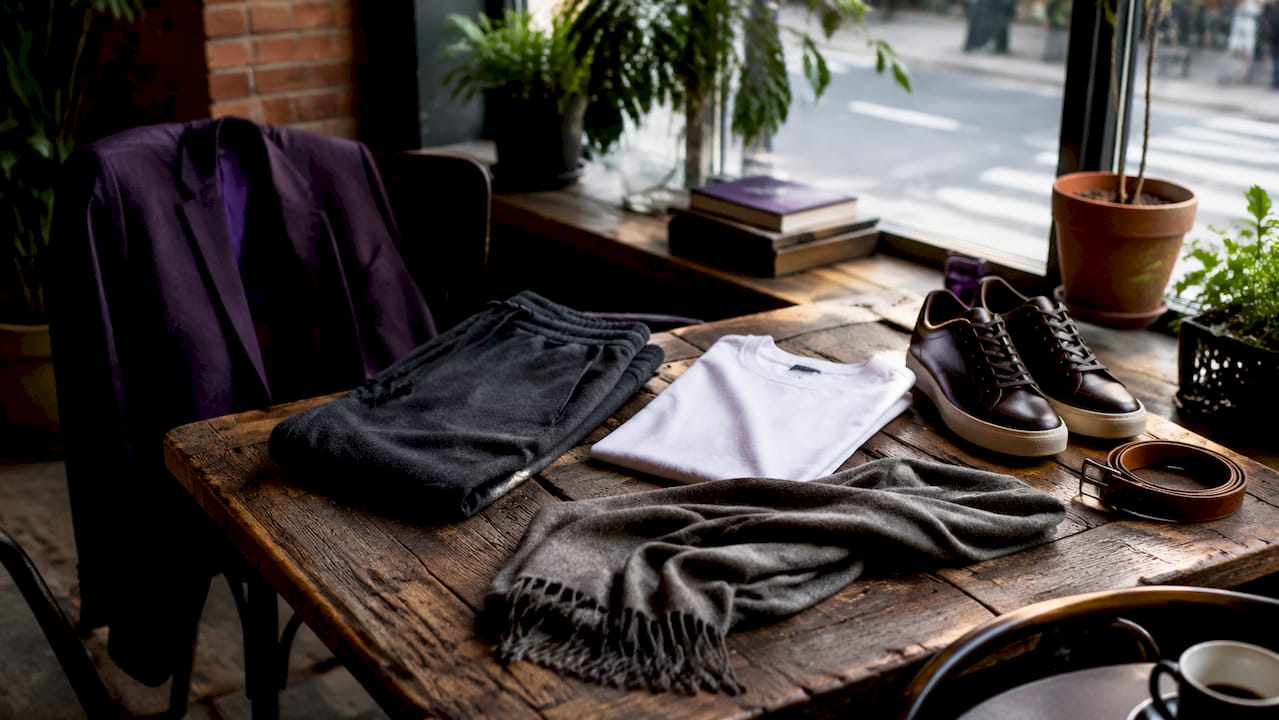
Fabric choice is where most people get it wrong. Mixing technical synthetics with premium materials like cashmere, wool blends, or crisp leather creates an intentional look rather than an accidental one. A moisture-wicking base layer under a cashmere crewneck is sport casual. The same moisture-wicking layer under a zip-up hoodie is just gym wear.
Color palette matters just as much as silhouette. A palette grounded in 3 to 4 neutral tones such as oatmeal, taupe, charcoal, and soft black makes layering easier and keeps the overall look sophisticated. Neutrals allow you to mix textures freely without the outfit looking chaotic.
Pro Tip: Build your sport casual wardrobe around one anchor neutral, like charcoal gray, and let every piece you buy work with that base. You’ll never struggle to put together a polished outfit again.
Silhouette balance is the final pillar. Fitted bottoms with oversized tops, or a relaxed trouser with a fitted jacket, create visual proportion. Wearing both fitted and oversized at the same time collapses the look into shapelessness.
How does sport casual differ from athleisure and casual chic?
These three styles share DNA but serve different purposes, and confusing them leads to outfits that miss the mark.
Athleisure prioritizes performance and gym readiness. The materials are chosen for function: stretch, sweat-wicking, and durability during movement. Sport casual, by contrast, chooses materials and silhouettes for visual impact. You would wear athleisure to a yoga class and then a coffee run. You would wear sport casual to that coffee run, a casual work meeting, and dinner with friends.
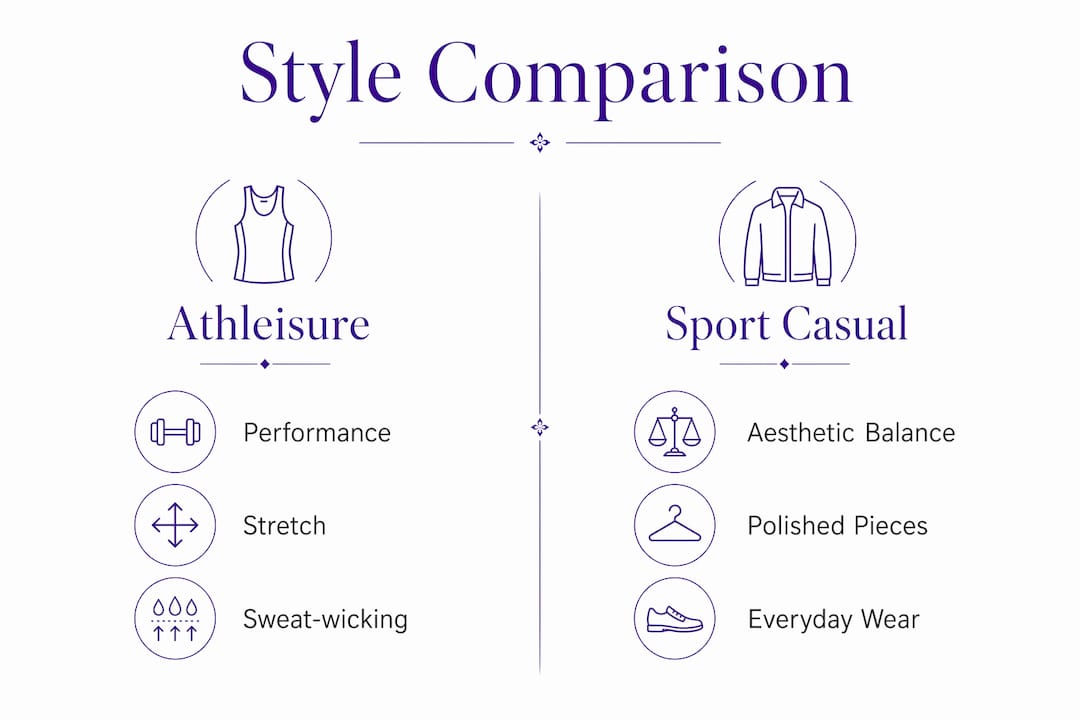
Casual chic leans on timeless, preppy pieces: a crisp button-down, tailored trousers, loafers, and clean accessories. It rarely incorporates athletic references. Sport casual deliberately introduces those athletic references as the 30% accent layer.
| Style | Core purpose | Signature pieces | Best occasions | Styling approach |
|---|---|---|---|---|
| Sport casual | Aesthetic balance | Joggers, blazer, sneakers, structured tee | Errands, casual work, social outings | 70% polished, 30% sporty |
| Athleisure | Comfort and performance | Leggings, sports bra, zip-up, trainers | Gym, coffee run, travel | Function-first, minimal styling |
| Casual chic | Polished relaxation | Button-down, tailored trousers, loafers | Brunch, office casual, dates | Classic pieces, minimal athletic reference |
The clearest example of sport casual done right: joggers in a technical fabric paired with a double-breasted blazer and white leather sneakers. That outfit would look out of place at the gym and underdressed at a formal dinner. It lives exactly where sport casual is supposed to live.
Practical sport casual outfit ideas for everyday life
True sport casual is an extension of a polished lifestyle, not an afterthought. The difference between looking intentional and looking like you forgot to change shows up in three specific choices: contrast, proportion, and occasion awareness.
Here are proven outfit frameworks for different daily scenarios:
- Errands and weekend mornings: Tapered track pants in charcoal, a fitted ribbed crewneck in oatmeal, and clean low-profile sneakers like New Balance 550s or Nike Air Force 1s. Add a structured puffer or wool overcoat to shift the look from casual to sport casual.
- Casual workday (non-corporate): Slim dark jeans, a performance polo shirt, and a lightweight bomber jacket. This combination reads polished enough for a meeting and relaxed enough for lunch outside. Moreciandco’s performance polo guide breaks down exactly which fabrics hold up in this context.
- Social outings: Tailored joggers, a fitted mock-neck sweater in merino wool, and leather sneakers. Minimal jewelry and a structured tote or backpack complete the look without overdoing it.
The most common mistake is wearing 100% athletic gear and calling it sport casual. Avoiding full gym-wear combinations is the single easiest way to upgrade your look. A second common mistake is over-accessorizing to compensate for a weak outfit foundation. Sport casual works because the clothes do the talking.
Pro Tip: When you’re unsure if an outfit qualifies as sport casual, count the athletic pieces. If more than two items are purely functional gym wear, swap one out for a structured or premium alternative.
The intentional contrast principle is what separates a street style reference from a sloppy look. Pairing sleek sneakers with formal trousers, or a technical jacket over tailored pants, creates that productive tension that defines the style. Learn how to transition gym wear into street-ready outfits for a deeper breakdown of this principle.
What fabrics work best for sport casual clothing?
Fabric selection is the technical backbone of sport casual dressing. The wrong material can make an otherwise well-constructed outfit look cheap or purely athletic.
- Hoodies and sweatshirts: French terry cotton or a cotton-modal blend gives weight and drape without looking like a gym pullover. Avoid thin polyester fleece, which reads as purely functional.
- Joggers and track pants: A ponte fabric or a tapered nylon-spandex blend with a clean silhouette works best. Avoid drawstring-heavy, baggy cuts that collapse the proportional balance.
- Sneakers: Leather or leather-look uppers in white, black, or gray anchor the polished side of the ratio. Highly technical running shoes with aggressive soles tip the outfit toward pure athleisure.
- Outerwear: A wool-blend overcoat or a structured bomber in nylon or satin provides the structured 70% anchor that holds the whole outfit together.
- Base layers: Moisture-wicking synthetics work here, but only when covered by a premium outer layer. A technical fabric base layer under a cashmere crewneck is a textbook sport casual combination.
The principle from the research is direct: mixing technical synthetics with higher-end urban textures like cashmere, wool, or leather creates a curated look rather than a gym-bag aesthetic. Fabric blending is not optional in sport casual. It is the mechanism that makes the style work.
How to maintain and accessorize a sport casual wardrobe
A sport casual wardrobe stays sharp through curation, not volume. You need fewer pieces than you think, but each one has to earn its place.
- Wardrobe essentials to prioritize: Two pairs of quality sneakers (one white leather, one gray or black), three to four neutral tops in premium fabrics, one structured blazer or overcoat, and two pairs of tapered bottoms in different weights for seasonal rotation.
- Caring for mixed fabrics: Wash technical synthetics in cold water on a gentle cycle to preserve stretch and moisture-wicking properties. Dry clean or hand wash wool and cashmere pieces. Never machine-dry leather sneakers. Treating each fabric by its own rules extends the life of every piece significantly.
- Accessories: Keep them minimal and purposeful. A sporty watch in stainless steel or a clean rubber strap, a structured backpack or tote in leather or nylon, and minimal gold or silver jewelry are the right moves. Avoid heavy chains or statement pieces that pull focus from the outfit’s proportional balance.
- Seasonal rotation: Swap heavyweight wool pieces for linen-blend or lightweight cotton alternatives in warmer months. The silhouette and ratio stay the same. Only the fabric weight changes.
Explore the Complesso Collection for curated pieces that hit the right balance between structured and sporty without requiring a complete wardrobe overhaul.
Key takeaways
Sport casual dressing works because the 70/30 ratio, fabric mixing, and proportional balance combine to create outfits that are polished without being overdressed and comfortable without reading as gym wear.
| Point | Details |
|---|---|
| The 70/30 ratio is non-negotiable | 70% polished base pieces and 30% sporty accents keep the look intentional, not accidental. |
| Fabric mixing defines the style | Pairing technical synthetics with premium materials like wool or leather separates sport casual from pure athleisure. |
| Neutral color palettes simplify layering | Sticking to 3 to 4 grounded neutrals like charcoal and taupe makes mixing textures effortless. |
| Proportion creates visual balance | Pair fitted bottoms with relaxed tops, or vice versa, to avoid a shapeless or overly athletic silhouette. |
| Accessories should stay minimal | A clean watch, structured bag, and low-profile sneakers complete the look without competing with it. |
Why sport casual is the style most people already want but can’t name
I’ve watched people struggle with this category for years, and the pattern is always the same. They either go too far into gym wear and wonder why they look underdressed, or they overcorrect with too many polished pieces and lose the relaxed energy that makes sport casual worth wearing in the first place.
The honest truth is that sport casual projects confidence, comfort, and understated sophistication precisely because it refuses to try too hard. The moment you start forcing it, the look falls apart. The 70/30 rule exists not as a rigid formula but as a calibration tool. When an outfit feels off, that ratio is almost always the reason.
The misconception I see most often is treating sport casual as a permission slip to wear whatever is comfortable. It is not. Comfort is a byproduct of the style, not the goal. The goal is a look that reads as intentional at every angle. That requires real decisions about fabric, fit, and proportion. Most people skip those decisions and then wonder why their outfit looks like they grabbed whatever was clean.
My advice: start with one anchor piece you genuinely love, whether that’s a great pair of leather sneakers or a well-cut wool overcoat, and build the outfit outward from there. The rest falls into place faster than you’d expect.
— Giuseppe
Build your sport casual wardrobe with Moreciandco
Moreciandco was built on a single premise: you deserve to get exactly what you pay for. That means quality fabrics, precise cuts, and pieces that work across multiple outfit contexts without falling apart after six months. The Complesso Collection brings together luxury clothing pieces designed specifically for the sport casual aesthetic, structured enough to anchor the polished 70% and refined enough to make the sporty 30% look deliberate. If you’re building or upgrading a sport casual wardrobe, this is the right place to start. Browse the full Moreciandco store to find wardrobe essentials that hold up in both quality and style.
FAQ
What is the definition of sport casual dressing?
Sport casual dressing is a style that blends athletic-inspired clothing with polished casual pieces to create outfits that are comfortable and stylish for everyday settings. The defining principle is the 70/30 ratio: 70% structured or neutral base pieces and 30% sporty accents.
How is sport casual different from athleisure?
Athleisure prioritizes performance and gym functionality, while sport casual focuses on aesthetic balance for social and everyday settings. Sport casual uses premium fabrics and structured silhouettes that athleisure typically avoids.
What are the best sport casual outfit ideas for men and women?
Strong sport casual outfits combine tapered joggers or slim jeans with a structured blazer or wool coat and clean leather sneakers. The key is pairing one athletic piece with two or more polished items to maintain the 70/30 balance.
What fabrics should I look for in sport casual clothing?
Look for moisture-wicking synthetics in base layers, French terry or modal blends in sweatshirts, and wool or cashmere in outer layers. Leather or leather-look sneakers anchor the polished side of the outfit.
Can sport casual work for a casual office environment?
Sport casual works well in non-corporate office settings when you lead with structured pieces. A performance polo, slim dark jeans, and a clean leather sneaker read as polished enough for most casual workdays while keeping the athletic reference present.