


Performance shirts have vents because your body needs a way to shed heat and moisture during exercise, and fabric alone cannot do that job fast enough. Vents are engineered openings or perforated zones that break the humid microclimate trapped between your skin and the shirt, letting warm, wet air escape and cooler, drier air enter. The result is faster sweat evaporation and a measurable drop in skin temperature during sustained effort.
The core benefits of vents in performance shirts:
- Airflow: Vents create channels for fresh air to circulate against the skin, replacing stagnant warm air.
- Moisture management: By venting humid air, they accelerate the body’s natural evaporative cooling instead of letting sweat pool in the fabric.
- Comfort: Less trapped heat means less discomfort, reduced chafing, and better focus during activity.
- Mobility: Vents placed at arm bends and underarms reduce fabric tension, giving you a fuller range of motion.
Common vent placements include underarms, side seams, and the back panel. The Under Armour Men’s Tech Vent Short Sleeve T-Shirt, for example, integrates vented mesh panels and underarm gussets specifically to address both airflow and movement in one design.
Where vents go and why placement changes everything
Not all vents are created equal, and location determines how much work they actually do. Research using sweating thermal manikins found that side-seam vent panels provide the most favorable ventilation under still-air conditions, because arm motion pumps air in and out through those openings with every stride or swing. Chest and upper-back panels, by contrast, contribute less unless an air gap is maintained between the fabric and skin.
Common vent placements and their purpose:
- Underarm vents: Target the highest-sweat zone on the torso; also reduce fabric bunching during overhead movements.
- Side-seam vents: Activated by arm motion, creating a bellows-like pumping effect that exchanges warm interior air with cooler ambient air.
- Back vents: Warm air rises naturally, so upper-back openings let it escape; effective during upright activities like running.
- Chest perforations: Useful when garment drape maintains an air gap; less effective when wet fabric clings to skin.
The Baseball Lifestyle 101 Diamond Tech Vented Shirt uses a diamond-pattern mesh construction across the body to distribute airflow broadly rather than concentrating it in one zone. The VRST Men’s Woven Wind Golf Shirt takes a different approach, placing discrete side vents to preserve a clean, tailored look while still managing heat during a round. Both strategies reflect the same underlying principle: get air moving where the body generates the most heat.
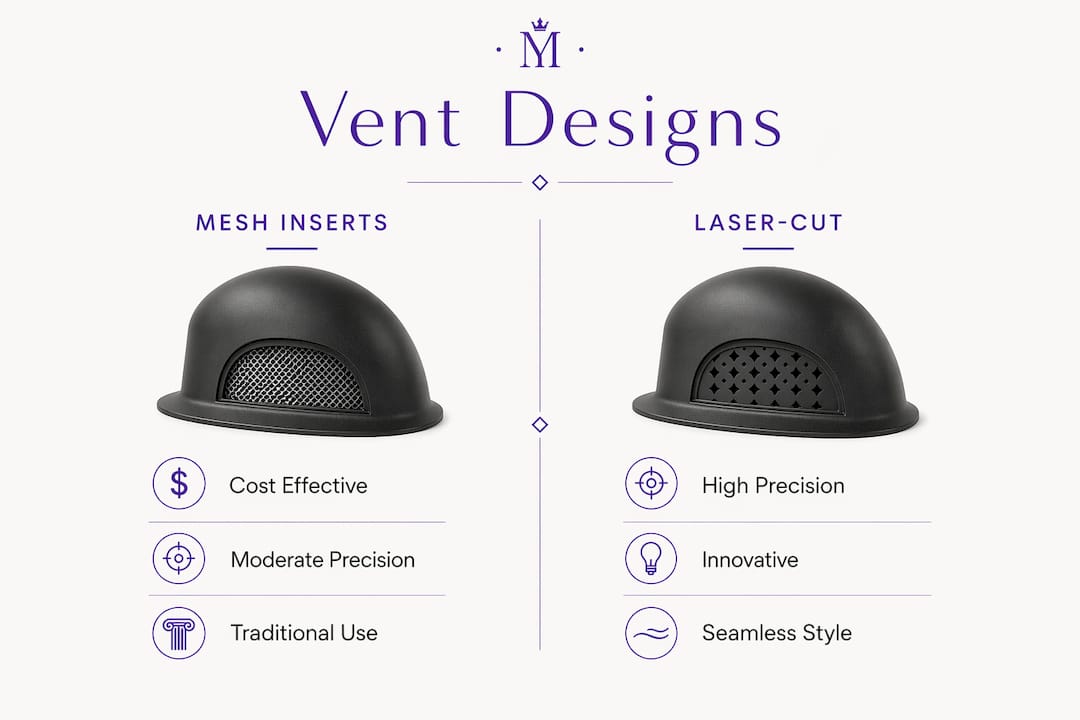
Modern designs also use mesh panels, laser-cut micro-perforations, and hybrid constructions that combine both. Body-mapping, a technique that charts heat and sweat output across the torso, guides vent zone placement so openings land exactly where they matter most rather than where they look good on a spec sheet.
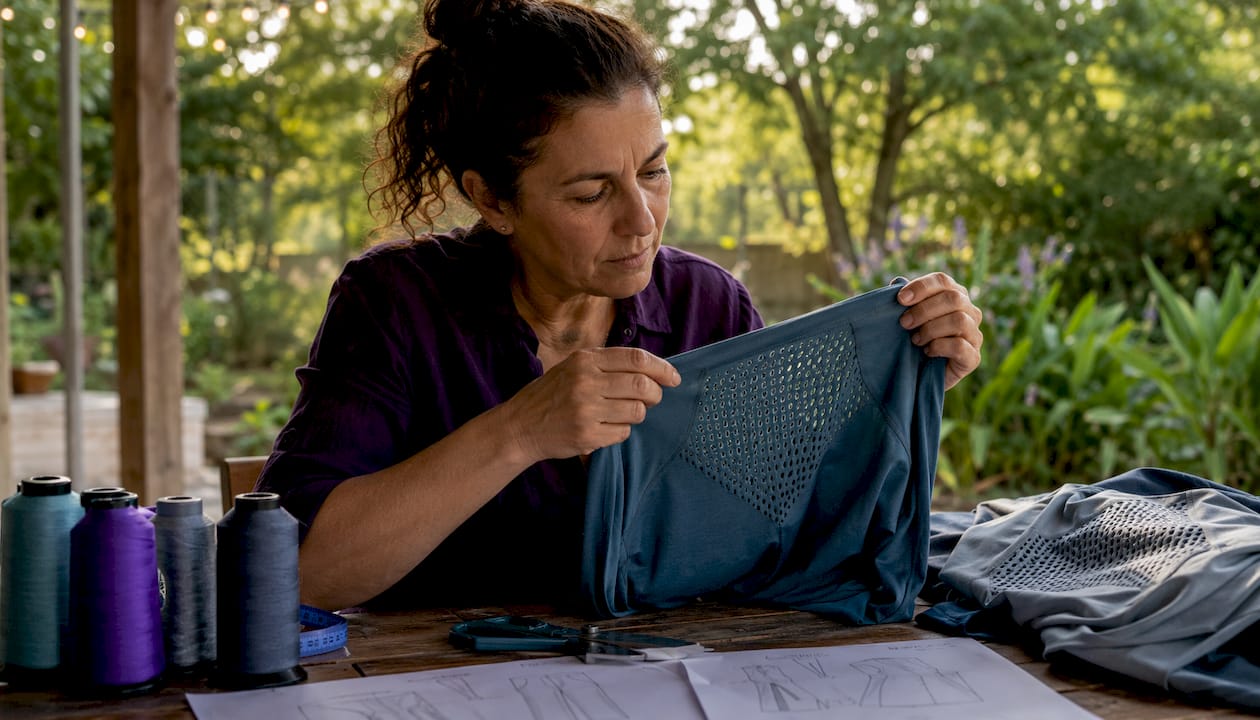
Pro Tip: When trying on a vented shirt, raise your arms overhead and swing them forward. If the shirt pulls tight across the underarms or side seams, the vent placement is fighting your movement instead of supporting it.
How vents actually improve ventilation and cooling during activity
Vents do not cool your skin directly. What they do is remove the humid microclimate that forms between your skin and the fabric, which is the real obstacle to cooling. When that trapped layer of warm, moist air stays in contact with your skin, sweat cannot evaporate efficiently, and your core temperature climbs faster than it should.
The physics behind this gets interesting. As you move forward during a run or a workout, air pressure at the front of the shirt increases slightly while pressure inside the garment stays lower. This pressure differential, driven by the Venturi Effect, pulls fresh air through the vent openings and accelerates it toward the skin. The faster the airflow, the faster sweat evaporates. Nike’s research on the Radical AirFlow shirt demonstrated this principle at scale: the vented prototypes absorbed significantly less sweat and showed reduced resistance to sweat evaporation during prolonged running in the heat.
There is also the “pumping effect” to consider. Every arm swing or body rotation shifts the fabric toward and away from the skin, forcing air in and out through vent openings like a bellows. Research on athletic T-shirt design confirms that vented panels improve both thermal insulation reduction and moisture vapor resistance, with gains increasing as more vent panels are added to the garment. A looser garment drape amplifies this effect by maintaining an air gap that prevents wet fabric from sealing against the skin and blocking ventilation entirely.
Pro Tip: Pair a vented shirt with a slightly relaxed fit rather than a compression cut. A small air gap between the fabric and your skin is what lets the vents do their job. A shirt that clings eliminates that gap and neutralizes the ventilation benefit.
How vents improve your range of motion and reduce chafing
Ventilation is the headline benefit, but vents placed at arm bends and underarms deliver a second advantage that athletes notice quickly: better mobility. Fabric bunched under the arm or pulled tight across the shoulder creates resistance with every repetitive movement, whether that is a golf swing, a rowing stroke, or a set of overhead presses. Vents in those zones reduce the fabric mass and tension at the exact points where the garment flexes most.
Key mobility and friction benefits from strategic vent placement:
- Underarm gussets (like those in the Under Armour Tech Vent) give the sleeve room to move independently of the torso panel, eliminating the drag that makes you feel like the shirt is fighting you.
- Side-seam openings reduce lateral fabric tension during twisting movements, which matters in sports like tennis, baseball, and golf.
- Reduced friction zones at high-sweat areas lower the risk of chafing, since drier skin and less fabric contact both contribute to irritation prevention.
- 4-way stretch fabrics paired with vents compound the benefit: the fabric moves with you while the vents keep the microclimate dry, so there is no wet, stiff material grinding against skin.
Vents placed at arm bends and underarms were a deliberate engineering choice in Nike’s Radical AirFlow development, added specifically to maximize mobility and reduce chafing risk in those high-friction zones, as seen in Pallets Air Nike T-Shirts available. The Compressport Performance SS T-shirt applies the same logic, using body-mapped air mesh under the arms and down the back to keep those areas dry and unrestricted simultaneously. For a deeper look at how fit interacts with these ventilation benefits, the athletic shirt fit guide at Moreciandco covers the relationship in practical terms.

Vent designs and materials: what the differences mean for performance
The gap between a basic mesh insert and a laser-cut perforation is wider than it looks on the rack. Each approach involves real trade-offs in airflow, weight, durability, and aesthetics.
| Feature | Traditional mesh inserts | Laser-cut micro-perforations |
|---|---|---|
| Precision | Moderate | High |
| Weight | Heavier due to added material | Lighter, no extra layer |
| Aesthetics | Visible seams, bulkier look | Sleek, seamless appearance |
| Durability | Mesh edges can fray over time | Laser cuts prevent fraying |
| Customization | Limited to panel shapes | Highly adjustable size and pattern |
| Airflow control | Broad, less targeted | Precise, zone-specific |
Mesh inserts have been the standard for decades because they are inexpensive and effective. An open-knit mesh panel on the back or underarm moves a lot of air, and the Baseball Lifestyle 101 Diamond Tech Vented Shirt uses this approach to deliver broad coverage across the torso. The trade-off is bulk and the potential for fraying at seam edges after repeated washing.
Laser-cut ventilation uses micro-perforations created by precise laser technology directly in the base fabric, with no additional mesh layer required. The perforations can be sized and patterned to target specific hot zones, and because the laser seals the fabric edge as it cuts, fraying is not a concern. The result is a lighter, cleaner garment that performs comparably to mesh in airflow while looking far less utilitarian. The VRST Men’s Woven Wind Golf Shirt reflects this direction, prioritizing a refined appearance without sacrificing the side-vent function that keeps a golfer comfortable across 18 holes.
Material choice shapes the outcome as much as vent design. Polyester-spandex blends dominate performance shirts because polyester wicks moisture away from the skin while spandex provides the stretch that lets vented panels flex without distorting. The Under Armour Tech Vent uses a 96% polyester and 4% elastane blend, which keeps the shirt light and fast-drying while the knit structure itself contributes to breathability. Seamless construction, used by Compressport across its performance line, eliminates raised seams that can irritate skin at vent edges, which matters most during long-duration efforts. For athletes comparing performance vs. regular shirts, the vent design and fabric combination is usually the deciding factor.
Moreciandco’s perspective on engineering vents that actually work
At Moreciandco, the approach to performance shirt venting starts with a question most brands skip: where does this specific wearer generate heat, and how does the garment’s construction either help or hinder the body’s response? Giuseppe, Moreciandco’s apparel specialist, frames it this way:
That philosophy shapes every decision in Moreciandco’s performance line, from the weight of the base knit to the size and density of any perforations. A vent that sits over a low-heat zone is decorative. A vent engineered over a high-sweat zone, backed by a fabric that moves moisture away from the skin and a drape that maintains an air gap, is a functional cooling system. The brand’s commitment to quality over trend means choosing construction methods that hold up through repeated high-intensity use, not just the first few wears.
Moreciandco also treats the intersection of ventilation and style as a design problem worth solving properly. Laser-cut perforations allow precise placement without the visual bulk of mesh panels, which means a shirt can perform at a high level and still look considered rather than purely technical. That balance, function expressed through refined design, is central to what Moreciandco builds.
Pro Tip: Look for shirts where the vent placement matches your sport’s primary movement pattern. A runner needs side-seam and back vents activated by forward motion. A golfer benefits more from underarm and shoulder vents that open during a rotational swing. The right vent in the wrong place is still the wrong shirt.
If you want shirts built with this level of intentionality, the Complesso Collection at Moreciandco brings that standard to every piece.
Explore the full range at Moreciandco and find performance apparel that earns its keep.
Key Takeaways
Vents in performance shirts work because they remove trapped humid air from the skin microclimate, enabling faster sweat evaporation and sustained thermoregulation during exercise.
| Point | Details |
|---|---|
| Vents remove trapped humidity | They vent the humid microclimate between skin and fabric, enabling the body’s natural cooling to function. |
| Placement determines effectiveness | Side-seam vents activated by arm motion outperform chest panels under still-air conditions. |
| Venturi Effect amplifies airflow | Forward movement creates pressure differentials that pull fresh air through vent openings and speed evaporation. |
| Laser cuts outperform mesh on durability | Laser-cut micro-perforations are lighter, fray-resistant, and allow precise hot-zone targeting. |
| Fit and drape matter as much as vents | A clingy shirt eliminates the air gap that makes vents work; a relaxed drape preserves it. |