


A white dress shirt is defined as the single most adaptable garment a professional wardrobe can hold. No other piece crosses the line from boardroom to bar, from job interview to weekend brunch, with so little effort. The reason why white dress shirts are versatile comes down to three factors: neutral color, varied fabric construction, and fit. Get all three right, and one shirt does the work of five. Moreciandco builds around exactly that principle, delivering quality that earns its place in your closet every single day.
Why white dress shirts are versatile by design
A white dress shirt functions as a visual anchor across diverse dress codes, acting as a permanent reference point that holds an outfit together without competing with it. That is the core reason professionals and fashion enthusiasts return to it season after season. White reflects light evenly, which means it does not pull focus. Every other element in your outfit, whether a patterned blazer, a textured scarf, or a bold tie, reads more clearly against it.
The shirt also works as a blank canvas that enhances the sophistication of accessories and outerwear rather than fighting them. A navy blazer looks sharper. A silk tie looks more deliberate. A structured overcoat looks more intentional. The white shirt does not shout. It lets everything else speak.
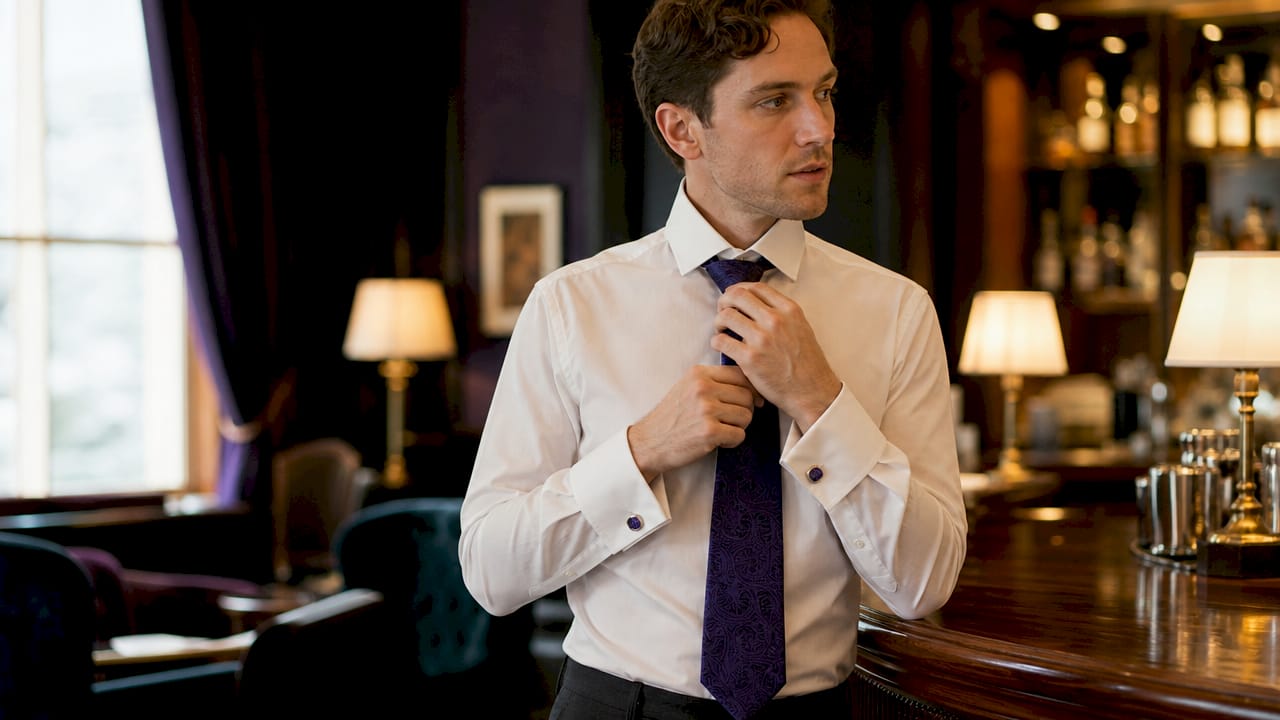
This neutral quality is not accidental. It is built into the color itself. White carries no seasonal association, no cultural limitation, and no dress-code restriction. That makes it the one shirt you can reach for without thinking.
How fit determines the versatility of white dress shirts
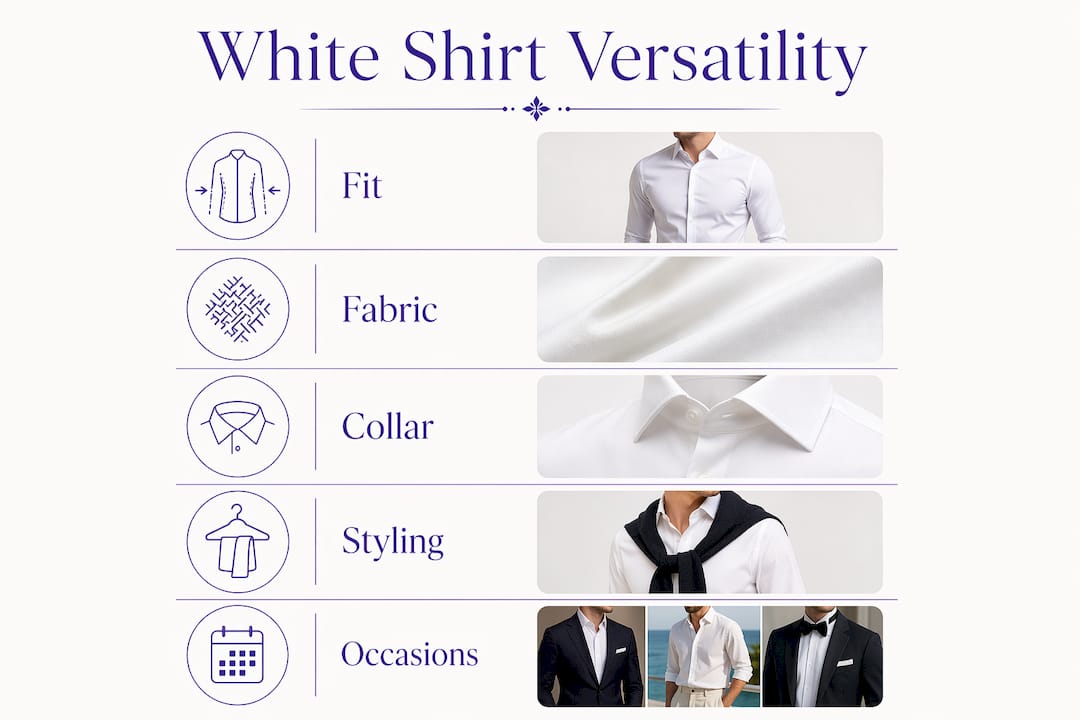
Fit is the single biggest factor in whether a white dress shirt works or fails. A tailored shirt’s collar and shoulder proportions prevent a messy appearance and maximize layering options across dress codes. When the shoulders sit correctly and the collar lies flat, the shirt looks clean under a suit jacket, a crewneck sweater, or on its own.
Most fashion failures with white shirts trace back to poor collar size and sleeve length. These are the two most visible fit problems and the hardest to fix without a tailor. A collar that gaps at the neck or sleeves that bunch at the wrist undermine the shirt’s entire purpose.
Here is what correct fit looks like in practice:
- Collar: One finger should fit comfortably between the collar and your neck when buttoned. Any tighter and you look constricted. Any looser and the shirt reads sloppy.
- Shoulders: The seam sits exactly at the edge of your shoulder bone. If it drops onto your arm, the shirt is too large.
- Chest: The shirt should lie flat with no pulling at the buttons. You should be able to pinch about one inch of fabric on each side.
- Sleeve length: The cuff should show about half an inch below a jacket sleeve. On its own, it sits at the wrist bone.
- Torso: No excess fabric bunching at the sides. A slim or tailored cut removes bulk without restricting movement.
Understanding the difference between slim and regular fit is the starting point for getting this right. Better fit also lowers your cost per wear over time, because a shirt you reach for constantly justifies its price far more than one that sits unworn.
Pro Tip: If you are between sizes, size up in the collar and have the body taken in by a tailor. Collar alterations are expensive and difficult. Body alterations are cheap and fast.
What fabric and collar choices do for white shirt versatility
Fabric determines where a white shirt can go. Oxford and twill weaves provide less transparency and more texture than plain poplin, which expands their range from casual Friday to formal presentations. Twill also hides creases better, which matters if you are traveling or working long days.
| Fabric | Texture | Formality level | Best use |
|---|---|---|---|
| Poplin | Smooth, lightweight | Formal | Business meetings, black tie events |
| Oxford | Textured, basketweave | Casual to smart casual | Weekends, business casual offices |
| Twill | Diagonal weave, medium weight | Business to formal | All-day office wear, travel |
| Voile | Sheer, lightweight | Casual | Warm weather, layered looks |
Collar style does equal work. Structured spread collars suit ties and formal settings. Softer button-down collars work for open-neck casual looks without losing shape. A cutaway collar frames the face well and reads as modern in both suited and open-collar contexts.
- Spread collar: Best with a tie or under a suit. Wide spread accommodates larger tie knots like the Windsor.
- Button-down collar: Stays in place without a tie. Works well with chinos or denim for a smart casual look.
- Cutaway collar: Modern and clean. Works with or without a tie and suits slim lapels.
Pro Tip: For a shirt that crosses from office to evening, choose a poplin spread collar in a medium weight. It reads formal enough for a tie and clean enough without one.
Fabric weight also matters for climate. Lightweight poplin breathes well in summer. Oxford cloth holds warmth in cooler months. Choosing by season means your white shirt stays comfortable and looks sharp year-round. For a full breakdown of what each weave delivers, the dress shirt fabric guide covers every option in detail.
How to style a white dress shirt for any occasion
The white shirt’s power as a neutral base means it supports combinations that would otherwise clash. A white dress shirt works with patterned blazers, textured scarves, and vibrant ties because it absorbs contrast and lends structure to complex outfits. That is not a styling trick. It is physics. White does not compete for visual attention.
Here are the core outfit builds that prove this:
- Formal: White poplin spread collar shirt, charcoal or navy suit, silk tie, Oxford shoes. The shirt disappears into the look and lets the suit do the work.
- Business casual: White Oxford button-down, slim chinos in camel or olive, loafers or clean white sneakers. Tuck it fully for a polished read, or leave it half-tucked for a relaxed one.
- Smart casual: White shirt open at the collar, dark jeans, a structured bomber or unlined blazer, Chelsea boots. Roll the sleeves two turns for a deliberate, relaxed effect.
- Weekend casual: White shirt worn loose over a plain tee, relaxed trousers, and clean leather sneakers. The layering reads intentional without effort.
The French tuck technique flatters nearly all body types. Tuck the front of the shirt into your waistband while leaving the back and sides loose. This creates a defined waist and works with straight-leg trousers, slim-fit chinos, and even tailored shorts. It is the fastest way to shift a white shirt from relaxed to put-together without changing anything else.
Accessories shift the tone further. A watch with a leather strap reads professional. A woven bracelet reads casual. A pocket square adds formality. White sneakers pull the look toward streetwear. The shirt stays the same. The accessories do the work of changing the occasion.
For a full breakdown of how white shirts fit into a working wardrobe, the business casual wardrobe guide covers the combinations that hold up across dress codes.
Common myths about white dress shirts that limit their use
The biggest myth is that white dress shirts are only for formal occasions. White shirts built from Oxford cloth or twill read as casual as any chambray or flannel when worn correctly. The fabric and collar do the work of setting the formality level. The color alone does not.
The second myth is that white shirts require constant maintenance. A quality cotton shirt pressed correctly holds its shape through a full workday. Learning how to iron dress shirts takes less than ten minutes and extends the life of the shirt significantly.
The third and most damaging myth is that any white shirt will do. Poor fit and synthetic, overly shiny fabric are the main reasons white shirts appear less versatile or too attention-grabbing. Natural cotton with correct proportions keeps the shirt subtle. Synthetic blends reflect light unevenly and draw attention to the shirt itself, which defeats its purpose as an anchor.
White shirts should be anchors, not focal points. Overly reflective synthetic fabrics or improper fit cause them to compete visually, undermining their styling benefits. The shirt’s job is to make everything else look better.
White also carries a psychological signal. Clean, well-fitted white reads as organized and professional across cultures and industries. That signal works in your favor in interviews, client meetings, and first impressions. A wrinkled or ill-fitting white shirt sends the opposite message with equal force.
Key Takeaways
A white dress shirt is the most versatile garment in a professional wardrobe because fit, fabric, and neutral color combine to make it adaptable across every dress code and occasion.
| Point | Details |
|---|---|
| Fit is non-negotiable | Collar, shoulder, and sleeve fit determine whether the shirt looks polished or sloppy in any setting. |
| Fabric sets the formality | Oxford and twill work casually; poplin reads formal. Choose by occasion and climate. |
| Collar drives adaptability | Spread collars suit ties and suits; button-down collars work open-neck for casual looks. |
| Styling shifts the occasion | The French tuck, sleeve rolls, and accessories change the shirt’s tone without changing the shirt. |
| Avoid synthetic fabrics | Natural cotton keeps the shirt subtle and lets it function as a visual anchor, not a focal point. |
The white shirt is the one piece I never second-guess
I have spent years watching people overcomplicate their wardrobes. They buy statement pieces that only work one way and then wonder why getting dressed feels like a puzzle. The white dress shirt solves that problem completely, but only when you buy it right.
The mistake I see most often is treating the white shirt as a commodity. People grab whatever fits loosely enough and call it done. Then they wonder why it looks average. The collar gaps. The shoulders drop. The fabric shines under office lighting. None of that is the shirt’s fault. It is a fit and fabric problem.
When you invest in a properly fitted white shirt in a quality natural cotton, something shifts. You stop thinking about what to wear with it. You just reach for it. It works under a suit for a board meeting and open-collar with dark jeans for dinner. That kind of wardrobe efficiency is genuinely rare, and it comes from one garment done correctly.
My honest advice: own two. One in poplin for formal days, one in Oxford cloth for everything else. Get both tailored to your shoulders and collar. Maintain them properly. Those two shirts will outperform a closet full of novelty pieces every single time.
— Giuseppe
Quality white shirts worth reaching for every day
Moreciandco was built on the idea that you should get exactly what you pay for. That means shirts cut from natural fabrics, finished with attention to collar and shoulder construction, and designed to work across the occasions you actually live in.
The Moreciandco collection includes white dress shirts built for professionals who want one shirt that handles everything from client meetings to weekend plans. The fabric quality and fit construction reflect the brand’s core commitment: no shortcuts, no synthetic blends that undermine the shirt’s purpose. Pair a white dress shirt with pieces from the accessories collection to shift the tone of any look without changing the shirt itself. Quality that earns its place is the only kind worth buying.
FAQ
Why are white dress shirts considered versatile?
White dress shirts act as a neutral visual anchor that works across formal, business casual, and casual dress codes. Their neutral color allows accessories, outerwear, and trousers to read more clearly without competition.
Can you wear a white dress shirt casually?
A white Oxford or twill shirt worn open-collar with chinos, dark jeans, or relaxed trousers reads as fully casual. Fabric choice and collar style determine formality level, not color alone.
What fabric is best for a versatile white dress shirt?
Oxford cloth and twill offer the widest range, covering casual to formal settings with better crease resistance than poplin. Poplin works best for strictly formal occasions.
How does fit affect a white shirt’s versatility?
Correct collar, shoulder, and sleeve fit prevents bunching and keeps the shirt clean under jackets or worn alone. Poor fit is the primary reason white shirts fail to function as style anchors.
What is the French tuck and why does it matter?
The French tuck involves tucking only the front of the shirt into the waistband while leaving the back loose. It creates a defined waist and shifts the shirt’s tone from casual to put-together without any other changes.