


Raglan sleeves are defined by a diagonal seam that runs from the collar to the underarm, replacing the traditional shoulder seam entirely. This construction is the primary reason why workout shirts have raglan sleeves. The design gives your arms a full, unrestricted range of motion during lifting, throwing, running, and any overhead movement. Unlike set-in sleeves, which anchor fabric at the shoulder point and create tension during dynamic activity, raglan construction lets the sleeve move with your arm. The result is a shirt that feels like it was built for the way your body actually moves.
Why do workout shirts have raglan sleeves?
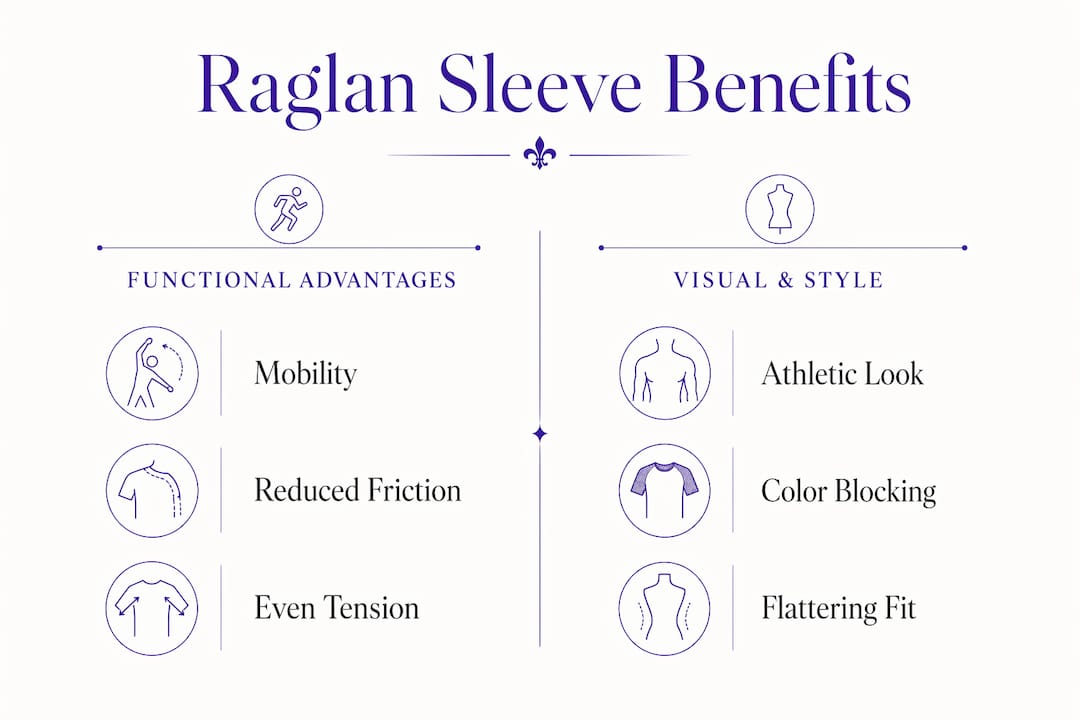
The core answer is mobility. A raglan sleeve’s diagonal seam runs at an optimal angle of 20–30 degrees from vertical. That angle is not arbitrary. It matches the natural arc your arm travels when you raise it overhead, which means the fabric follows your movement instead of pulling against it.
Set-in sleeves have a horizontal seam that sits directly on top of the shoulder. That seam becomes a hard stop. When you press overhead, do a pull-up, or throw a ball, the fabric tightens across your shoulder and upper back. Raglan construction eliminates that restriction completely.
The wider underarm area in a raglan shirt also reduces fabric bunching. Bunching creates friction, and friction during repetitive motion causes chafing. Wearers report reduced shoulder tightness and noticeably less restriction after switching from set-in to raglan activewear. That feedback is consistent across lifting, racket sports, and team sports.
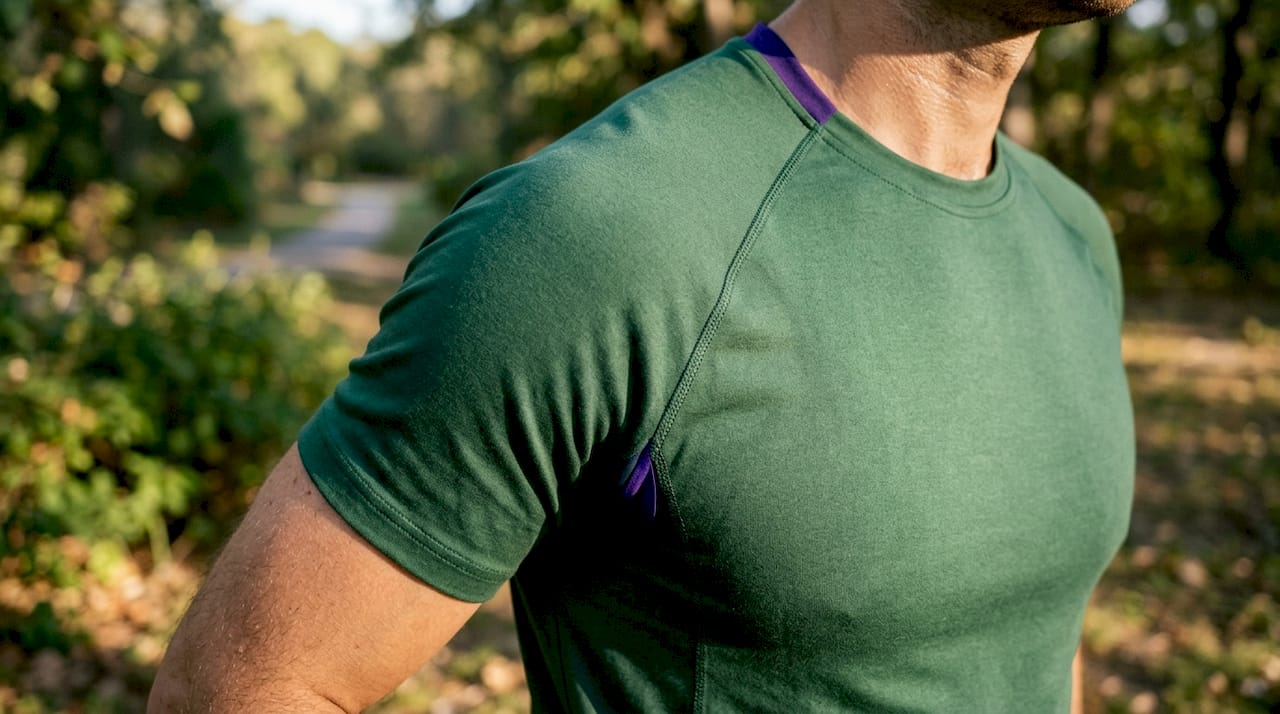
Raglan sleeves also distribute fabric tension evenly across the shoulder and upper back during overhead and dynamic arm movements. Even tension means no single point of the seam absorbs all the stress. That matters both for comfort during your workout and for how long the shirt holds up over time.
Pro Tip: If you train with overhead pressing, pull-ups, or any throwing movement, a raglan shirt will feel dramatically different from a standard set-in sleeve tee within the first set.
Here is what the raglan design specifically addresses during a workout:
- Overhead pressing and pull-ups: The diagonal seam allows full arm elevation without the shirt riding up or pulling across the back.
- Running and sprinting: The wider underarm panel reduces side-seam friction against the ribcage during arm swing.
- Throwing and racket sports: The shoulder stays unrestricted through the full throwing arc.
- High-rep bodyweight work: Less bunching means less skin irritation over extended sessions.
What is the history of raglan sleeves in sportswear?
The raglan sleeve takes its name from FitzRoy Somerset, the first Baron Raglan, a British military commander during the Crimean War in the 1850s. The design was originally created for soldiers who had suffered arm injuries, giving them easier dressing and better arm movement. 19th-century military garments used this construction specifically to accommodate limited shoulder mobility, which made it ideal for active use from the start.
The transition to sports happened naturally. By the early 20th century, baseball uniforms adopted the raglan cut because pitchers and fielders needed full shoulder rotation without fabric interference. The contrast sleeve panels common in baseball shirts, typically white body with colored sleeves, became a visual signature of the style.
Here is how raglan sleeves moved from military use to modern athletic apparel:
- 1850s military origin: Designed for injured soldiers needing unrestricted arm movement and easier dressing.
- Early 1900s baseball adoption: Baseball teams used raglan cuts to give pitchers and outfielders full throwing range.
- Mid-20th century team sports: Football, soccer, and track uniforms incorporated raglan construction for the same mobility reasons.
- Late 20th century activewear: Performance apparel brands recognized the ergonomic advantage and made raglan the standard cut for workout shirts.
- Modern fitness apparel: Raglan construction is now the default in premium athletic shirts because it solves the mobility problem that set-in sleeves never fully addressed.
The shift from military garment to gym staple took about 150 years, but the underlying reason never changed. The design works because it respects how the shoulder joint actually moves.
What visual and style advantages do raglan sleeves offer?
The diagonal seam does more than improve function. It creates a distinct visual line that makes a shirt look athletic before you even start moving. Raglan shirts’ diagonal seams create visual zones that are ideal for color blocking, which is why contrast sleeve panels became a signature look in team sports and activewear.
Color blocking works especially well on raglan shirts because the seam provides a natural, clean boundary between the body fabric and the sleeve fabric. A white body with navy sleeves reads immediately as athletic. That visual shorthand is part of why raglan shirts feel sporty even in casual settings.
The diagonal seam also suits diverse physiques better than set-in sleeves. Set-in sleeves have a fixed shoulder point that either fits your shoulder width or it does not. Raglan construction bypasses the rigid shoulder point entirely, which means the shirt accommodates a wider range of shoulder widths without looking ill-fitting.
Pro Tip: When buying a raglan workout shirt for casual wear, choose a contrast sleeve color that matches your training shoes or shorts. The color block reads as intentional and put-together without any extra effort.
A few style considerations worth knowing:
- Color blocking: The diagonal seam creates a natural, clean boundary for two-tone designs that look sharp and athletic.
- Silhouette: The relaxed shoulder line gives a broader, more athletic appearance across the upper body.
- Body type fit: The seam bypasses the shoulder point, so the shirt fits a wider range of builds without pulling or sagging at the shoulder.
- Logo placement: Diagonal seams require custom artwork alignment to avoid distortion. Brands that do this well look polished; brands that ignore it look sloppy.
The sporty color-blocking style of raglan sleeves contributes to immediate visual energy. That is not just aesthetics. It signals athletic intent, which is part of why the style has stayed relevant across decades of changing fashion.
What manufacturing factors affect raglan sleeve quality?
Raglan shirts cost more to make than standard set-in sleeve shirts, and that cost difference reflects real complexity. Raglan sleeves are more complex and costly to manufacture because the curved seam requires precise sewing and more fabric than a straight shoulder seam.
The curved seam is the technical challenge. Sewing a curve accurately without puckering requires skilled workmanship and the right equipment. A poorly sewn raglan seam puckers along the diagonal, which looks bad and creates pressure points during wear. This is the clearest quality signal when you pick up a raglan shirt: run your finger along the diagonal seam. It should lie flat with no rippling.
| Construction factor | Set-in sleeve | Raglan sleeve |
|---|---|---|
| Seam complexity | Straight shoulder seam | Curved diagonal seam |
| Fabric requirement | Lower | Higher |
| Skill level required | Standard | Advanced |
| Chafing risk | Higher at shoulder point | Lower across shoulder |
| Durability under stress | Seam splits at shoulder point | Even tension prevents splitting |
| Fit flexibility | Fixed shoulder width | Accommodates varied widths |
The durability advantage is real. Even tension distribution prevents seam failure during repetitive high-movement athletic use. A set-in sleeve concentrates stress at the shoulder point every time you raise your arm. Over hundreds of workouts, that stress causes the seam to fail. Raglan construction spreads that load across the full diagonal seam, so no single point takes the full force.
Stretch knit fabrics work especially well with raglan construction. The combination of a curved seam and a fabric with four-way stretch gives you maximum mobility without the shirt deforming over time.
Why choose raglan sleeves for your next workout shirt?
The right raglan shirt depends on what you train and how you move. Not every workout demands raglan construction, but certain activities benefit from it more than others.
Overhead athletes get the most direct benefit. If your training includes barbell pressing, pull-ups, kettlebell work, or any throwing sport, the athletic shirt fit guide at Moreciandco covers how raglan construction interacts with different movement patterns and body types. The diagonal seam matters most when your arms regularly travel above shoulder height.
Runners and cyclists benefit from the reduced underarm friction. Long sessions amplify small irritations, and a raglan shirt eliminates one of the most common sources of chafing in upper-body athletic wear.
Here is what to check when selecting a raglan workout shirt:
- Seam quality: The diagonal seam should lie flat with no puckering. Puckering means poor construction and future pressure points.
- Fabric stretch: Four-way stretch fabric paired with raglan construction gives the best mobility. Two-way stretch limits the benefit.
- Fit at the chest and back: Raglan shirts fit differently at the shoulder. Size for your chest and back, not your shoulder width.
- Sleeve length: Raglan sleeves often run slightly longer than set-in sleeves. Check the sleeve length if you prefer a shorter cut.
- Color blocking: If you want contrast sleeves, verify the seam alignment is clean. Misaligned seams on color-blocked shirts look unfinished.
For layering, raglan shirts work well under zip-up hoodies and training jackets because the shoulder seam does not create a bulk point under the outer layer. The best layering pieces for 2026 at Moreciandco pair specifically well with raglan base layers for this reason.
Key Takeaways
Raglan sleeves are the superior construction choice for workout shirts because the diagonal seam eliminates shoulder restriction, reduces chafing, and distributes fabric tension evenly across the full range of athletic movement.
| Point | Details |
|---|---|
| Mobility advantage | The 20–30 degree diagonal seam matches the arm’s natural arc, removing overhead restriction. |
| Chafing reduction | Eliminating the shoulder seam removes the primary friction point in repetitive athletic motion. |
| Durability benefit | Even tension distribution across the diagonal seam prevents the seam splitting that set-in sleeves develop over time. |
| Style flexibility | Diagonal seams create natural color-blocking zones and suit a wider range of shoulder widths. |
| Manufacturing quality | Flat, unpuckered diagonal seams signal skilled construction and predict long-term comfort. |
What I’ve learned from years of wearing raglan workout shirts
The fitness apparel industry talks a lot about fabric technology, moisture wicking, and compression fits. Raglan construction rarely gets the attention it deserves, and that is a mistake.
I have worn raglan shirts through overhead pressing sessions, long runs, and team sports for years. The difference from a set-in sleeve shirt is not subtle. The first time you press overhead in a well-made raglan shirt, the absence of shoulder pull is immediately noticeable. You stop adjusting the shirt between sets.
What most people overlook when buying workout shirts is the seam, not the fabric. Shoppers read the fabric label and ignore the construction. A mediocre fabric in a well-constructed raglan shirt will outperform a premium fabric in a poorly sewn set-in sleeve shirt for any overhead or dynamic movement.
The color-blocking aesthetic is also underrated as a practical feature. Contrast sleeves make it easier to see your arm position in a mirror during training, which is a small but real benefit for form-conscious lifters. That is not a marketing claim. It is just a useful side effect of the design.
My honest advice: if you train with any overhead movement and you are still wearing set-in sleeve shirts, try one quality raglan shirt for a week. The construction difference will make the decision obvious.
— Giuseppe
Quality raglan workout shirts worth wearing
Moreciandco was built on one idea: you should get what you pay for. That means construction details like raglan seams, not just premium fabric labels.
The Complesso Collection at Moreciandco includes athletic pieces built with the kind of seam quality and fabric selection that makes raglan construction perform the way it should. The Complesso Tee is a direct example: a luxury bamboo-cotton blend made in Portugal, cut for athletic movement, and finished with the attention to seam detail that separates a shirt that lasts from one that does not. If you want workout shirts that hold up and feel right from the first session, Moreci’s apparel is worth a look.
FAQ
What are raglan sleeves on a workout shirt?
Raglan sleeves use a diagonal seam from the collar to the underarm instead of a traditional shoulder seam. This construction eliminates the shoulder seam that restricts arm movement during athletic activity.
Are raglan sleeves better for working out?
Yes, for most athletic movements. The diagonal seam allows full overhead range of motion and reduces chafing at the shoulder, making raglan shirts more comfortable during lifting, throwing, and running.
Why do raglan shirts cost more than regular shirts?
Raglan construction requires more fabric and skilled sewing to execute the curved diagonal seam without puckering. That added complexity and material cost is reflected in the price of well-made raglan shirts.
What activities benefit most from raglan sleeve design?
Overhead pressing, pull-ups, throwing sports, and racket sports benefit most. Any movement that takes your arms above shoulder height gains the most from the unrestricted shoulder construction.
How do I know if a raglan shirt is well made?
Run your finger along the diagonal seam. A quality raglan shirt has a flat, smooth seam with no puckering or rippling. Puckering signals poor construction that will create pressure points during wear.